24 Apr 2022

Can rivers, lakes and trees be granted their own rights, just like people?

By Megan Clendenan

April 22nd is Earth Day – a great opportunity to consider how we are caring for our home planet. Are we using the golden rule? Are we treating our planet how we ourselves would like to be treated?

A different perspective shows us how everything on Earth is connected. 
 

The right to life. Freedom from discrimination. These are fundamental human rights, recognized by many – if not all – countries worldwide. Basic human rights are certainly not universally applied, as many people still face discrimination, unequal treatment and outright persecution. However, when human rights are recognized they do provide a legal framework that helps to protect many people and enable them to live more secure, free and healthy lives.

Could this same idea be given to help conserve and protect nature itself?

And if so, how exactly can we define what ‘the rights of nature’ means? In his book, The Rights of Nature: A legal revolution that could save the world (2017), David R. Boyd argues that it refers to “the rights of non-human species, elements of the natural environment and…inanimate objects to a continued existence unthreatened by human activities.”

The idea that we have both rights and responsibilities to care for and respect the natural world has been a part of many Indigenous cultures for generations. In 2017, after years of discussions with the Maori people, New Zealand granted legal rights to the Whanganui River, the third longest in the country. The river is now a ‘legal person’ with rights and responsibilities. It is represented by the Maori people, who can protect the river in court if need be. New Zealand is not the only country offering nature its very own rights.

Whanganui River, New Zealand Photo credit: Duane Wilkins

Ecuador’s 2008 Constitution protects the natural world and anyone can go to court on behalf of nature. In 2011, an Ecuadorian court ruled that a proposed road would violate the Vilcabamba River’s right to health as construction would dump huge amounts of rock, sand and gravel into the river, causing the river to flood and affecting people who lived nearby. Road construction was halted, and this was the first ever legal ruling on the rights of nature.

In 2016, a group of Colombian youth between the ages of 7 and 26 took their government to the Supreme Court citing failure to protect the Amazon rainforest. Each youth had been impacted in their home community by the effects of climate change, air pollution, or water contamination stemming from a lack of environmental protection. In 2018, the Supreme Court declared that the Amazon river ecosystem itself has the legal right to environmental protection.

In 2021 in Quebec, the Mutuhekau Shipu River (also known as the Magpie River), threatened by environmental degradation, became the first river in Canada granted legal rights. In a process led by the Innu First Nation, the river was declared a ‘legal person’ with nine rights, including the right to flow and the right to be free of pollution.

There are many other countries granting legal protection to nature, including Bangladesh, India and Bolivia. Granting rights to nature is not without challenge. For example, who will speak on behalf of the protected nature? And after a court protects a river with rights, what happens next? How is protection implemented, and, if it’s not, then what? And what about farmers, industries and other communities who feel that by giving nature its own rights, their own rights are being infringed upon? There are many thorny issues to untangle. However, the provision of legal rights is one tool that can be used to help conserve and protect nature from contamination, destruction and the continuing effects of climate change. Given recent IPCC reports on the state of our planet, we need to use all available tools.

What do you think?


To learn more about the rights of nature, why the right to live in a healthy environment should be protected as a human right, as well as inspiring environmental court cases from around the world (many led by children and youth!), check out my book Fresh Air, Clean Water: Our Right to a Healthy Environment, illustrated by Julie McLaughlin and published by Orca Books (March 2022).

22 Apr 2022

Tasty Rocks: salt and friends

Salt — that stuff that melts the ice on sidewalks and makes popcorn taste so yummy — salt is a rock! Well, the kind in your salt shaker is rock-y. There's also salt dissolved in the oceans. It is dissolved rock! A mineral, actually. 

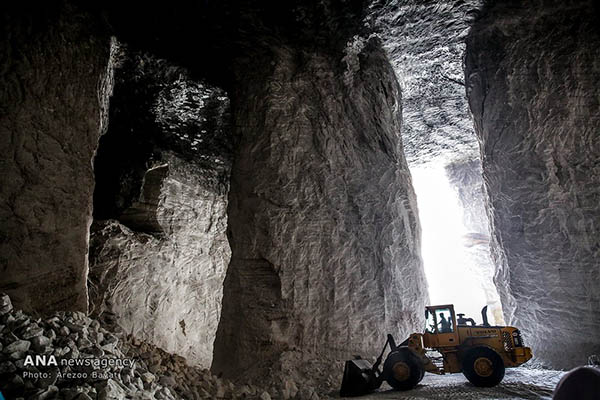
Salt is mined just like rocks too! It takes huge mining equipment like front loader shown in the photo of a salt mine below. 

Is salt the only rock that is tasty?

Big machinery cuts salt out of Iran's gigantic salt mine on the Silk Road in Semnan province.

Well, many rocks do have a taste. OG geologists used to use their taste buds to help identify rocks. Like, for instance, they could ID a rock because it tasted more bitter than its lookalike. Like halite does vs natural sodium chloride (table salt). Of course, tasting rocks is a bit of a gross way to identify them. It's not always safe, either! Some very hard substances can hurt you.

Lead is a harmful but useful rock-like substance. It was used in things like weights, pencils, and even paints. It tastes a little sweet. In fact, one of the old names for lead is "sugar of lead"! Problem is, lead causes brain damage that makes it harder to think. It is not safe to lick lead!

Lead isn't used in paints or pencils anymore. It hurt too many people and animals. Lead isn't used in fishing weights either, now. When people have to work with lead to build things today, they wear a lot of safety equipment to make sure that no lead gets on their skin or in their lungs. (See the lead safety instructions.)

Besides salt, gypsum is a rock we eat. You might know it as drywall, the sheets that make the walls in your house and school. That white crumbly gypsum is used in making beer, flour, ice cream and cheese! It tastes like — well‚ it tastes like drywall!

Here are some other rocky substances that have their very own flavour:

Borax — sweet but works as a cleaner, it is not a food

Chalcanthite — sweet but poisonous

Epsomite — bitter

Glauberite — salty and bitter

Hanksite — salty

Melanterite — sweet, puckery and metallic

Sylvite — bitter

Ulexite — alkaline (more soapy)


9 Apr 2022

When Ice Plays the Frazil Jam

 by Nina Munteanu

I’m a limnologist (someone who studies water and water systems); I’m also a Canadian, living in the north. That means that the water and waterways I study are often covered in ice and snow.

Since moving to Peterborough a few years ago, I’ve been walking daily along the shores of the Otonabee River, through riparian forest and marsh and small tributaries. The Otonabee River is a regulated river, with several dams and locks, forming part of the Trent-Severn Waterway in the Great Lakes Basin. The Otonabee River, which provides Peterborough its drinking water, receives water from Katchewanooka Lake in Lakefield and flows south through Peterborough into Rice Lake and from there water flows via the Trent River into Lake Ontario.

The Otonabee is regulated through a series of locks and dams with generating stations for electricity. I’ve been enjoying the seasonal changes of the river, along with the ostensible water level changes imposed throughout the seasons by the various dams and diversions. This has been particularly interesting for me during the onset and duration of winter, when ice and snow play a role in the river’s character. When it’s cold enough (at zero degrees Celsius or 32 degrees Fahrenheit), ice forms. It can form as a solid sheet on lakes and rivers and on land (as a glacier). Ice can also occur as frost, snow, sleet and hail. 


Limnologists talk about the ice-up of lakes and rivers, often making it sound like a singular phenomenon. But it isn’t. The characteristic ice sheet of a fully frozen lake or river goes through several stages and will vary from year to year. The cyclic nature of ice-up determines the quality and nature of the ice that forms and the under-ice environment. In a regulated river it gets even more complicated.

But it all starts with young ice crystals, frazil ice, that grow and evolve into something bigger. 


When Water Freezes & Ice Grows

Two things determine how ice forms: temperature and turbulence. The Otonabee experiences below freezing air temperatures for close to five months of the year and is both turbulent and calm in various places and times based on its level changes. This makes for some varied and interesting ice phenomena.


As early as November, when it’s freezing cold and water supercools, sharp pointed discs of ice crystals (frazil ice) form and mix into the waterbody’s upper layer. The ice molecules expand into an organized latticework that is less dense and lighter than liquid water, allowing it to float. Frazil ice often develops into slushy clumps of white ice a few centimeters across (grease ice or slushy, spongy grease ice called shuga). Frazil and grease ice may also create nilas ice, an up to 10 cm thick elastic ice crust with a mat surface.

On a quiet surface with little wind, such as a protected bay or pond, clear ice forms under very cold weather. Transparent ice may resemble Goethe glass and reflect light like clear wate or it can be slightly cloudy, reflecting a deep or aqua-turquoise blue, depending on the materials the crystals nucleate on. When the ice cover expands from the shore to the entire river or lake, it’s called fast ice because it’s held fast by the shore.


In rougher moving water, ice forms in a less orderly and transparent way, first forming frazil.

In more calm waters of shorelines and inlets, frazil ice may form skim ice that may look like a film of grease. Ice rind, a brittle shiny crust up to about 5 cm thick may form along protected shores around marsh reeds or on exposed rocks. 


Ice crystals need a nucleating agent to form in supercooled surface water. Examples include snow and ice fog, or already existing ice (e.g. frazil). Sediment and bacteria in lake and river water can also act as nucleating agents. In moderately cold and calm water with no falling snow, large crystals form unseeded ice; the nucleation sites are most likely particulates in the water. When snow falls, tiny ice crystals form on the water surface (seeded ice).


On a minus twenty C° January day, I followed the frazil or floating slush as it drifted downstream below a dam until the frazil ran into an ice jam that was piling up behind the next dam. Much of the frazil had organized into hundreds of small circular 4-cm diameter wide ice pancakes in the turbulent flow. The tiny pancakes collided into one another and jammed up against the established frazil ice sheet, creating a frazil floc and eventually cementing into the larger ice jam. The small ice pancakes foamed up with a milky froth, sliding on top or below each other and crowding into the ice jam. They made a distinct fizzing high pitched ‘shhh’-sound, just like soda pop when it’s first opened. They were frazilling. Frozen waves of ice fraziling formed and thin shards of broken ice rind had rafted over each other to form rows of hummocks as the ice jam grew upstream from the dam. 


Pancake Ice

Pancake Ice is ice that spins around in waves and thickens into free-floating ice disks. It forms particularly where the turbulence of rough water and rapids affect slush or ice rind, such as just downstream of a dam. This is exactly where I’ve seen pancake ice of varying sizes on the Otonabee River (pancakes from as small as 4-centimetres to as large as 3-metres wide and up to 10 cm thick). 


Pancake ice forms in two ways: 1) on water covered by slush, shuga or grease ice that, when it becomes sufficiently dense, congeals to form a pancake, or 2) from breaking ice rind, nilas or even gray ice in agitated conditions. When the floating ice rinds of grease ice break up, pancake ice forms from the pieces. I’ve seen pancakes raft over each other, creating an uneven top and bottom surface on an ice jam. I saw good examples of pancake-frazil formation below one dam and these formed an ice jam behind a downstream dam.

The rims of pancake ice are often turned up; when the pancakes collide into each other like bumper cars, frazil ice or slush piles onto their edges.  


Glossary of Ice Terms (Environment Canada):

ADVECTION FROST: A collection of small ice crystals in the shape of spikes that form when a cold wind blows over branches of trees, poles, and other surfaces.

BRASH ICE: Accumulations of floating ice made up of fragments not more than 2m across; wreckage of other forms of ice.

FAST ICE: Ice that forms and remains fast along the shore, where it is attached to the shore, an ice wall, or ice front.

FRACTURING: Pressure process whereby ice is permanently deformed, and rupture occurs.

FRAZIL ICE: Fine spicules or plates of ice (ice crystals), suspended in water.

GRAY ICE: Young ice 10-15 cm thick, less elastic than nilas and breaks on swell. Usually rafts under pressure.

GRAUPEL: Heavily rimed snow particles or pellets, typically white, soft and crumbly.

GREASE ICE: A later stage of freezing than frazil ice. It occurs when the crystals have coagulated to form a soup layer on the water surface. Grease ice reflects little light, giving the water a mat appearance. Forms shuga.

HUMMOCKED ICE: ice piled haphazardly one piece over another to form an uneven surface. When weathered, it has the appearance of smooth hillocks.

ICE BRECCIA: Ice of different stages of development frozen together.

ICE JAM: An accumulation of broken river ice caught in a narrow channel.

ICE RIND: A brittle shiny crust of ice formed on a quiet surface by direct freezing or from grease ice. Thickness to about 5 cm. Easily broken by wind or swell, commonly breaking in rectangular pieces.

NILAS: A thin elastic crust of ice, bending easily on waves and swell. Up to 10 cm thick with a mat surface. Under pressure it thrusts into a pattern of interlocking fingers.

PANCAKE ICE: Mostly circular pieces of ice from 30 cm to 3 m in diameter and up to 10 cm thick, with raised rims due to the pieces striking against one another. May form on a slight swell from grease ice, shuga, or slush, or from the breaking of ice rind, nilas or gray ice.

POLYNYA: Any nonlinear-shaped opening in the water but enclosed by ice. Some polynya recur annually in the same position.

RAFTED ICE: Type of deformed ice formed by one piece of ice overriding another.

RAFTING: Pressure processes whereby one piece of ice overrides another. Most common in new and young ice. 

SHUGA: An accumulation of spongy white ice lumps, several centimeters across; formed from grease ice or slush and sometimes from ice rising to the surface.


References:

Armstrong, T., and B. Roberts. 1956. Illustrated ice glossary. Polar Record 8:4-32.

Ashton, G., editor. 2010. River Lake Ice Engineering. Water Resources Publications LLC, Highlands Ranch, Colorado, USA.

Bengtsson, L. 1986. Spatial Variability of Lake Ice Covers. Geografiska Annaler: Series A, Physical Geography 68:113-121.

Brown, L. C., and C. R. Duguay. 2011. A comparison of simulated and measured lake ice thickness using a Shallow Water Ice Profiler. Hydrological Processes 25:2932-2941.

Burn, C. R. 1990. Frost heave in lake-bottom sediments, Mackenzie Delta, Northwest Territories. Nordicana 54:103-109.

Cherepanov, N. 1974. Classification of ice of natural water bodies. Pages 97-101 in Ocean '74 : IEEE International Conference on Engineering in the Ocean Environment Institute of Electrical and Electronic Engineers, New York, NY, USA.

Downing, John A. 2021. “Ice Formation is Not a Singular Phenomenon.” University of Minnesota Sea Grant. February 25, 2021.

Eisen, O., J. Freitag, C. Haas, W. Rack, G. Rotschky, and J. Schmitt. 2003. Bowling mermaids; or, how do beach ice balls form? Journal of Glaciology 49:605-606.

Fahnestock, R. K., D. J. Crowley, M. Wilson, and H. Schneider. 1973.Ice& volcanoes of the Lake Erie shore near Dunkirk, New York, USA. Journal of Glaciology 12:93-99.

Kavanaugh, J., R. Schultz, L. D. Andriashek, M. v. d. Baan, H. Ghofrani, G. Atkinson, and D. J. Utting. 2019. A New Year’s Day icebreaker: icequakes on lakes in Alberta, Canada. Canadian Journal of Earth Sciences 56:183-200.

Kempema, E. W., E. Reimnitz, and P. W. Barnes. 2001. Anchor-Ice Formation and Ice Rafting in Southwestern Lake Michigan, U.S.A. Journal of Sedimentary Research 71:346-354.

Knight, C. A. 1962. Studies of Arctic Lake Ice. Journal of Glaciology 4:319-335.

Michel, B. 1971. Winter regime of rivers and lakes. US Army Corps of Engineers, Cold Regions Research and Engineering Laboratory, Hanover, New Hampshire USA.

Michel, B., and R. O. Ramseier. 1971. Classification of river and lake ice. Canadian Geotechnical Journal 8:36-45.

Muguruma, J., and K. Kikuchi. 1963. Lake Ice Investigation at Peters Lake, Alaska. Journal of Glaciology 4:689-708.

Pounder, E. 1965. Physics of ice. Pergammon Press, Oxford, UK.


25 Mar 2022

Millipedes

by Kim Woolcock

It’s spring, and all kinds of creatures are crawling out from under the leaf litter. Including millipedes.

Their name means “thousand legs” (even though only one millipede, Eumillipes persephone, has more than a thousand legs, and it was just discovered in December 2021). Despite their many legs, they are not fast runners, and they cannot bite or sting. To prevent becoming tasty snacks, they have many defenses. The most well-known is their ability to curl into spirals, with their head in the middle.

Coiled Millipede in dry leaf litter
Taken by: Prosthetic Head


Some carry physical weapons. Polyxenid millipedes have interlocking bristles on their butt that they rub off on ants. The bristles get stuck on the ants, who give up attacking the millipede to remove the bristles. The bristles, which are barbed and have grappling hooks at the end, interlock as the ant tries to get them off. Some ants are too entangled to remove them, and die.

Polyxenus lagurus (Diplopoda, Polyxenida). Dundon, England, United Kingdom
Taken by: Andy Murray


But most millipedes carry chemical weapons, stored in the aptly named “repugnatorial glands." Millipedes can produce eight major types of repellent chemicals, from phenols to quinones to hydrogen cyanide (yes, cyanide).

When threatened, some millipedes squeeze muscles around their repugnatorial glands [editor's note: these are glands that drive away predators], dotting their backs with droplets of predator repellent. Others just let their defensive chemicals ooze out and coat their exoskeleton. But some can spray their repellent, up to 50 cm! Large millipedes from Hispaniola are reported to be able to blind chickens. Others, like Glomeris marginata, take a different tack, exuding a sedative similar to Quaalude, which can put wolf spiders to sleep (it also tastes terrible and it’s not known if predators ingest enough to actually fall asleep or if they’re just put off by the bad taste). Just in case, G. marginata includes sticky proteins in its secretions, entangling its would-be predators.

Flat-backed millipedes don’t mess around with bad tastes or smells—they produce hydrogen cyanide. Yes, cyanide, the famously fast-acting, potent poison. Millipedes are immune to it, and they can exude enough to kill birds and mice. Some of these cyanide producers, like Harpaphe haydeniana, are so deadly they have basically only one predator, the beetle Promecognathus laevissimus, which is also immune to cyanide.

Harpaphe haydeniana
Taken by: Franco Folini

All of this makes them sound rather menacing. But down there on the forest floor, protected by their chemical arsenal, they are performing an essential service: they are shredding up the leaf litter, grinding it into tiny pieces and making the nutrients more available for the rest of the food web. A study of the yellow-spotted millipede in BC’s coastal rainforest estimated that it consumes 36% of the annual coniferous litterfall. Just that one species! That is a lot of shredding.


To learn more about tiny creatures and their superpowers, check out my new book It’s Tough to be Tiny, coming out from Flying Eye Books in September, illustrated by Stacey Thomas. It’s full of fun facts about creatures like springtails and cone snails and how they evade predators, hunt for their lunch, and buddy up with bigger creatures for the benefit of both.


Resources
https://www.sciencenews.org/article/millipede-most-legs-eumillipes-persephone
https://blog.nature.org/science/2017/10/17/millipede-protects-itself-cyanide-yellow-spotted-bugs/
https://www.nature.com/articles/s41598-018-19996-6
https://www.pnas.org/doi/full/10.1073/pnas.1500014112
https://www.sciencedirect.com/science/article/pii/S0305197815001167
https://www.loc.gov/everyday-mysteries/zoology/item/how-are-millipedes-and-centipedes-alike-and-how-do-they-differ/
https://www.ncbi.nlm.nih.gov/pmc/articles/PMC38244/
https://cdnsciencepub.com/doi/10.1139/x00-014

15 Mar 2022

Why Do Kids Play?

by Anne Munier

Kids doing what kids do best!

Children are playful creatures. This holds true all over the world- whether that’s playing 4-square in the schoolyard, engaging in some shadow tag if you happen to be in Ireland, or maybe partaking in a bit of luksong-baka if you’re in the Philippines (it translates to “jump over the cow”, but don’t worry, no real cows are involved!). Even back in the Middle Ages kids made toys out of wood or stones, and long before then, pre-historic toddlers finger-painted on cave walls. No matter where kids are, a day well spent is a day full of fun.

Twig figurines from the American South-West. Toys have been popular for a long time.

And it’s not just human kids -- lots of animals, especially mammals, grow up playing. Think of otters gliding down mud slides on their bellies, puppies wrestling with sticks, baby goats galloping all over each other and head butting anything in sight- they are clearly having fun! The most play-loving of all may be our closest relatives the chimpanzees and bonobos, who laugh, tickle, wrestle, play with dolls (well, with sticks that they treat like dolls, so I’d say that counts), and spend most of their childhood, well, having fun.

All this to say -- playing is genetically ingrained in humans. Kids have evolved to play.

Humans are in good company when it comes to enjoying some good playtime.

But why?? Generally we evolve attributes that help us to survive, be healthy, and have babies. But for most of our evolutionary history we were hunters and gatherers, and playing could have some serious drawbacks. For instance, play:

-Burns lots of energy, so kids need to eat more food (that can be expensive when you’re foraging and hunting every day for survival)

-Is risky -- have you ever known a kid to get hurt or lost when they’re clambering over rocks or climbing trees or exploring new areas?

-Can be loud, which would have attracted the attention of hungry predators.

Having fun? No, these kids are honing their critical thinking skills and coming up with solutions.

None of this sounds like an evolutionarily good idea! But scientists assure us that the benefits of play far outweigh the downsides, by helping kids to:

-Learn skills- children’s games often mimic adult activities, such as playing with toy tools, caring for stuffies, or building sand castles. Play allows for years of practice before taking on real life responsibilities (of renovating buildings, parenting, or designing houses for example). It also gives kids a chance to figure out what they love doing.

-Be strong! All that running around and climbing and wresting and jumping is great exercise.

-Think critically- learn how to analyze situations, come up with solutions, and then evaluate. Think of playing Capture the Flag: your team decides who does what, and how to react to certain situations (like the other team getting too close to your flag). Then you try it out, and chat about how it all went down afterwards. Critical thinking at its finest!

-Communicate, form friendships, develop confidence, and generally get along with others. Social animals (like humans, apes, or wolves) tend to spend more time playing than other species.

-Come up with solutions to life’s problems while having fun! Which, it turns out, is a far better way to learn than when you’re stressed out and running from a charging predator, say. One study observed a group of chimpanzees who all wanted some bananas that were out of reach. Which one figured out how to manoeuver them down with sticks? The one who had had the opportunity to play with sticks beforehand, learning how to manipulate them!

Science backs all this up. Bear cubs that play the most are the most likely to survive the winter. Playful yellow bellied marmots are most likely to have high status as adults. Girls in Botswana who play at pounding grain when they’re young become better grain-pounders (a very challenging job) when older. And children who play more as kids tend to become adults who are good at making friends and adapting to life’s changes.


Keep playing little bear!

The bigger problem today is that kids seem to have *less* playtime than ever before. There may be lots more organized activities in kids’ lives (sports teams, music lessons, tutoring sessions, what have you), but having time to play whatever they want - not so much. Scientists are learning that this is not good for the physical and mental health of children *or* the adults they become.

So, the next time anyone tells you that you’re wasting time playing around rather than doing something serious with your time, you can let them know that millions of years of evolution aren’t wrong. That play *is* serious business, and one of the most important things you can spend your precious time on!

13 Mar 2022

Antelope Island and Its Famous Residents—the Bison

by Elaine Kachala

Photo by Michael Kachala

It might surprise you to learn that one of the largest free-roaming herds of bison lives in a state park! Recently, I had the incredible experience of visiting Antelope Island State Park. Located in Utah, United States, it’s the largest island in the middle of Great Salt Lake and home to remarkable wildlife.

Great Salt Lake is five times saltier than the ocean—five times! Why so salty, you might ask? The Lake is in a basin (a dip or depression in the Earth’s surface), so there is no natural outlet. Water feeding the Lake from rainfall, rivers, and streams can only leave by evaporation. These sources carry small amounts of salts and minerals left behind and build up over thousands of years. Great Salt Lake is what remains of prehistoric Lake Bonneville, which dates back 30,000 years.

It’s so salty that no species of fish can survive. But brine shrimp and the larvae of brine flies live there, and they attract millions of birds yearly. Antelope Island is a paradise for bird breeding, migration stopovers, and birdwatching.

The Island is also home to antelopes. Well, not actually antelopes. Pronghorns. Although their scientific name means “American antelope goat,” pronghorns aren’t antelope. But in 1843, explorer John C. Freemont called them antelopes and named the Island in their honor because he valued them as a vital food source.

Cool Facts About Bison:

Weight: 900-2000 lbs (408-907 kgs)

Diet: Grass and flowering plants

Speed: 40 mph (64 kph)

Lifespan: 20 years

Natural predators: wolves (no wolves on Antelope Island)

Bison vs. Buffalo: Buffalo are distant cousins. American bison are unique to North America.

Photo by Michael Kachala

But the Island’s most famous residents are bison. These days, between 500-700 bison are roaming free. And it’s all thanks to two conservationists from Utah, William Glassman, and John Dooly. They saw the need to preserve and protect this once-vast herd. Millions of bison used to roam North America. By the late 1800s, hunting brought them close to extinction. In 1893, the two men brought twelve bison to the Island by boat. They became the foundation for one of the oldest and largest herds in the world.

Caution! Don’t Approach the Bison.” Today, you'll see these signs throughout the Park with information about “how close is too close?” If the bison stops grazing, sleeping, or doing other activities to look at you, you're too close! If the bison stares at you and raises its tail, it's about to charge.

We followed the Park’s rules and watched the bison from our car. They were grazing with tails wagging. We stepped out of the car to take a photo, still keeping our distance. But as we watched, even though we were far away, their tails became still; they stopped grazing and looked up. Time to go!

Human history on Antelope Island began with Indigenous peoples. Then explorers, pioneers, and ranchers all called the Island home. In 1981, the State of Utah bought the Island as a state park. Protecting its fragile ecosystem was a top priority. The State partnered with different organizations, such as the Nature Conservancy. Together, they host education and outreach programs.

The annual bison roundup is another protective measure. Horseback riders worldwide register to help round up the bison into corrals for a veterinary check. Visitors can watch! Since there's only enough food and water on the island for 500-700 bison each year, dozens are auctioned at the roundup. They’re sent to other herds around the country to increase genetic diversity. The money from the auction helps raise funds for conservation efforts on the Island.

A lot is happening on Antelope Island. You can learn about science and history. Revel in geologic marvels. Or you can hike, bike, kayak, camp, star-gaze, and more!


References

Canadian Geographic. https://www.canadiangeographic.ca/article/animal-facts-pronghorn

Smithsonian. https://www.si.edu/object/what-makes-great-salt-lake-so-great:yt_csP5KtR72nU

The Nature Conservancy. https://www.nature.org/en-us/get-involved/how-to-help/places-we-protect/the-great-salt-lake-shorelands-preserve/

Utah Government. Antelope Island State Park. https://stateparks.utah.gov/parks/antelope-island/
and https://www.utahtravelsecrets.com/antelopeislandstatepark.html

Utah Government. History To Go. https://historytogo.utah.gov/lake-bonneville/

Utah History Encyclopedia. https://www.uen.org/utah_history_encyclopedia/l/LAKE_BONNEVILLE.shtml

Utah Government. State Parks. Antelope Island. https://stateparks.utah.gov/stateparks/wp-content/uploads/sites/26/2015/02/AISP-Ed-Packet-History.pdf

Utah Government. State Parks. Antelope Island State Park Junior Ranger Activity Guide. https://stateparks.utah.gov/wp-content/uploads/sites/13/2019/05/AISP-Jr.-Ranger-Booklet.pdf


4 Mar 2022

The Other Entanglement

 
A year ago I wrote a blog entry which included  “entanglement” – a complicated quantum mechanics concept where multiple particles … never mind. (If you’re interested, go and look for the February 2021 blog “Schroedinger’s Bird ??????”.

This other entanglement is more easily understood. Why does hair tangle and how do you get it untangled?

When you look at hair under a microscope, you can see that the core of the hair is covered with cuticles. Think of them as being like the scales of a fish. Both the cuticles and the core of the hair are made up of keratin – helix-shaped protein molecules. The cuticles are covered with sebum, an oily substance which protects the hair from drying out. 


                                         A single human hair, showing the cuticles

Because hairs are not smooth, if two meet at the right (wrong?) angle, they can snag on each other. If hair is damaged, cuticles may be missing, torn, or more protruding, and the tangling will be worse. Not all hair is the same, of course. Hair ranges from fine to coarse in thickness, and from straight to curly. It’s not a simple problem to figure out what hair will tangle more. A head of hundreds of thousands of strands colliding in all directions is just the sort of knotty problem that mathematicians and physicists love to tackle. Some fine work done by Jean-Baptiste Masson, a brain imaging researcher at the École Polytechnique in France showed that, although curly hairs cross more often than straight, the angle at which the hairs meet is most important. Counter-intuitively, straight hair tangles more than curly. And what appears to be the most important factor is the diameter of the strands. Fine hair tangles more than coarse hair.

 How to Untangle Hair

 Less surprising than the study of what hair tangles most, is the result of work done by a team of scientists at Harvard. They found — drum roll, please — that untangling hair is best done by starting to comb close to the ends and then working your way up to the scalp.

You can also get some help from the magic of chemistry. There are dozens of commercial Detangling Sprays available. My favourite — based solely on the name — is this one:


 The name is based on the widespread myth in Southern Africa that elephants eat the fermented fruit of the Marula tree, get drunk on the alcohol, and rampage around, causing widespread destruction. And of course, what could be more effective at detangling your hair than a rampaging drunken elephant?

The active ingredients in detangling sprays are

  • Oils. These replace missing sebum, making hair softer and less likely to tangle.
  • Silicone. A substance with long molecular chains that bind to the surface of the hair and make it glossy, smooth and less likely to tangle.
  • Acidifiers. Lowering the pH of the hair strengthens the hydrogen bonds between keratin molecules. This smooths and tightens the surface cuticles on each strand.
  • Hydrolyzed Protein. Amino acids which are the building blocks of proteins. These help to repair damaged keratin, smoothing broken edges of the cuticles.
  • Surfactants. These molecules have one part which binds to the exposed keratin, between damaged cuticles; the other end of the molecule is hydrophobic (repelling water) and creating a smooth thin film that’s easier to comb.
 Preventing tangles – Shampoo and Conditioner

Shampoos are detergents which do one simple job: remove dirt from hair. The dirt is caught up in the oily sebum and the detergent washes it away. Detergents are molecules with one end which is attracted to oil and the other end attracted to water. So one end binds to the dirty, oily sebum and rinsing with water washes away that dirty oil. Any detergent would effectively wash away the dirt. Soap, which is also a detergent, would do that. If you live in Vancouver, which has ‘soft’ water, soap should work quite well instead of shampoo. If you live in Montreal or Kitchener/Waterloo, which have ‘hard’ water, not so much. ‘Hard’ water has dissolved salts of calcium and magnesium, and soap reacts with them to form a deposit: “soap scum”. You don’t really want that coating your hair after you wash it; you need a detergent other than soap.

Some other considerations:

  • shampoos are pH balanced – between 5 and 8. Outside of that range, the cuticles will not lie flat.
  • The detergent must not be too strong. If it is, it will remove all of the sebum, along with the dirt, and your hair will end up too dry.
  •  Shampoos always include a foaming agent. This has absolutely no use except to make the user feel as though the shampoo is working. If the shampoo doesn’t foam, people won’t buy it.

Even with a mild detergent, conditioners are helpful in replacing the sebum that’s been removed. How do conditioners work and what are their active ingredients? Conditioners are actually the same as detanglers, so they are just like that descrition above. Yes, you can use a conditioner as a detangler, especially the conditioners that are designed to be left on your hair and not rinsed off.

Final snippet: 2 in 1 Shampoo & Conditioners are great for saving time. You wash and condition your hair in one step, not two. But how do they work? How does the conditioner “know” that it should wait for the shampoo to remove the sebum before coating the hair? Clever chemistry holds silicones in suspension in a shampoo until the shampoo is rinsed away with a lot of water. So, during the shampooing the silicones are held in a sort of suspended state of animation. When the shampoo is washed out, the silicones are activated, coat the hair and leave it in good condition. The results can be pretty good, but still 2 in 1's can’t match the effectiveness of separate shampoo and conditioner.