Showing posts with label canada. Show all posts

30 Apr 2021

Beaver Buddies

These fuzzy vegan chonkers are full of personality and vital to the ongoing health and diversity of forests and waterways. Their forestry and dam building efforts filter water, create wetlands, and make room for the next-in-line trees and bushes. All of that encourages more types of animals to come.
Though the beaver in this picture was so chill that it popped up to check out my kayak, most of the time the only notice of a beaver is the sound of its big flat tail slapping the water in warning as it dives to be alone.

Bonch o' Beaver Facts

  • 2 to 4 babies (kits) each year
  • live in family colonies until at least 2 years old
  • grow to 3 ft long and 40 lbs on average
  • orange teeth because of iron in the enamel covering
  • teeth never stop growing
  • hold breath 15 minutes underwater
  • webbed feet help them swim up to 8 km/h
  • vegan diet includes bark as well as water plants like lily pads and cattails
  • tireless builders, they seem motivated to stop the sound of running water
  • see-through eyelids help them see underwater
  • closeable nostrils and ears keep water out, as well as lips behind their teeth!
  • very important in the fur trade that was key in founding Canada
  • build enormous dams that can be many meters tall — the longest found is 850 m, and it's right here in Canada!
  • live up to 12 years in nature
  • home is a lodge pile of sticks and mud that can keep at 10°C even in the coldest –40°C of winter
  • like scritches, just like a cat

26 Mar 2019

Move Over SUE, There's a New T. rex in Town

Photo by Claire Eamer
by L. E. Carmichael

Of all the dinosaurs in all the world, SUE the T. rex might be the most famous. The most complete T. rex skeleton ever found, SUE is likely also the most well-traveled. Her bones, or at least casts of them, have been displayed all over the world. The casts I saw in Nova Scotia came with bilingual displays written in English and Arabic!

But there's a new king of the dinosaurs in town, and his name is Scotty.

Named after a bottle of Scotch the scientists toasted his 1991 discovery with, Scotty is only 65% complete, compared to SUE's 90%. But he stands out for another reason - as far as we currently know, he's the biggest carnivore ever to walk the earth.

As any forensic anthropologist will tell you, there's a certain amount of instinct and guess-work involved in reconstructing height and weight from nothing but bones. But measurements of Scotty's femur (the long, heavy bone from his thigh) suggest he was in the ballpark of 19,500 pounds - almost a ton more than SUE.

He was also a senior citizen - at approximately 28 years old, Scotty lived longer than any other T. rex we currently know about. And he was a tough old dude, surviving a broken rib, fractured tail bones, and an infected jaw. Those injuries showed signs of healing, meaning they likely weren't his ultimate cause of death.

Now that Canadian palaeontologists have had a chance to study him, Scotty will be making his public debut at the Royal Saskatchewan Museum this May.  No word yet on whether he'll be joining his cousin SUE on tour!


21 Jul 2017

Canada's next Governor General - out of this world!

By Claire Eamer

Literally, she was out of this world. Twice! Julie Payette, who will take up the post of Governor General of Canada in the fall, is a scientist, an astronaut, and the first Canadian woman to board the International Space Station (ISS).

Julie Payette. Canadian Space Agency photo.
In fact, she helped build it. In 1999, she spent nine days as part of the second mission ever to the ISS. In a 2015 interview with Macleans Magazine, she said she thought of herself as a space construction worker. "We brought the first three tons of equipment, including some of the Imax camera stuff. We literally switched the light on to the station and walked in."

In 2009, Payette left Earth again, this time as flight engineer aboard the space shuttle. During that trip, she got to manipulate the giant, Canadian-designed robotic arms on the shuttle and the space station - Canadarm and Canadarm2. It was a tense assignment, she said in the Macleans interview: "When you're moving something on a a multi-billion-dollar structure, with people on board who count on that structure for safety and integrity, a mistake is not an option."

Payette has degrees in electrical engineering and computer science. She holds a commercial pilot's licence and is also a qualified pilot of military jet aircraft. She speaks English and French fluently, and can also carry on a conversation in Russian, Italian, Spanish, and German. And if that's not enough, she plays piano and has sung with several major classical music groups.

The 53-year-old Payette retired from the Canadian Space Agency in 2013, and became chief operating officer of the Montreal Science Centre. She left that job recently and will be sworn in as Governor General probably in late September or early October.

As the representative of the Crown in Canada, the Governor General performs the Queen's duties as set out in the Canadian constitution. It is a largely ceremonial role, but offers the person performing it plenty of opportunity to interact with Canadians in all regions and at all levels. Most recent governors general have used the opportunity to bring attention to an aspect of Canadian life that they feel strongly about.

In an interview with the Globe and Mail, Payette said it's still too early to say what her priorities will be during her tenure, but that they will include science and a knowledge-based society. As both a scientist and a science communicator, she is admirably equipped to take on that task.

References:

21 Apr 2017

Get Your Hands into Science in Your City

Science doesn’t just happen in big facilities far away. There is science happening right in your city. On May 13 the universities and the nature clubs, the industrial researchers and the backyard tinkerers invite you to come out and play with them at the free 10th annual Science Rendezvous.

What Happens

Every booth wants you to poke, pet, produce, prime, punch, or pedal to partake in the science they are excited about. There are things that explode, float, or twirl. There are technologies that make our modern world run, and technologies looking for new applications. There are ancient technologies like telescopes and modern ones like Frisbee-throwing robots.

Out of the lab and into the streets, more than 6000 groups entertain over 300,000 visitors on this free day of discovery. Get a peek at state-of-the-art laboratories and research facilities, and get a glimpse into the career of a scientist. Meet animals, bike to light up an infrared camera, try the CSI tools, or map your own DNA. Each location is different because it is made up from the local community.

The emphasis is on getting your hands into the action. Takeaways give you activities to do at home and ideas for ways to put more since in your life the rest of the year.

Not Just for Kids

While each festival location definitely has activities for the community’s smallest members, there are hands-on activities for people of all ages. Kids, it’s a great way to inspire your parents to try some cool experiments at home.

Where


From Inuvik and Vancouver to Windsor and St. John’s, there are more than 34 sites holding free festivals on May 13. Find a location near you on the festival’s webpage.


19 Aug 2016

Mark Your Calendar: Science Literacy Week Sept. 19-25!


Science lovers, strap on your boots! You’ll need them for Science Literacy Week coming your way September 19-25, all across the country. This wonderful celebration of all things science will feature events for everyone, adults and kids alike, in venues ranging from libraries and schools to museum and local parks.

Jesse Hildebrand, founder of Science Literacy Week
Science Literacy Week is the brainchild of Jesse Hildebrand, a self-confessed science geek and energy whirlwind. I had the opportunity to interview him earlier this summer, to find out both where he gets his superhuman enerjuice and about the marvelousness that is Science Literacy Week. Here is what I found out:

1. Give us your brief potted bio. Who the heck are you and why do you love science so much?

I'm a lifelong tremendous nerd, born and raised in the same lovely house in Etobicoke.  I grew up with Steve Irwin posters on my wall and Carl Sagan books on my shelf.  If I was interested in anything, my parents dutifully marched me to a library to get books on it.  Thus, my initial love of science was fostered and nourished immensely. 

I went on to get an Evolutionary Biology Degree from U of T and a Science and Society Diploma from The Open University.

I also truly love baseball, nature, books, pina coladas and taking walks in the rain.  The dunes of the cape also sound awfully inviting.

2. What were some of the science books you read as a kid that sparked your imagination?
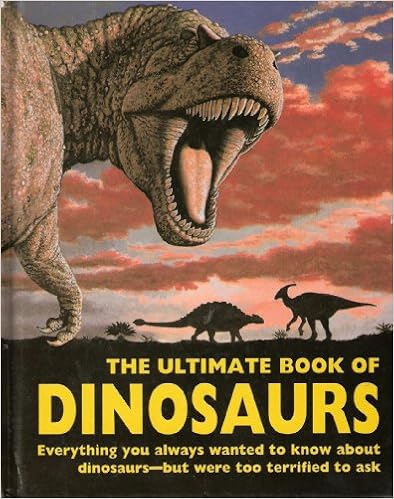
 I still have them so that's easy!  The Ultimate Book of Dinosaurs, Animals of the World, The Great Big Book of Knowledge, The Crazy World of What If? And my two very favourites, the awesome 'Wildlife Fact File" series and the Oxford First Encyclopedia.  My own kids will get all of them.  I was also encouraged by the librarians at my junior schools at Broadacres and John G Althouse and at Richview Public Library, where I'm still to be found roaming the halls more often than not.

3. What is Science Literacy Week? Why/how did you found it?
Science Literacy Week began simply as an effort to encourage University of Toronto libraries to bring their science collections out from the back for one week and prominently display them in the spot typically reserved for popular fiction.  I had always wanted to do something in science communication, and quite literally the day after I finished my last exam -  April 3rd, 2014 - I approached the libraries to make the ask. They took me seriously and it snowballed from there.

4. Tell Sci/Why readers about how the program has expanded since you began it in 2014.

Once the U of T libraries got on board, I convinced the Toronto Public, Mississauga Public and York University libraries to join in, making it a total of four participating institutions.  I convinced a few of my former professors to give talks and also arranged a smattering of other activities. 

It went pretty well in Toronto!  I thought that it could be expanded to include the whole country, so in 2015, I emailed everybody - libraries, museums, science organizations - some 4,500 emails in all in an attempt to make Science Literacy Week bigger. 

There was a tremendous response! I was remarkably lucky to receive ten yesses for every no. All told, Science Literacy Week 2015 came to include 300 events in 40 cities coast-to-coast. 

This year, with 160+ partners and major support from Indigo and NSERC (The Natural Sciences and Engineering Research Council of Canada), Science Literacy Week 2016 looks to be even bigger. NSERC has now hired me run the week, which means that since I no longer have to do this as a volunteer, I can commit full time to bringing it to life.  As of August 8st, there are 142 events already scheduled to run in 8 provinces!

5. Can you highlight some of the most successful/innovative/fun programs that ran in previous years, and some that are coming up this year?  

St. John's, NF, was one of the 2015 Science Literacy Week’s hotspots.  A great group of participants including Memorial University, the public libraries, the Johnson Geo Centre and the Let'sTalk Science folks worked together to present 27 events in 7 days. These included taking over the main mall in the city for a 5 hour science demo, an impressive event covered by the local radio station.  That was Science Literacy Week at its best! 

Across Canada, there was also "the Great Egg Drop" where kids had to make a container to drop an egg in from 25 ft. without it breaking; science demos in libraries where you could play with Non-Newtonian fluids; dozens of Astronomy Nights and more. 

For this year, some early confirmed highlights include:
Ø  Dissect a Beaver  (Vancouver)
Ø  Bird-banding hike in Oak Hammock Marsh (Manitoba)
Ø  Science with Fire and Alcohol (Red Deer)
Ø  A showcase of iconic science books you can touch and flip the pages of at Thomas Fisher Rare Book Library (Toronto).

6. And let’s repeat for those who have forgotten: when is Science Literacy Week running this year?

September 19-25, 2016. 

For the current roster of confirmed events by province, go to http://scienceliteracy.ca/events/

7. How can people – librarians, educators, institutions, ordinary folk who want to HOST a program -  get involved?

Anyone who wants to host a program or be put in touch with other local groups who might be keen to partner can contact me directly  info@scienceliteracy.ca.


8. And for those who would like to attend or participate in a program, where can they find the information?

For the most up to date listings of confirmed events by province, go to 

You can learn about events near you on twitter @scilitweek, on Facebook at Facebook.com/scilitweek

You can participate by spreading the word and sharing your love of science with the hashtag #scilit16


 Thank you! See you in September!

18 Jul 2015

Learn Latin Names of Common Plants

By Helen Mason

A recent trip to Ireland reinforced for me the importance of learning Latin names of common plants.

Of course I recognized my old friend Taraxacum sighted here at Mellifont Abbey in County Louth — and in numerous fields. Although we in North America don't think of dandelions as an invasive species, they are native to Eurasia and have been spread around the world by settlers who likely planted the seeds to make use of the plant's many medicinal and nutritional uses.

Dandelion at Mellifont Abbey. (Helen Mason photo)

I also knew that this bird fishing in the waters outside Ashford Castle in County Mayo had to be a member of the heron family. It's a grey heron (Ardea cinerea), a species native to temperate parts of Europe, Asia, and parts of Africa.

The herons around my Georgian Bay cottage are great blue herons (Ardea herodias) — same genus, different species.

Grey heron fishing in County Mayo. (Helen Mason photo)

What puzzled me, however, was a flower I found while exploring County Clare's Craggaunowen, a tourist site with re-creations of the various types of housing used in Ireland's past — from a Crannog or lake-dwelling from the Bronze age, to a ring fort from the 4th and 5th Centuries, to 1400s-era castle.

Walking through the woodlands below the fort, I admired this blossom.

The Irish jack in the pulpit: Arum maculatum. (Helen Mason photo)

Not recognizing it, but thinking it might be related to something I did, I asked the guide.

"Jack in the pulpit," she responded, "sometimes called lords-and-ladies."

This is where common names can run us into trouble. To me, a jack in the pulpit is a shy blossom that covers is reproductive parts.

The Canadian jack in the pulpit: Arisaema triphyllum. (Helen Mason photo)

In fact, these two jack in the pulpits belong to the same family but not the same genus or species.

The Irish plant is Arum maculatum, a woodland species common to Europe, Turkey, and the Caucasus. Like many plants, it has a number of common names — snakeshead, adder's root, Adam and Eve, and lords-and-ladies, as well as jack in the pulpit.

The Canadian plant is Arisaema triphyllum, a native of moist eastern North American woodlands. Like its Irish distant relative, this jack in the pulpit has other names, including bog onion, brown dragon, Indian turnip, and American wake robin.

Common names change from locale to locale. They can provide interesting information about the use of the plant or the social history of the namer. The Latin term is unique. It identifies one genus and species, and only that one.


16 Dec 2011

Christmas counts - to the birds


By Marie Powell

As we start preparing the annual Christmas turkey (photo by tuchodi), tens of thousands of volunteers are out in search of other birds - on the annual Audobon Christmas Bird Count.

Before the Twentieth Century, many bird and animal species would need to fear the annual hunting parties in search of sport and/or food for the holidays. According to the Audobon website, this annual hunt turned into a bird-counting census on Christmas Day in 1900, when the idea was suggested by ornithologist Frank Chapman. In its first year, the bird count included sites from Ontario to California.

Today, Christmas bird counts are held across North and South America from December 14 to January 5. Bird counting usually takes place in groups within a defined area, and in all kinds of weather. The data collected helps scientists and researchers study the health of bird populations over time. That helps identify declining bird populations - and ultimately, declining populations tell us about the health of a given area or ecosystem.

It's a way of giving back - and when could that be more appropriate than at Christmastime?

For more about Christmas bird counts, or to find one near you, try these links:

Audobon: Christmas bird count: http://birds.audubon.org/christmas-bird-count#

Audobon: Get Involved: http://birds.audubon.org/get-involved-christmas-bird-count

Bird Studies Canada: http://www.bsc-eoc.org/volunteer/cbc/index.jsp?targetpg=cbcparticpate&lang=EN

Marie Powell is a freelance writer and author of Dragonflies are Amazing (Scholastic).

4 Oct 2011

Yes, It IS Ethical Oil

Posted by Helaine Becker

Last month, Saudi Arabia made headlines in Canada when it tried to prevent the non-profit advocacy group, Ethical Oil, from running ads in support of Canada’s oil sands. Saudi Arabia apparently didn’t like how the TV spots highlighted the Saudis’ abysmal record re human rights. (Read more here.)
Less than a week later, the oil sands were in the news again, this time receiving plaudits from a surprising source: Patrick Moore, founder of Greenpeace. Moore said, “oilsands development is necessary and often leaves the production sites in better environmental shape than they were before oil was taken from the land.” (Read more here.)
I live a world away from Alberta, in posh, ivory-tower Toronto. It's hard to really know the truth about the oil sands/tar sands here (take your pick of the terminology; which you call it reveals your attitude, pro or con). I can tell you, though, that the Lululemons in my 'hood unanimously and vociferously decry them (but then drive off in their X5s).

As a science writer, I know the world is not a chic but simplistic black-and-white. I know, for example, that as feel-good as it is to tsk tsk fossil fuels, I wouldn’t  - couldn’t - live in Canada without oil. I’m fond of my furnace come October. So until that magic day when we can switch over entirely to non-carbon fuel sources, I’m going to have to accept that oil and I are partners in the Canadian experiment.
But that’s not to say I’m not uneasy about it. It’s also why I jumped at the chance to see the oil sands for myself last June. As part of the Canadian Science Writers Association’s annual meeting, a trip to Fort MacMurray was offered. I signed up pronto.
What I wanted to know was, “What is the real impact of the mining operations on the environment? Is it really “dirty oil,” as opponents claim? What are companies doing to minimize the environmental impact? And what, really, are our alternatives?”
The day was warm as we boarded the private plane provided by Connacher Oil and Gas, one of the gazillion oil companies based in Fort MacMurray. Connacher is at the forefront of in situ mining, a method of oil recovery that only became viable in the last decade. Traditionally, oil sands were obtained through open pit mining – huge quantities of the bitumen-rich soils were scraped off the surface of the land for later extraction. This process certainly left large areas of the landscape in bad shape, and potentially exposed populations downstream to toxic wastes.
Only a fraction of the oil sands – those that lay on the surface –could be mined this way. But much greater quantities of oil – unbelievably huge reservoirs that make the Middle East's reserves look like duck puddles – remained inaccessible. Technology to access them simply did not exist until the 1980s, when a technique called SagD (Steam Assisted Gravity Drainage) was developed and proven. With SagD, hot water is pumped into underground reservoirs that contain the thick, tarry oil sands. The steam loosens the tar, enabling it to be pumped up to the surface, where it can then be refined.

The Connacher team at the well pad
SagD seems to have a much more limited impact on the environment than traditional open pit mining. The footprint of the wellpad is tiny; to my eye, about the size of an average high school gym. The official bumpf says the pads cover 85-90% less surface area than old style mines. The Connacher plant also recycles over 90% of the  water used to make the steam, using only non-potable water; it doesn’t draw water from the nearby surface water or rivers. The company also  generates its own energy, making it largely independent of the power grid.
I have to say I was impressed by the facilities we toured and the caliber of the Connacher staff we met. Like most Canadians, the engineers at Connacher were concerned with the environment, and proudly detailed for us the programs they had in place to ensure as little disruption as possible to the wildlife of the area, and the environment overall.
Our guides were not given an easy ride by our group of science professionals and journalists, which included Jay Ingram, longtime host of Daily Planet, Susan Eaton, geologist, geophysicist and committed conservationist, and award-winning science journalist Peter McMahon. They were given tough questions to answer, and were not allowed to avoid them or slide away with easy generalities. Is SagD perfect? Of course not. It still is releasing carbon into our atmosphere, which we all know is damaging. And there are still local environmental concerns that need to be addressed with stricter regulations and monitoring.
After the visit to Ft. MacMurray, the issues around the oil sands were clearer in my mind. Like Patrick Moore, I now believe that Canada, as a nation, cannot, and should not, put a stop to oil sands extraction in Alberta. We simply have no alternatives to oil yet.  Until we do, we have to get our oil from somewhere. Like the folks at Ethical Oil say, where would you rather get your oil, from Canadians who are regulated and who make the effort to obtain the oil in the cleanest possible way (no matter if we don’t always reach nirvanic perfection, at least we are trying – can you say the same about Venezuela?)? Or would you rather buy your fuel from a country where women aren’t allowed to drive, or vote, or get stoned to death if they look at a man that isn’t their relative?
Not me. I’m going to continue to use as little fossil fuel as I can, because reducing its use is good for everybody. But until I can honestly live without fossil fuels, I’m going to support the firms and countries that are more in line with my values of environmental conservation and human rights. That means Canadian oil.

14 Sept 2011

A Call to Arms – and Flippers, Too


Image: Cedars-Sinai.edu
 Readers of The Globe and Mail were treated to this headline this morning: “Children’s book too hot for U.S. publishers warmly received in Canada.” Naturally, I was intrigued.

The book in question turned out to be a children’s nonfiction title, published by Kids Can Press: Evolution, by Daniel Loxton.

I had the great pleasure of reading the book when I sat on the judges’ panel for the Lane Anderson Science Writing for Children Award back in June. I can tell you that the book was so well-received by all the judges that it made the shortlist, along with Sea Wolves is by Ian McAllister and Nicholas Read, and Ultimate Trains by Peter MacMahon (The winner of the award, and the $10,000 cash prize will be announced later today).
So what’s the trouble with Evolution? It’s factually correct, sensitively and intelligently written, and beautifully designed; the perfect introduction to one of the most important principles in biology, for children and adults.
But for U.S. publishers, according to Loxton, it was “too hot a topic” – i.e., they were afraid of pressure from creationist yahoos (my expression, not Loxton's).  All declined to publish it.
As a born-and-bred Yank, I’m appalled by this thoroughly chickenshit (a well-known scientific term) behavior on the part of my fellow Americans. Book people should know better. Forgive the book-related pun, but book people should  show some spine.  Yes, I know, the book biz is struggling, publishers need to feel certain that a book will make money. But really – you don’t think there’s a big enough market to support a terrific science book? Puh-leeze.
On the flip side, I’m feeling great pride that one of my own publishers here in Canada, Kids Can Press, isn’t as much of a weenie as their American counterparts. They knew a good book when they saw one, and decided to publish it for all the right reasons. I bet they’ll make a mint on it too.
Gillian O’Reilly, the Editor of the Canadian Children’s Book Centre News, is not surprised that Evolution found a home in Canada. She thinks Canadian publishers have distinguished themselves in science publishing for many years. “It's interesting that the American Institute of Physics award for science writing has gone to Canadian books five times since 2001,” she says. “The subjects have been wide-ranging (space, engineering feats and failures, dinosaur poop, math all around us and explosions of all sorts)… I see a lot of great Canadian books in my role, and I think Canadian publishers are willing to take risks and be inventive when it comes to science for kids.”
So bouquets and two opposable thumbs up go to Kids Can Press and all of the other vertebrates (i.,e, those with backbones) of the Canadian children’s publishing scene.

And brickbats go to American publishing invertebrates (read: woosies) who clearly have devolved since The Origin of the Species was published in 1859.
 To read the Globe article, go here.
To find out more about the Lane Anderson Award, go here.
To find out more about Daniel Loxton’s Evolution and/or to buy the book, go here.