Showing posts with label science center. Show all posts

10 Nov 2017

Who Writes for Science Centres and Museums, and How?

by Adrienne Montgomerie 

There are words everywhere at museums and science centres: on the walls, in the guide books, in their newsletters, blog posts, and marketing materials, in the visitor activities and kids’ clubs, and in the audio guides and press releases. And that’s just the stuff the public sees. Behind the scenes there are funding requests to write, reports, journal papers, and things like that.

Sci/Why wanted to know what it was like to work on those materials, so we asked some experts to tell us about it. What follows came out of interviews with three writers from Canada and the United States who specialize in writing for science centres and museums.

How Writers Write Content for Museums

The writers and editors don’t have to have all the knowledge, they just have to know where to find it. Sometimes they get to work with subject experts—scientists and researchers—one-on-one to gather info. Other times they read what experts wrote, to gather facts to share with the public.

“It’s really an exercise in cutting,” said Kimberly Moynahan, to make the expert knowledge fit on a very short panel. She works on exhibits for the likes of the Ontario and Saskatchewan science centres in Canada. Panels explaining exhibits can be super short. “A whole panel might be 60 words. And you’re going to explain fusion,” she said. “What really are the key messages? Everything you write has to add more information. You never repeat anything, because you don’t have room for that.”

“It’s super important to keep it fun,” Moynahan said. “We try to get kids to engage with other parts of the room or activities by challenging them with questions: Can you think of something bigger than an elephant? How many equilateral triangles do you see? Hint, look at the windows.

Imagine these panels on the wall beside an exhibit: “There’s a big header with question on it, then underneath that, a bold sentence with the secondary information. Beneath that, there might be one or two big sentences not quite as bold, then a paragraph of two to three sentences. A lot of people will only read the headers,” Moynahan explained.

Who the Museum Writers Target Audience Is 

When editing words the public will read, “I often have to eliminate a lot of jargon,” said Sara Scharf, editor in paleontology for materials at the Royal Ontario Museum in Canada. “I try to write for a grade 6 reading level or so.”

Aiming for that 11- or 12-year-old visitor is key, agrees Moynahan. “We might have some messaging for adults,” she said. “But the general audience for tone, language, and facts hit that middle school audience. That age group is the bulk of visitors—with schools coming through.”

Maggie Goodman is writing for younger kids (grades 3–5) because her work at the Chicago Museum of Science and Industry in the USA was for a science club as well as a summer program at the public libraries. “Language needs are very important when we’re looking through to make sure things work,” Goodman said. She also considers what kids are interested after 5 pm (outside of school hours).


The Museum Writers' Reference Shelf 

For the facts, the experts on the team are the writers’ most important resource. For the other parts, writers look to school curriculum (available online by province) to find words and ideas that are familiar to kids. Museums and science centres love to teach visitors new things. Knowing what the visitors might already be familiar with helps them build on and extend that knowledge, taking visitors from the familiar to the unfamiliar, and on to new reaches of knowledge. In the USA, Goodman refers to the Next Generation Science Standards that outlines the progression of scientific concepts and depth of understanding across the grade levels.

For checking the use and style of science jargon, writers ask their experts, and check books like Scientific Style and Format and AP Stylebook, and science dictionaries as well as standard school curriculum, and reputable websites. (Also see our article on science vocabulary by grade.)

The Museum Writers' Background 

Writers and editors working in a niche often know something about the topic beforehand, but sometimes their expertise is primarily in language. Scharf has a PhD in the history and philosophy of biology and Moynahan has a degree in zoology. Goodman has a background in educational development, but not in science. Sometimes not being a subject expert can help the editor or writer put themselves in the public’s shoes. They have to write materials that can be understood by visitors who are completely new to the subject, after all.

Moynahan says that her training as a scientist helps her a lot: “It’s helped our design team that I can do some of the research so they don’t have to farm it out. I already have a basic understanding and know what to Google. Most of the time, what you’re writing is not deep science. It’s very helpful to have a science background because you have to pull from three pages and get a story arc onto three [60-word] panels.” The scientists like working with her, she says, because “I can talk with research scientists who are truly expert in the field, and understand [them] enough that they don’t really have to explain [the science].”


What Museum Writers Want You to Know 

Moynahan wants others to know “the fact that it is a career path for a writer. It never occurred to me as a freelancer that there is work [for us in museums].”

“There is that false idea that there’s a gatekeeper to understanding science and liking science,” Goodman said. “We are really trying to tear that down at the Museum of Science and Industry. I’m really proud that there’s a universal ownership to science learning and exploration that’s occurring. Everybody has that on a daily basis, they’re just often not doing that in the terms that are used in a STEM [science, technology, engineering, and math] setting.”

“I like looking at the same material from multiple angles, helping to bring cutting-edge research to a broader audience,” Scharf said. “And the challenge of doing so in a variety of voices and registers.”


Do you remember an exhibit whose writing really stood out? Did you ever think about being on that creative team? Did you learn something when writing an exhibit that you’d like to share? Leave a comment and tell us about it.

6 Oct 2017

Science Literacy or....What?

By Claire Eamer
Think scientists are scary? How about sitting
down with a few scientists at your local pub?
Not so scary after all, eh? Pint of Science is
one of several organizations making that happen.

A couple of days ago, I found myself in a Twitter conversation with an assortment of science communicators and scientists (sometimes, but not always, the same thing). We were talking about promoting science literacy. Or maybe not - because what do we actually mean by science literacy?

The conversation was sparked by a previous Twitter exchange, summarized in this blog post by the fiercely scientific and communicative Sarah BoonIs it time to stop using the phrase “science literacy”?

And that, in turn, started with a comment from Canada's new chief science adviser, Dr. Mona Nemer. She expressed concern that too many Canadians still think science is a matter of opinion rather than fact. She added, “I think that we need to develop a better dialog and better ways of exciting the youth about science.”

Imagine getting to play with all those cool science toys
at BC's Science World or Toronto's Ontario Science Centre,
without having to make way for scores of rowdy kids. It can
happen. Check your local science centre for an adults-only
night. And if there isn't one, ask them why not!
Now I spend a lot of time writing about science for kids and talking to kids about science - and most of them, I find, are already excited by science. Kids want to know how things work, where they come from, what they're made of - all the things that scientists want to know. And there are plenty of ways for kids to get involved with science: books, magazines, toys, museums, science centres, natural history clubs, space camps, and school itself.

But adults are another case entirely. I've met adults who are sure they can't understand science - are even afraid of science. And often intelligent, accomplished adults who are thoroughly competent in their own fields. At some point between the curious child and accomplished, competent adult, something has happened to convince them that they can't understand things scientific.

How about a science poetry slam? Or stand-up science comedy?
Watch as science lovers battle to communicate science.
What's on the line? Pride, fame, and eternal glory. And it's all
happening at a Science Slam near you.
They lack - in the most commonly used term - science literacy. That sounds awful, doesn't it? As if they can barely read and write. But, of course, that's not the case. Veteran science writer/broadcaster Jay Ingram suggests dropping the term science literacy entirely. No one's really sure what it means in practical terms, and it sounds like a chore, a duty, another unwelcome obligation in an already busy life.

I'd love to see grown-ups having as much fun with science as kids do. And why not? Imagine digging for real dinosaur bones, helping excavate a genuine archaeological site, peering at tiny critters through a microscope or enormous planets through a telescope. Imagine getting to play with all those gizmos and gadgets in science centres without having to compete with hyperactive eight-year-olds. That would be fun!

And, increasingly, you can do it. Science centres and museums and science communication organizations are recognizing that adults need some science fun too. Remember that Twitter conversation that started this bit of musing? It led to a bouquet of recommendations for organizations that are putting the fun back into science for us grown-ups. Click on the links under the images scattered around this post to learn more.

And - please - if you know of a great science event for grown-ups, add it in the Comments section below. Forget science literacy - let's have fun!


19 Aug 2016

Mark Your Calendar: Science Literacy Week Sept. 19-25!


Science lovers, strap on your boots! You’ll need them for Science Literacy Week coming your way September 19-25, all across the country. This wonderful celebration of all things science will feature events for everyone, adults and kids alike, in venues ranging from libraries and schools to museum and local parks.

Jesse Hildebrand, founder of Science Literacy Week
Science Literacy Week is the brainchild of Jesse Hildebrand, a self-confessed science geek and energy whirlwind. I had the opportunity to interview him earlier this summer, to find out both where he gets his superhuman enerjuice and about the marvelousness that is Science Literacy Week. Here is what I found out:

1. Give us your brief potted bio. Who the heck are you and why do you love science so much?

I'm a lifelong tremendous nerd, born and raised in the same lovely house in Etobicoke.  I grew up with Steve Irwin posters on my wall and Carl Sagan books on my shelf.  If I was interested in anything, my parents dutifully marched me to a library to get books on it.  Thus, my initial love of science was fostered and nourished immensely. 

I went on to get an Evolutionary Biology Degree from U of T and a Science and Society Diploma from The Open University.

I also truly love baseball, nature, books, pina coladas and taking walks in the rain.  The dunes of the cape also sound awfully inviting.

2. What were some of the science books you read as a kid that sparked your imagination?

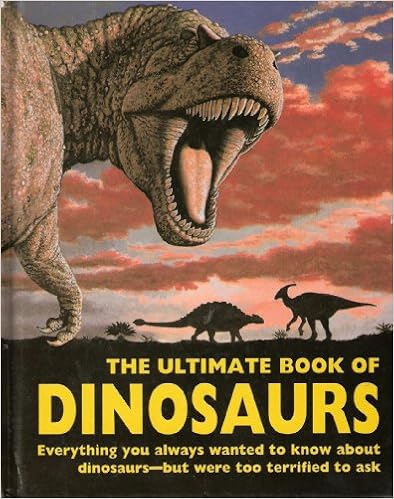
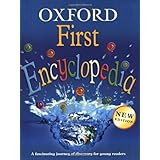
 I still have them so that's easy!  The Ultimate Book of Dinosaurs, Animals of the World, The Great Big Book of Knowledge, The Crazy World of What If? And my two very favourites, the awesome 'Wildlife Fact File" series and the Oxford First Encyclopedia.  My own kids will get all of them.  I was also encouraged by the librarians at my junior schools at Broadacres and John G Althouse and at Richview Public Library, where I'm still to be found roaming the halls more often than not.

3. What is Science Literacy Week? Why/how did you found it?

Science Literacy Week began simply as an effort to encourage University of Toronto libraries to bring their science collections out from the back for one week and prominently display them in the spot typically reserved for popular fiction.  I had always wanted to do something in science communication, and quite literally the day after I finished my last exam -  April 3rd, 2014 - I approached the libraries to make the ask. They took me seriously and it snowballed from there.

4. Tell Sci/Why readers about how the program has expanded since you began it in 2014.

Once the U of T libraries got on board, I convinced the Toronto Public, Mississauga Public and York University libraries to join in, making it a total of four participating institutions.  I convinced a few of my former professors to give talks and also arranged a smattering of other activities. 

It went pretty well in Toronto!  I thought that it could be expanded to include the whole country, so in 2015, I emailed everybody - libraries, museums, science organizations - some 4,500 emails in all in an attempt to make Science Literacy Week bigger. 

There was a tremendous response! I was remarkably lucky to receive ten yesses for every no. All told, Science Literacy Week 2015 came to include 300 events in 40 cities coast-to-coast. 

This year, with 160+ partners and major support from Indigo and NSERC (The Natural Sciences and Engineering Research Council of Canada), Science Literacy Week 2016 looks to be even bigger. NSERC has now hired me run the week, which means that since I no longer have to do this as a volunteer, I can commit full time to bringing it to life.  As of August 8st, there are 142 events already scheduled to run in 8 provinces!

5. Can you highlight some of the most successful/innovative/fun programs that ran in previous years, and some that are coming up this year?  

St. John's, NF, was one of the 2015 Science Literacy Week’s hotspots.  A great group of participants including Memorial University, the public libraries, the Johnson Geo Centre and the Let'sTalk Science folks worked together to present 27 events in 7 days. These included taking over the main mall in the city for a 5 hour science demo, an impressive event covered by the local radio station.  That was Science Literacy Week at its best! 

Across Canada, there was also "the Great Egg Drop" where kids had to make a container to drop an egg in from 25 ft. without it breaking; science demos in libraries where you could play with Non-Newtonian fluids; dozens of Astronomy Nights and more. 

For this year, some early confirmed highlights include:
Ø  Dissect a Beaver  (Vancouver)
Ø  Bird-banding hike in Oak Hammock Marsh (Manitoba)
Ø  Science with Fire and Alcohol (Red Deer)
Ø  A showcase of iconic science books you can touch and flip the pages of at Thomas Fisher Rare Book Library (Toronto).

6. And let’s repeat for those who have forgotten: when is Science Literacy Week running this year?

September 19-25, 2016. 

For the current roster of confirmed events by province, go to http://scienceliteracy.ca/events/

7. How can people – librarians, educators, institutions, ordinary folk who want to HOST a program -  get involved?

Anyone who wants to host a program or be put in touch with other local groups who might be keen to partner can contact me directly  info@scienceliteracy.ca.


8. And for those who would like to attend or participate in a program, where can they find the information?

For the most up to date listings of confirmed events by province, go to 

You can learn about events near you on twitter @scilitweek, on Facebook at Facebook.com/scilitweek

You can participate by spreading the word and sharing your love of science with the hashtag #scilit16


 Thank you! See you in September!

10 Sept 2015

Science North

by Joan Marie Galat

As a science author, I want to know the who-what-when-where-why-how of almost everything and traveling always triggers a myriad of fresh questions. That’s why, when my presentation schedule took me to Sudbury, I knew I had to make time to visit Science North. A visit to this first-class science center delivered the answers I wanted, but even better, it brought new topics to my attention. Here’s a selection of some of the irresistible facts I enjoyed discovering.

What formed the massive impact crater on the outskirts of Sudbury, Ontario?
Formed about 1.8 billion years ago, the Sudbury Basin is the second largest impact crater in the world. Most sources indicate it was created by a meteorite, however recent evidence suggests it may have been caused by a comet. The crater covers an area of about 30 x 60 kilometres (18 x 37 miles). It’s the source of nickel, copper, and 15 other minerals that have made Sudbury one of Canada's largest mining centers. So far, more than 125 craters have been found on Earth. NASA provides a nice teacher's guide with activities on impact craters.

What does it feel like to sleep on a bed of nails?
The sign said it wouldn’t hurt “much” and I suppose that’s an apt description, since I didn’t scream “very” loud when I tried it. The reason? If you drape yourself on one nail, your weight will push down on a single sharp point. If you stretch out on a bed of nails, your weight will be distributed over a large area. Still, I couldn’t sleep.

How long is your small intestine?
Pull a rope out of a human cut-out to get the full visual—your small intestine is more than 5.5 metres (6 yards) long. You might also like to know a 70 kg (154 pound) person’s body contains about 10 nails-worth of iron. You’ll also find enough salt to fill three shakers and water to fill 18 one-liter bottles (almost 5 US gallons). All that salt and water is protected by your skin. If you’re an average sized adult, your skin weighs 3-5 kilograms (7-11 pounds) and covers two square meters (2.4 square yards). It’s thickest on the soles of your feet and thinnest on your eyelids.

What is it like to be a newsreader on television?
Discover the science of television! Face the camera, hit record, read the teleprompter, and try to tell the world the latest science news without stumbling. If it’s not as easy as you thought, try to improve your delivery by reading more. Literacy matters.

How is animation created?
Arrange figurines on a tiny set, take a photo, rearrange again, and repeat the entire process a half dozen times. Follow the computer instructions and watch your creation come to life on a computer screen. Knowing how animation works makes watching We are Aliens in the science centre’s 360-degree digital planetarium even more fun. The show explores whether it’s possible to find life beyond Earth and what that might look like.

Three dimensional animation also brings woolly mammoths, sabre toothed tigers, and dire wolves to life in the centre’s Titans of the Ice Age. An accompanying exhibit explores Earth’s frozen landscapes in the time period encompassing 10 thousand years before modern civilization. 

You will discover how how creatures like this macrauchenia adapted to the cold environment and how prehistoric humans hunted this mega fauna. Ice eventually made it possible for North and South American animals to mix, causing some species to become extinct, and others to thrive.

Another plus at Science North is the chance to enjoy up close looks at live wildlife including frogs, skunks, turtles, a porcupine named Quillan, and Drifter, a beaver who can’t be released because part of his tail was lost to frostbite. Outside the science centre, a walk along Ramsey Lake provides the opportunity to discover flora and fauna in a natural setting.

Look for aquatic insects, chipmunks, Canada geese, and sandhill cranes. I especially enjoyed spotting the monarch waystation designed to provide nectar and shelter to migrating butterflies. Interpretive signage outlines a few human-caused problems. You can find out what happens if you release non-native plants or animals into the wild and how washing a car on a driveway allows detergents, grease, and other chemicals to enter waterways.

Next time your travels take you near a science center, take advantage of the opportunity to have your who-what-where-why-how questions answered too. You might find yourself thinking in new ways about how science applies to your own environment.

Read more: Joan Marie Galat explores the social and ecological importance of trees in Branching Out, How Trees are part of Our World - ​2015 winner of the Santa Monica Public Library Green Prize for Sustainable Literature.