Showing posts with label museums. Show all posts

26 May 2017

Three Men in a Canoe – A Fossil Legacy

By Larry Verstraete

Over the phone, Don Bell is matter-of-fact and modest, as if just about anyone could have accomplished what he, Henry Isaak, and David Lumgair did. But others didn't - at least not initially, nor to the same degree - and you don't have to look far to find proof of their legacy. It's a floor below the indoor hockey rink in Morden, Manitoba, in a sprawling space called the Canadian Fossil Discovery Centre (CFDC).

During my research for ‘Dinosaurs’ of the Deep: Discover Prehistoric Marine Life (Turnstone Press), Don Bell's name came up often. "He knows more than almost anyone," someone at CFDC told me. "You should call him."

So I did. "Can you tell me how this all started?" I asked.

"We were on a canoe trip," Don said.
(L to R) David Lumgair, Henry Isaak, Don Bell taken on the day they heard about the fossil find
(Photo courtesy of Don Bell)
In quick steps, Don covered the story of a 1972 canoe trip involving a group of paddlers. Don, Henry and Dave were in one canoe, keeping leisurely pace with the others. At a stop for lunch, discussion ensued about a recent discovery of dinosaur bones in the Morden area.

"Hank and I were interested," Don said.

Bitten by curiosity, Don and Henry, both teachers, struck out at 6 a.m. on a later weekend to search for the fossil. A mile west of Morden's Stanley Park, they turned south and drove another 300 metres. Lying exposed in a field, they discovered a large fossil skull. Immediately, they realized that it was not a dinosaur, but a long-extinct – and very large – marine reptile.

"We knew it was important," Don added.

Ill-equipped to bring the skull home, Don and Henry drove back to town to regroup. By the time they returned, two young fellows were there, hammering the fossil to pieces.
The Manitoba Escarpment near Morden, Manitoba.

The Morden region lies at the edge of the Manitoba Escarpment. Eighty million years ago, at the time of the dinosaurs, the Western Interior Seaway sliced across North American dividing it in half. The escarpment is a by-product of Manitoba’s watery past and a rich source of marine fossils from that period.

At the time, the Pembina Mountain Clays Company had been mining the area for bentonite, a type of volcanic clay used in detergents and other products. Fossils turned up frequently, often crunched to bits by heavy equipment.

Realizing the scale of destruction, Don and Henry embarked on a mission to save as many as possible. The two got to know the miners and struck up a deal. When fossils surfaced, miners placed a call to the pair. In the evening, after the miners shut down for the day, Don and Henry salvaged what they could before operations resumed in the morning. Sometimes they worked through the night, excavating and jacketing fossils by the glow of headlights. They carted their prizes home and stored them in Henry's garage and Don's basement.

Knowing the demands of teaching, I couldn't imagine a life of all-nighters. "What kept you going?" I asked Don.

"To me it was exciting, discovering something that hadn't been discovered before," he said.
A plesiosaur on display,
one of many collected  by Don and Henry.
What started as a small-scale operation mushroomed. Interest spread. Volunteers joined the effort. Henry tapped into government grants and hired university students to help. The pair consulted paleontologists and made weekend field trips to Kansas City, Drumheller, and the University of Calgary, places with Late Cretaceous fossils and people with the necessary know-how.

Early on, David Lumgair – the third man in the canoe – got involved, too. He lived on a farm near Thornhill, a few kilometres from Morden. Fossils often surfaced on his land, and Dave had an open-door policy when it came to the growing brood of fossil hunters. He welcomed them and let them set up shop on his property.

In just two years, the ambitious team unearthed 30 mosasaurs, 20 plesiosaurs, and hundreds of other fossils from the region around Morden. In 1974, David’s farm yielded a spectacular prize – an immense mosasaur. Nicknamed Bruce, it took several seasons to unearth and jacket the entire creature.
Bruce, the world's largest mosasaur, on exhibit at the Canadian Fossil Discovery Centre.

Eventually, the collection of fossils outgrew Don’s basement and Henry’s garage. It was moved to the Morden and District Museum, and then in 1976 to its present quarters in the lower level of Morden's Community Centre.

Today, the Canadian Fossil Discovery Centre is a world-class institution. It houses Canada's largest collection of Late Cretaceous marine vertebrate fossils. The undisputed star of the Centre is Bruce. The sprawling 13-metre-long mosasaur is the world’s largest exhibited mosasaur and a Guinness record-holder.
Two university students with Victoria Markstrom (R), Field Collection Manager
for the Canadian Fossil Discovery Centre at a dig site along the escarpment.
The Morden area continues to yield fossil treasures, and new finds are constantly being added to CFDC’s holdings. The place is a buzzing hive of research and educational programs, and a fitting reminder of what three people hooked by passion and persistence can achieve.

Links:
Canadian Fossil Discovery Centre   http://discoverfossils.com/
Turnstone Press  http://turnstonepress.com/
Larry Verstraete  https://www.larryverstraete.com/

Unless otherwise noted, all photos by Larry Verstraete.

19 Aug 2016

Mark Your Calendar: Science Literacy Week Sept. 19-25!


Science lovers, strap on your boots! You’ll need them for Science Literacy Week coming your way September 19-25, all across the country. This wonderful celebration of all things science will feature events for everyone, adults and kids alike, in venues ranging from libraries and schools to museum and local parks.

Jesse Hildebrand, founder of Science Literacy Week
Science Literacy Week is the brainchild of Jesse Hildebrand, a self-confessed science geek and energy whirlwind. I had the opportunity to interview him earlier this summer, to find out both where he gets his superhuman enerjuice and about the marvelousness that is Science Literacy Week. Here is what I found out:

1. Give us your brief potted bio. Who the heck are you and why do you love science so much?

I'm a lifelong tremendous nerd, born and raised in the same lovely house in Etobicoke.  I grew up with Steve Irwin posters on my wall and Carl Sagan books on my shelf.  If I was interested in anything, my parents dutifully marched me to a library to get books on it.  Thus, my initial love of science was fostered and nourished immensely. 

I went on to get an Evolutionary Biology Degree from U of T and a Science and Society Diploma from The Open University.

I also truly love baseball, nature, books, pina coladas and taking walks in the rain.  The dunes of the cape also sound awfully inviting.

2. What were some of the science books you read as a kid that sparked your imagination?

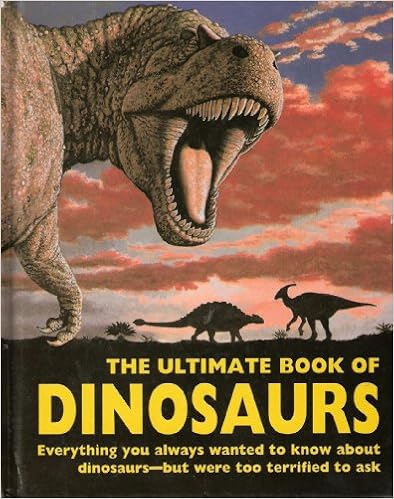
 I still have them so that's easy!  The Ultimate Book of Dinosaurs, Animals of the World, The Great Big Book of Knowledge, The Crazy World of What If? And my two very favourites, the awesome 'Wildlife Fact File" series and the Oxford First Encyclopedia.  My own kids will get all of them.  I was also encouraged by the librarians at my junior schools at Broadacres and John G Althouse and at Richview Public Library, where I'm still to be found roaming the halls more often than not.

3. What is Science Literacy Week? Why/how did you found it?

Science Literacy Week began simply as an effort to encourage University of Toronto libraries to bring their science collections out from the back for one week and prominently display them in the spot typically reserved for popular fiction.  I had always wanted to do something in science communication, and quite literally the day after I finished my last exam -  April 3rd, 2014 - I approached the libraries to make the ask. They took me seriously and it snowballed from there.

4. Tell Sci/Why readers about how the program has expanded since you began it in 2014.

Once the U of T libraries got on board, I convinced the Toronto Public, Mississauga Public and York University libraries to join in, making it a total of four participating institutions.  I convinced a few of my former professors to give talks and also arranged a smattering of other activities. 

It went pretty well in Toronto!  I thought that it could be expanded to include the whole country, so in 2015, I emailed everybody - libraries, museums, science organizations - some 4,500 emails in all in an attempt to make Science Literacy Week bigger. 

There was a tremendous response! I was remarkably lucky to receive ten yesses for every no. All told, Science Literacy Week 2015 came to include 300 events in 40 cities coast-to-coast. 

This year, with 160+ partners and major support from Indigo and NSERC (The Natural Sciences and Engineering Research Council of Canada), Science Literacy Week 2016 looks to be even bigger. NSERC has now hired me run the week, which means that since I no longer have to do this as a volunteer, I can commit full time to bringing it to life.  As of August 8st, there are 142 events already scheduled to run in 8 provinces!

5. Can you highlight some of the most successful/innovative/fun programs that ran in previous years, and some that are coming up this year?  

St. John's, NF, was one of the 2015 Science Literacy Week’s hotspots.  A great group of participants including Memorial University, the public libraries, the Johnson Geo Centre and the Let'sTalk Science folks worked together to present 27 events in 7 days. These included taking over the main mall in the city for a 5 hour science demo, an impressive event covered by the local radio station.  That was Science Literacy Week at its best! 

Across Canada, there was also "the Great Egg Drop" where kids had to make a container to drop an egg in from 25 ft. without it breaking; science demos in libraries where you could play with Non-Newtonian fluids; dozens of Astronomy Nights and more. 

For this year, some early confirmed highlights include:
Ø  Dissect a Beaver  (Vancouver)
Ø  Bird-banding hike in Oak Hammock Marsh (Manitoba)
Ø  Science with Fire and Alcohol (Red Deer)
Ø  A showcase of iconic science books you can touch and flip the pages of at Thomas Fisher Rare Book Library (Toronto).

6. And let’s repeat for those who have forgotten: when is Science Literacy Week running this year?

September 19-25, 2016. 

For the current roster of confirmed events by province, go to http://scienceliteracy.ca/events/

7. How can people – librarians, educators, institutions, ordinary folk who want to HOST a program -  get involved?

Anyone who wants to host a program or be put in touch with other local groups who might be keen to partner can contact me directly  info@scienceliteracy.ca.


8. And for those who would like to attend or participate in a program, where can they find the information?

For the most up to date listings of confirmed events by province, go to 

You can learn about events near you on twitter @scilitweek, on Facebook at Facebook.com/scilitweek

You can participate by spreading the word and sharing your love of science with the hashtag #scilit16


 Thank you! See you in September!

29 Jul 2011

Flocks of fun: The Roger Tory Peterson Institute

Text and photos by Marie Powell

For those who love museums and galleries with a special interest, I can highly recommend spending some time at the Roger Tory Peterson Institute of Natural History in Jamestown, New York State.

The Peterson Field Guide to Birds has been a useful and recommended resource since its first publication in 1934.

The Institute is filled with Peterson’s sketches and paintings, as well as other works of art and exhibits.

I recently had a chance to join a tour of the archives given by Mark Baldwin, director of education since 1998, during the Highlights Chautauqua conference in July.

It's a fascinating place, full of displays and information.

I learned that Peterson trained as an artist and painter, but he also became known as a writer, photographer, filmmaker, and lecturer. Born in Jamestown in 1908, he loved to escape into the “natural world.” He bought his first camera with his paper route money as a child.

He used a variety of tools to help him create his well-known field guides, and the beautiful paintings of birds in their natural habitat that adorn the walls of the Institute.

Some examples include field notes and sketches, 35-mm transparencies, and “study skins” like this passenger pigeon (left).

There are about 200,000 transparencies in the archives, Baldwin said, as well as “study skins” of various birds that date back as far as 1892.

We also had a tour of the building and an introduction to its architecture from retired architect Marlin Casker.

The facility was built using the rural "Adirondack" style that's well known in the western part of NY State, Casker told us. In other words, it looks a little like the large log-cabin-style buildings that wealthy families built as their summer homes after the civil war.

The architects and builders used stone, natural and finished wood, as well as lodge-pole and white pine. It's very striking inside and out, with high ceilings, arches, and display areas.

I love birds, so I found lots to interest me at the institute, including some very cute displays like this Emperor Penguin (right).

Find out more about the Institute and about Roger Tory Peterson on the website: http: www.rtpi.org/


Marie Powell is the author of Dragonflies are Amazing! (Scholastic Canada).