Showing posts with label snakes. Show all posts

6 Sept 2021

Virtual Tour of Snake Dens!

by Paula Johanson

 The Covid-19 pandemic is still affecting everyone during the fall of 2021, even nature centres in outdoor parks. Many nature centres have been closed to the public for most of the past eighteen months. Some centres open or close according to provincial health guidelines. One of those nature centres is Narcisse Snake Dens in Manitoba near the town of Gimli.


This park showcases a fascinating phenomenon! Every autumn, thousands of garter snakes find their way to hide together in underground dens. There they hibernate together, sleeping during the long, cold winters in Manitoba. When spring comes, the snakes emerge and go their separate ways. Take a moment to click on this link, and follow a virtual tour around the trail that shows you several snake dens. Right now in the fall of 2021, garter snakes are gathering at their dens getting ready to hibernate.

Now, maybe snakes aren't your thing, or you're actually scared of snakes. It's okay to be cautious around rattlesnakes and other venomous snakes! But in Manitoba, snakes are not dangerous to humans. Most are garter snakes, and other types listed here at this link. 

What can you do if you're afraid of snakes? It's a good idea to learn more about nature where you live, whether you're on the Prairies in Canada, or anywhere in the world. That will help you to know how much caution around snakes is smart for your area. All snakes have important roles in the natural world. Garter snakes in a Canadian garden or yard are a good sign that this place is healthy for nature.

You can read more about Narcisse Snake Dens and about nature in Manitoba at the online magazine Nature North when you click on this link. They have a lot of information about wild animals and cottage country, and a YouTube channel of videos as well. There's also a link to the Manitoba Herps Atlas of reptiles and amphibians in Manitoba, a terrific resource that maps where people have seen snakes, frogs and toads, salamanders, and turtles. (Herps is the nickname used for amphibians and reptiles, by scientists called herpetologists.)


12 Jul 2019

Snakes at the Seaside and Birds in the Bush

By Claire Eamer

"Snake!" yelled 8-year-old Carys, and dove for the grassy bank beside the trail. She emerged clutching a deeply puzzled garter snake at least 60 centimetres long, with elegant checkerboard markings on its sides and a jagged yellow stripe running the length of its back.
Western garter snake, found at Pipers Lagoon Park, Nanaimo.
The rest of the group -- more than two dozen kids and adults, with an age range from 8 to 80-ish -- crowded around to admire her catch. Our leader, biology professor Tim Goater of Nanaimo's Vancouver Island University (VIU) identified it as a female western garter snake (Thamnophis elegans), almost certainly pregnant, and the largest specimen he had seen at Pipers Lagoon, the small seaside park we were exploring. Western garter snakes have a variable diet, depending on where they live, he explained. Carys's prize catch would specialize in hunting intertidal fishes among the park's rocks and tidepools.

Professor Tim Goater with
a large clam at Pipers Lagoon.
Once everyone had admired the snake, we put her back on the slope beside the trail and watched, fascinated, as she disappeared into the grass and undergrowth in less than a second.

The mixed group of kids and adults wasn't just a casual group of visitors to the seashore. We were students in a class called Explorations of Animal Diversity, one of 10 offerings at this year's edition of Grandkids University. The two-day program is open to kids aged 7 to 13 and to their grandparents or grandparent-equivalents (other senior relatives or special friends).

Carys, left, entranced by birdbanding.
Carys and I (I'm her great-aunt) were in our second year at Grandkids University this year. Her brother, Rowan, was in his third year. He and his special friend, Susan, spent two days in the chemistry lab, making soap, slime, invisible ink, instant ice cream, and pop-bottle rockets -- and learning a considerable amount of chemistry along the way.

Over two days, Carys and I got to see and handle garter snakes both in the lab and in the field, peer at insects through a dissecting microscope, search for animals in the intertidal zone, visit a bird-banding station, dissect a ratfish in search of parasites, and tour VIU's International Centre for Sturgeon Studies.

Master bander Eric Demers shows the wing feathers
of a Common Yellowthroat.
And, at the end of the two days, we all attended a graduation ceremony in the university's theatre. VIU's symbols -- a mace and a beautifully decorated steering paddle -- were formally piped through the theatre to the stage. Then, the VIU registrar, in full academic robes, presented each adult and child with a completion certificate. Kids and adults who had attended Grandkids University for 5 years also received "Masters" medals. (Both Rowan and Carys are determined to get their Masters!)
A female American Goldfinch receives its individualized band.
This is the 11th year for VIU's Grandkids University, and it drew a record 163 participants. Almost a dozen former kid participants have grown up to become VIU students, and a number of the participating adults also take VIU classes. Clearly it's part of the university's recruiting program, but it does more than just generate students.

Carys found a seastar that had lost one arm
and was still regrowing its replacement.
Both the kids and the grandparents learn things -- about the subject they are studying and about each other. For two days, they are equals, experiencing the pleasure of learning something new and interesting. The kids can see that adults don't know everything, but that they can learn. The adults get a chance to see how bright and capable the kids are.

And everyone is reminded that learning isn't drudgery. It's fun.

All photos by Claire Eamer.

17 Mar 2017

In Honour of Saint Patrick's Day - SNAKES!

By Claire Eamer

This day, March 17, is St. Patrick's Day, celebrated around the world by the Irish, the formerly Irish, the wannabe-Irish, and beer drinkers of all persuasions. It's generally marked by a lot of green - green clothing, green-dyed flowers, green-dominated parades, and that abomination - green beer.

But no snakes. Snakes almost certainly don't celebrate St. Patrick's Day (even though many of them are noticeably and naturally green). After all, St. Patrick is famous for driving the snakes out of Ireland. But did he?

A green tree python relaxes in comfort, using its own
body as furniture.
Sadly for legend, Ireland was snake-deprived long before St. Patrick arrived more than 1500 years ago. The cold temperatures and ice sheets of the last major glaciation drove snakes and other reptiles south. When the world warmed up about 10,000 years ago and the snakes moved back north, they were blocked by the cold waters of the Irish Sea. The few snakes that made it that far north simply settled down among the forests and hills of Britain and left the island of Ireland alone.

The Irish probably don't regret the lack of snakes, but they might be missing something. Snakes are amazing and quite beautiful. A few years ago, I wrote a book about animals adapting to extreme habitats (Lizards in the Sky: Animals Where You Least Expect Them) - and one of my favourite examples was the flying snakes of Southeast Asia.

The elegant rainbow boa is popular among collectors.
"Flying snakes?!?" you ask. (Well, most people ask that.) Really and truly! A small group of snakes in the jungles of Malaysia and Borneo has developed the ability to glide through the air. They fling themselves from a high branch, flatten out their bodies, and swim through the air in a wriggly glide. The most accomplished species, the paradise tree snake, has been seen to glide more than 20 metres - far enough to take it safely over a five-lane highway with room to spare.

And then there are the swimming snakes. "No, no... not swimming snakes too!" you cry. (I'm sure I heard you cry that.) Yup. Sea snakes, in fact.

Snakes taste tiny bits of scent in the air with their
tongues. The two forks of the tongue give the snake
a sort of stereo smelling capacity so it can tell
which direction the smell comes from.
Actually, sea snakes are quite common in the warm waters of the Indian and Pacific oceans, but most of them stay in the shallows close to shore.

The exception is the yellow-bellied sea snake, which is born at sea and lives there its entire life. Coolest fact? The yellow-bellied sea snake can tie itself in a knot. It loops around itself into a simple knot and runs the loop from one end of its body to the other to scrape off parasites and dead scales.

See what you're missing, Ireland?

Claire Eamer likes strange animals and weird facts and science of almost any kind. Her latest book is What a Waste! Where Does Garbage Go? (Annick Press, 2017).

29 Jan 2016

Raptors in residence: The fun way to learn about hawks, falcons, and other birds of prey

By Marie Powell

As the author of a book called Hawk, I was naturally interested when the Canadian Raptor Conservancy came to Regina earlier this month.  This group has a focus on conservation and education, bringing live bird shows across Canada.

Many of the species are endangered, so the shows offer a unique opportunity for the public to see these birds up close. In Regina, we saw a great horned owl, several species of falcons and hawks, and even a bald eagle.

During the shows, the handlers use posts for the birds set in strategic areas around the room. They carry the birds to the posts, then walk away. At a signal, the birds swoop through the crowd -- often right overhead -- to fly back to the handlers for their reward. The show set up in Evraz Place in Regina to get enough room for these dramatic flights that quickly won over the crowds on a cold January weekend.

That also let them set up displays of falconry equipment, wall-sized photos, and display cabinets of bird feather, bones, anatomy, and a full-sized mural of bird wingspans for children to compare against their own outstretched arms.

The combination of macabre and informative displays made for exciting set-ups to catch the attention of the crowd between shows.

Between the shows and the displays, people who attended had many opportunities to learn a few facts about the birds and their handlers. For example, the peregrine is the fastest bird in the animal kingdom. In a dive (or stoop), peregrines tuck in their wings in a teardrop shape to reach speeds of over 300 k/h (200 mph). With breeding programs for more than 15 species, the Ontario facility houses some 200 birds bred in captivity, and releases some of these birds back into the wild.

In Regina, the group teamed up with Little Ray's Reptile Zoo and the Backyard Conservation Fund of Canada, alternating the raptor shows with live snakes and reptile demonstrations. Reptiles of all kinds were also housed in display cases throughout the show area.

Large poster boards and displays also gave the conversation message, and the handlers were ready to talk about their message during and between shows. Many raptor species face habitat loss from such human activities as urban sprawl and pesticides, so these shows offer a unique opportunity for the public to interact and learn a little about ecology and conservation at the same time.

Here are some more websites to check for information about raptors:

Canadian Raptor Conservancy
http://www.canadianraptorconservancy.com

Audubon: Identify Raptors in Flight:
https://www.audubon.org/news/identify-raptors-flight

Watch a video of a peregrine falcon in flight:
https://www.youtube.com/watch?v=Me3Y64VUqqQ

Amazing Planet: Five fastest birds
https://www.youtube.com/watch?v=MMsLVxcKh24

Watch for the Canadian Raptor Conservancy shows as they move across Canada. Have you seen a show yet? Leave a comment and let's discuss it.


Marie Powell is the author of the young adult fantasy Hawk (Five Rivers),  as well as 30 other books for children and youth on a variety of topics. More information about her and her books can be found on her website at www.mepowell.com.

16 May 2014

Omigod SNAKES!!!!!

Posted by Helaine Becker

DO NOT READ THIS. If you go squirmy at the thought of snakes. Because last week I was in Manitoba for TD Canada Children's Book Week. The beginning of May also happens to be when the garter snakes come out of hibernation. By the thousands. The tens of thousands. And when they wake up, they want to, ahem, get busy.


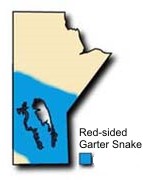
The town of Narcisse, Manitoba is home to the largest congregation of Red Sided Garter snakes anywhere. In May you can give yourself the major creeps just hearing them rustle in the grass- or pick up a ball of mating snakes...

Image from Nature North
Alas, because of the cold winter, I was a bit too early to experience peak snake freakout. But I did still manage to see quite a few slithery serpents on a farm in Boissevain. More snakes than I'd ever seen in my life in one place. I didn't bother to count....*runs for the non-existent hills*


For more on the Red-Sided Garter Snake, go to Nature North's website. And if you want to experience one of the natural wonders of the world, plan a trip to Manitoba in May. You might catch a glimpse of a few snakes  - or a visiting author. :)
That's me "doing work" on the Boissevain farm - no,
I won't be scooping up snakes!