16 May 2014

Omigod SNAKES!!!!!

Posted by Helaine Becker

DO NOT READ THIS. If you go squirmy at the thought of snakes. Because last week I was in Manitoba for TD Canada Children's Book Week. The beginning of May also happens to be when the garter snakes come out of hibernation. By the thousands. The tens of thousands. And when they wake up, they want to, ahem, get busy.


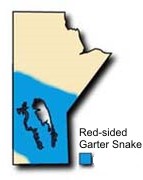
The town of Narcisse, Manitoba is home to the largest congregation of Red Sided Garter snakes anywhere. In May you can give yourself the major creeps just hearing them rustle in the grass- or pick up a ball of mating snakes...

Image from Nature North
Alas, because of the cold winter, I was a bit too early to experience peak snake freakout. But I did still manage to see quite a few slithery serpents on a farm in Boissevain. More snakes than I'd ever seen in my life in one place. I didn't bother to count....*runs for the non-existent hills*


For more on the Red-Sided Garter Snake, go to Nature North's website. And if you want to experience one of the natural wonders of the world, plan a trip to Manitoba in May. You might catch a glimpse of a few snakes  - or a visiting author. :)
That's me "doing work" on the Boissevain farm - no,
I won't be scooping up snakes!


9 May 2014

A Baby Snapping Turtle Success Story

Jan Thornhill 
baby snapper (Chelydra serpentina)
Newly hatched snapping turtle—mini prehistoric beast!
There's a small old bridge on our road that a little creek flows under. The bridge has been there long enough that gravel has accumulated on the edges. The gravel's not very deep, but for some reason female snapping turtles think it's a great place to dig shallow holes and lay their eggs. They do this every year. And every year raccoons, and probably skunks and foxes too, find the nests, dig up the eggs, and gobble them up. The turtles often lay their eggs at night and, just as often, by dawn they're all gone.


snapping turtle laying clutch of eggs
The bridge is so cramped, this female ended up damaging
another nest while making her own.
But last year, a few of days after I posted on Sci/Why about freshwater turtles and ways to help them during nesting season, I happened to drive over the bridge while a female snapping turtle was in the process of laying her clutch of eggs. A chance to put my money where my mouth was!

I used a board to temporarily cover the nest when she was done, but I needed something else to protect it for the two months or so it would take for the eggs to mature: boards are okay for a couple of days to mask the fresh turtle scent, but after that nests need to be protected while at the same time leaving them exposed to sun and air and moisture. All I had at home was some chicken wire, which I tried to keep in place with some rocks and pegs, but this proved to be inadequate and one of two nests I covered was dug up within 24 hours. 


Happily, I wasn't the only one monitoring the snapping turtles. My neighbours, Tracy and Jim and their kids, who live beside the bridge, were also paying attention. While another turtle laid her eggs, Jim was constructing sturdy open wooden boxes with heavy-duty wire mesh "lids." These were placed over the two intact nests. Sadly, a raccoon managed to raid both clutches that night by cleverly digging under the boxes. One of the two nests had only been partially dug up, so Tracy carefully reburied the few eggs that seemed undamaged, replaced the box and, this time, put a heavy rock on it. That did the trick and the box remained undisturbed for the rest of the summer.


newly hatched snapping turtle and protective box
A baby snapping turtle impatiently trying to
get out of the protective cage Jim made.
By the end of August, Tracy and I and everyone else who knew what was going on on the bridge were stopping to check several times a day to see if there were any signs of hatching. We'd almost given up when our mail lady, who had made it a habit to slow down to glance at the box every time she crossed the bridge, saw some movement. She drove up Tracy and Jim's lane to deliver the news: "The turtles are hatching!" Tracy called me from the bridge and I raced up the road with my camera.  

And here they are—our little success story of five baby snapping turtles! 


baby snapping turtles and car keys
Five newly hatched snapping turtles!
newly-hatched snappers hiding in sand
Baby snapping turtles are shy.
upside down snapping turtle
Oops! This one fell off an inch-high cliff (the indent from the box).
baby snappers head for water
Tracy and I were worried that the babies would get picked off by predators
before they reached the creek, so we carried them to the water's edge.
newly hatched snapping turtles first swim
All five in the creek. Within minutes they'd all
disappeared into the safety of deeper water.


What You Can Do (*This is a refresher from last year's post)
Help a Turtle Cross a Road
Pull over to a safe spot before getting out of your car. If it's any species other than a snapping turtle, use two hands to carry it in the direction it was travelling. Turtles often urinate when picked up. Don’t let this startle you or you might drop it! NEVER pick a turtle up by its tail—you could damage its spinal cord.
Snapping turtles have long necks that can easily stretch half the length of their carapace and they can also inflict a nasty bite or gouge you with their claws, so it's best not to pick them up. Instead, try using a stick or a shovel to coax them across the road. A snapping turtle will also sometimes latch onto a stick held near its mouth, making it easy to drag it across the road.
Protect a Clutch of Eggs
If you know the location of a new turtle nest, you can lightly sweep the surface to remove the scent or cover it with a board for a few days. You can also protect a nest from predators with a piece of wire mesh (at least 2’x2’) stapled onto a wooden frame or held down with rocks. Remove the mesh protection after 14 days. DO NOT disturb the eggs in a nest.
Report Sightings
There are various turtle monitoring programs in North America that want to hear about turtle sightings:
Help an Injured Turtle
Never try to nurse an injured turtle yourself. Use Google to find a licensed wildlife rehabilitation facility near you. In southern Ontario, contact the Ontario Turtle Conservation Centre (previously Kawartha Turtle Trauma Centre) (705-741-5000). For information on what to do with an injured turtle: https://ontarioturtle.ca/ourmission/drop-off/
Support the Ontario Turtle Conservation Centre
This non-profit, registered charity operates a hospital for injured wild turtles. They release recovered turtles back into the wild and also harvest eggs from wounded females, which they incubate and release after hatching. You can volunteer to be a Turtle Taxi driver, help with ongoing care, donate money or simply help to spread the word about their work: https://ontarioturtle.ca
Stop Snapping Turtle Harvesting in Ontario
Write your local MP. Write Ontario’s Minister of the Environment and the Minister of Natural Resources. There's an online email you can send via: http://action.davidsuzuki.org/snappers


Update 

August 21, 2018

Snappers have been nesting on and near that same bridge for years. Then – uh oh – the county decided to replace the bridge. But what about the eggs that already been laid? Solution: my neighbour Tracy and her daughter gathered a nest of eggs and took them to the Ontario Turtle Conservation Centre where they were incubated over the summer. When they hatched, Tracy and her daughter picked them up and sent me pictures of their release. 


Photos by Tracy Dafoe


Another friend brought 50 snapper eggs to the Centre a few weeks ago. At that point, they were already incubating 3,000 eggs! Please consider helping them in this important work! 


25 Apr 2014

Winning Authors, Touring Authors, Teaching Authors... We've got 'em all!

By Claire Eamer

It's the season, apparently, when Sci/Why authors come out of hibernation and flaunt their accomplishments. I did a quick whip-round of the Sci/Why bloggers and friends of Sci/Why, and discovered a flurry of activity. Here are the highlights.

First of all - we have a winner! Sci/Why blogger Shar Levine and her writing partner, Leslie Johnstone, have won the Canadian Science Writers' Association's 2013 Science in Society Youth Book Award for their down-and-dirty science activity book, Dirty Science: 25 Experiments with Soil. We are all, needless to say, very proud of them.

The 2014 roster of authors touring during TD Canadian Children's Book Week, May 3-10, includes a couple of Sci/Why bloggers. Helaine Becker will be touring in Manitoba, telling kids all about Zoobots and entertaining them with her Ode to Underwear. Claire Eamer will be visiting schools and libraries in Nunavut and talking about her book Before the World Was Ready: Stories of Daring Genius in Science.

Sci/Why blogger Marie Powell recently placed runner-up in the 2014 City of Regina Writing Awards. She'll lead a Channelling Creativity workshop on Tuesday, May 7, at Regina's Central Library. You can also catch her every second Thursday and third Wednesday at the Prince of Wales branch library, leading her ongoing Write for the Heart programs.

Blogger Jan Thornhill has been busy too. Her new book, Winter's Coming: A Story of Seasonal Change, is about to go to press. It's a companion volume for Is This Panama?: A Migration Story. And Jan has discovered a passion for fungi - to the point where she has launched a fungi blog called Weird and Wonderful Wild Mushrooms.

Our travelling-est blogger, Margriet Ruurs, has taken time off book writing to go touring the world over the past few months. You can find her adventures at her Globetrotting Grandparents blog. Recent entries include history in Holland, Turkish Delight in Istanbul, and the amazing archaeological sites of Petra, Jordan.

Paula Johanson, who's happiest in a kayak, has still managed the time to produce a couple of new books: one on Love Poetry, and another, called What is Energy? and due out in August. You can follow Paula's kayak adventures at the Kayak Yak blog.

Sci/Why's first Blog Boss, L.E. Carmichael has a couple of new books out for older kids who are dealing with health issues, either their own or someone else's: Living With Scoliosis and Living With Obesity.

Our Alberta blogger and astronomy enthusiast, Joan Marie Galat, will be leading a writing workshop at the Calgary Young Writers' Conference on April 26.

Sci/Why friend (she came up with the name!) Pippa Wysong can be found on Saturday, May 10, at her Quarantine Tent vaccine education event at the University of Toronto campus. It's part of the national event, Science Rendezvous. Here's a short video of the 2013 Tent event.

Finally, Sci/Why blogger Judy Wearing informs us that she's in the first year of a second (second!!) PhD in education, writing papers about critical thinking in science education and the relationship between fear and learning. She also says she'll have some book news to announce, but it's still a Big Hairy Secret. Keep an eye on Sci/Why, where all will be revealed... unveiled... whatever... soon!
22 Apr 2014

Mythbuster Kary Byron Answers Science Questions

By Paula Johanson

One of the great things about being a science writer is that it's part of my work to check out interesting articles on the Internet. No, I'm not just surfing randomly. I'm finding out the answers to interesting questions such as "What's it like to be a Mythbuster on the popular TV show Mythbusters? Or a female Mythbuster? And when Mythbuster Kari Byron was expecting her baby, how did she ensure there would be no bad effects from the various explosions that happen during the filming of the show?"

Yes, there have been more than one explosion filmed during Mythbusters episodes... over 750 explosions and counting since the show began airing on the Discovery Channel in 2003. For all those explosions, safety is a major concern. When doing home science, leave any explosions to the Mythbuster crew!

Mother Jones Magazine has published online an energetic interview with Kari Byron about her work on Mythbusters. "...it just happens to be that the best way to explore myth is the scientific method," says Byron at one point. The article goes on to say that "Byron's presence as a high-profile female role model promoting critical thinking and making science accessible is vitally important." Click on this link to read the article, see three short videos from the show, and download the podcast of a 43-minute interview with Byron.

That's enough about science-related shows on television for me right now. I've got to finish taking notes about eighteenth-century naturalist Archibald Menzies so I can return to the public library this fascinating book: The Interwoven Lives of George Vancouver, Archibald Menzies, Joseph Whidbey and Peter Puget: The Vancouver Voyage of 1791-1795, by John M. Nash. I'm learning how to brew spruce beer to avoid scurvy on long sea voyages!

15 Apr 2014

Busy as a Beaver - and that's very busy!

A busy Yukon beaver. John Meikle photo.
Here's a short note and a link from Sci/Why blogger Margriet Ruurs, who has abandoned us all - temporarily - for the joys of travel.

Margriet says:

"Quick! Which animal is on the Canadian nickel? Now look at this amazing video for an intimate look at some busy beavers in Calgary."

You can catch up with Margriet and her travels (if you move quickly enough!) on her Globetrotting Grandparents blog.

12 Apr 2014

Writing Workshop for MISSA

By Paula Johanson

Science writing is work that expands my mind. For me writing goes well with kayaking. Best way to clear the cobwebs out of my head after writing about Biofuels or Energy is to head out on the water in my kayak! And often while I'm on the water, there are interesting animals or stones or weather that make me resolve to write as soon as I get back to shore.
Most of my books are for Young Adult readers -- books on science or health or literature, for school libraries from educational publishers. Now I've got a writing workshop to teach in June that will take me to Pedder Bay. Writing and kayaking on the same weekend -- yay!


Jo-Ann Richards' photo shows the dock at Pearson College - borrowed from Facebook
This summer, I will teach a two-day writing workshop for Metchosin International Summer School of the Arts at Pearson College of the Pacific! MISSA is hosting my class Writing Non-Fiction for Young Readers, on June 28-29 2014. This workshop immerses writers in the process of writing non-fiction, starting with generating ideas and query letters and then preparing outlines and book proposals. Young readers need non-fiction books and stories of many kinds, suited to their ages and interests.

Looking forward to bunking at the college and paddling Pedder Bay before my class...
MISSA is a terrific program for arts -- consider making your summer learning my class, maybe followed by a week-long workshop by another instructor! Look at these photos of the fabulous location for MISSA, which takes place at Pearson College of the Pacific right on the shore of Pedder Bay.

4 Apr 2014

William Wallace Gibson and the first Canadian-built airplane

By Claire Eamer

On February 23, 1909, John McCurdy made the first powered flight in Canada, flying the Silver Dart at Alexander Graham Bell's home in Baddeck, Nova Scotia. The Silver Dart was designed by McCurdy and built in the United States, where Bell and his associates had been working on powered flight. So - while it was the first powered flight in Canada - the Silver Dart wasn't the first Canadian-built powered airplane.

A full-scale replica of the Gibson Twin-plane at the BC Aviation Museum.
That honour belongs to a peculiar-looking, kite-like airplane designed, built, and flown by Victoria flight enthusiast William Wallace Gibson just a year and a half after the Silver Dart's flight. Gibson, a former farmer and businessman from the Regina area, had been quietly experimenting with kites and elastic-powered airplanes for several years. He had also designed an air-cooled engine especially for his experimental plane and had it built in Victoria.

On September 8, 1910, Gibson powered up what he called the Gibson Twin-plane, rolled across a pasture near Victoria (now a school sports field), and lifted off the ground for less than eight metres. He had been nervous about whether the plane would work and afraid of being mocked, so he didn't tell anyone about the experiment. But it flew!

Gibson's engine drove two propellers, one at each end.
So Gibson invited witnesses and planned a second, formal flight. On September 24, 1910, he took off again. This time the plane flew 200 feet (just over 60 metres). The flight was a clear success, but it came to a bad end. A cross-wind pushed the plane towards an oak tree, and Gibson had to make a hasty landing. With no brakes and limited control, he rolled helplessly across the rough ground and straight into the tree. Gibson was thrown clear, but the plane was a wreck.

That didn't stop Gibson. He designed a new plane with multiple narrow wings and called it the Gibson Multi-plane. It was powered by the same engine he had designed for the Twin-plane. Then he went off in search of wide open spaces to test the new plane. He found his space in Calgary, and on August 12, 1911, he was ready.

The Multi-plane was piloted by his assistant, Alex Japp. It took off safely, reached an altitude of 100 feet (over 30 metres), and cruised for over a mile (about 1.7 kilometres) - just one of several successful flights it made that day. Unfortunately, the Gibson Multi-plane came to grief on landing, just as its predecessor had. A last hard landing on rough terrain was too much for it, and the plane broke up.
The pilot perched in the tiny seat below the arrow.

Gibson lived until 1965, long enough to see airplanes and air travel become a major industry, but that flight in Calgary was the end of his experiments with flight. However, it wasn't the end of his planes.

A full-scale replica of the Gibson Twin-plane dangles from the ceiling of the British Columbia Aviation Museum near Victoria. The original engine Gibson used in both planes is in the collection of the Canadian Aviation and Space Museum in Ottawa. And there's a model of the Twin-plane in the National Air Museum in Washington, D.C.

Here are a few links with more of Gibson's story:

http://victoriahistory.ca/blog/2010/08/the-gibson-twin-plane/

http://www.canadianflight.org/content/history-flight-bc-0

http://www.bcaviation.com/gibson.htm

All photos by Claire Eamer.