Showing posts with label carnivore. Show all posts

21 Aug 2020

Salty Slug Love

Slippery, slimy, oozy slugs; what’s not to love? Slugs can be small and slugs can be as long as your arm! Slugs can be sausage shaped and brown, or they can have leaves, legs, and lots of rainbow colours! They can live anywhere wet, and lots live under the sea. 
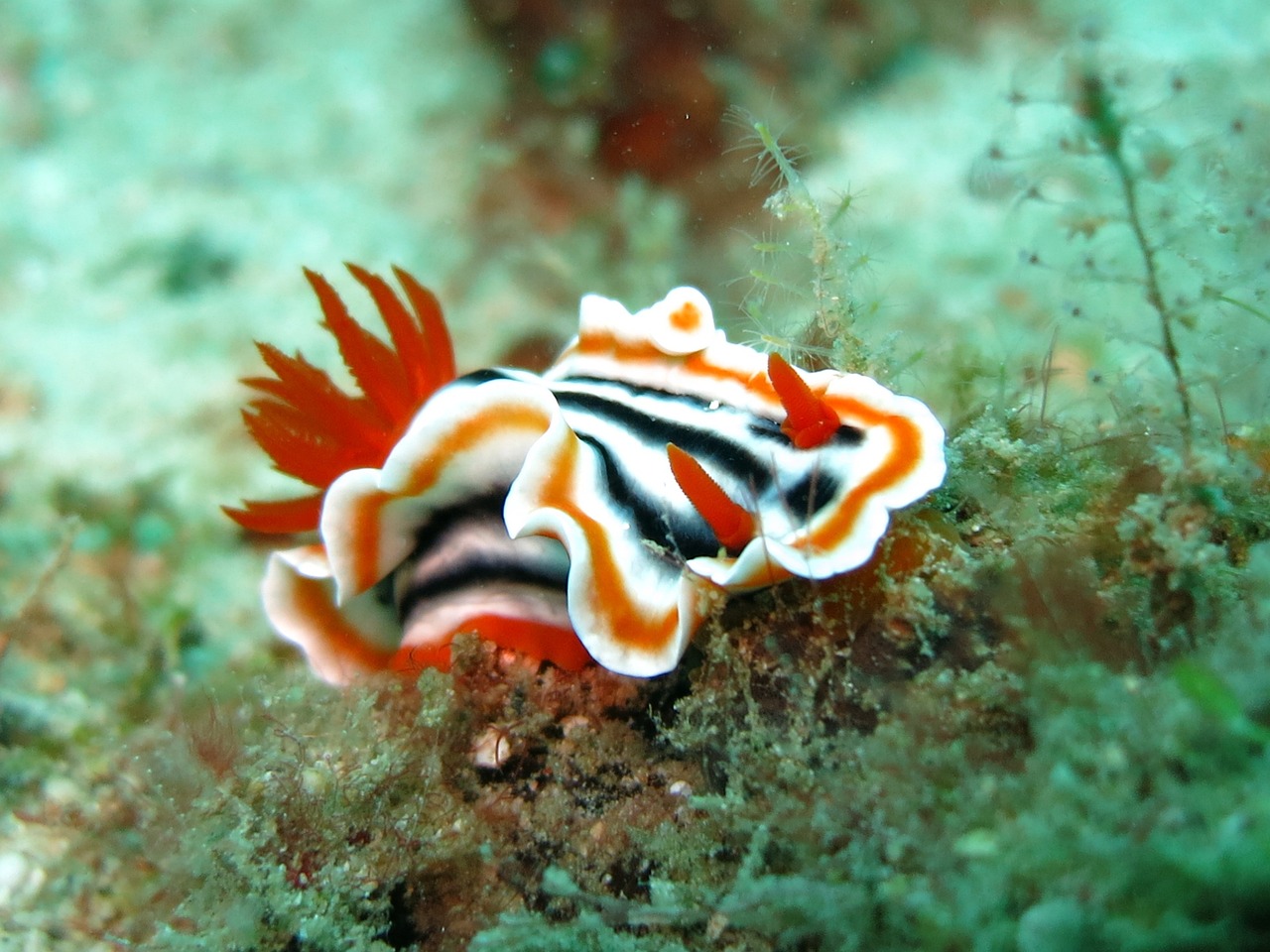
nudibranch chromodoris looks like ribbon candy

Salty Samples 

Sea slugs are a family of boneless animals that contain a particularly fancy looking molluscs called nudibranchs. Usually they’re small enough to fit on your hand, but they can be as long as a sheet of binder paper. Their shapes and colours result in names like “dragon” and “orange peel,” or “sea bunny,” “dancer” and “clown.” Start an image search and you could browse pictures of fanciful nudibranchs all day. There are more than 3000 kinds! 
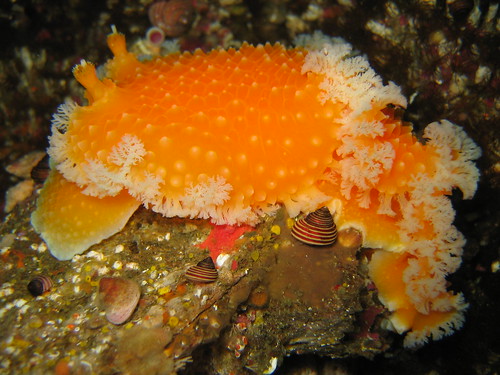
the "orange peel" nudibranch can be 50 cm long

Pantry Paint Packs 

Like flamingoes get their pink colour from their food, nudibranchs get their colour from their diet too. Check out this little creature that looks like a sheep that rolled in cut grass! It’s the leafy sheeps’ algae diet that makes them green. They store the chloroplasts from their food and that means photosynthesis happens inside their bodies like it does in plants. 
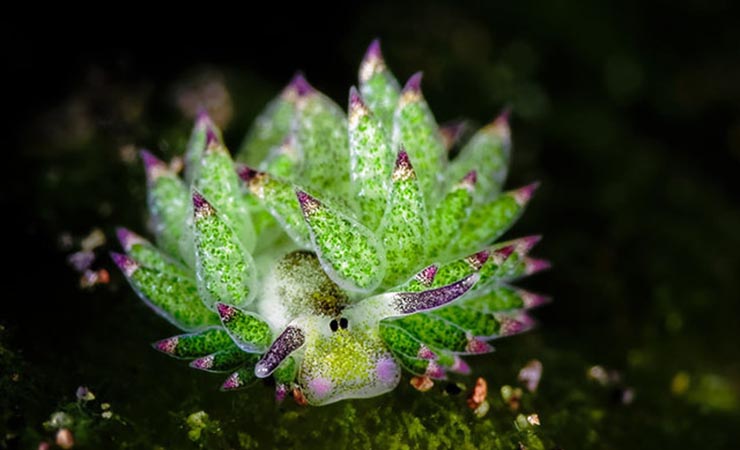
Nudibranch Brunch 

Nudibranchs are carnivorous! They eat algae, sponges, and even other sea slugs. Some also eat coral and even stinging jellyfish, and that makes them a bit toxic. Like the leafy sheep keeps some chloroplasts from its food, the jellyfish eating “blue dragon” keeps some of the stinging cells from its food. Like a lot of colourful things in nature, the bright hues warn us that they can hurt. Touching them can sting. 

Making Nudibranchs 

Any two nudibranchs can make babies together, because they all have both sex organs. They’re hermaphrodites, just like earthworms and most snails are. About 5 of every 100 animal species are hermaphroditic.
A gooey ribbon of fertilized eggs will hatch into nudibranchs that look just like their parents but smaller. Depending on the type, there can be 2 eggs or 25 million! Once they leave the nest, they’ll live just a few weeks to a year. 

Notice Nudibranchs 

To see a nudibranch in person, you’ll have to go out into the ocean because they don’t survive captivity for long. But you’ll find some of these saltwater slugs along every ocean coast — except in the Arctic and Antarctic circles. They love coral reefs. You will find nudibranchs in shallow water and way down in the deep. Look on the bottom, and remember they’re usually very small. Most photos of these creatures are taken with a close-up macro lens.
nembrotha nudibranch on the mouth of a glass drink bottle

23 Nov 2013

Who's that chit-chatting outside my door?

When I went to the Nature House at Elk/Beaver Lake, I expected to use my science talents, but I never expected to meet a new neighbour. A small neighbour, and new to me but a long-time resident of the area.
First sign of the little neighbour was a loud, repeated "CHIK!" sound from outside and behind the Nature House. I put down my gear -- a folding inflatable kayak in its bag, and a small drybag holding my wallet and spare dry shirt -- and walked round to the back of the Nature House. Up in a poplar tree was a small animal running from branch to branch, occasionally pausing to declare "CHIK!" in indignant tones.
Eventually I saw glimpses of it through the branches. It wasn't a bird as I'd thought; it was a furry four-footed animal. It wasn't a squirrel, either a red squirrel or a grey squirrel. Squirrels have long bushy tails. It wasn't a rat, either -- this animal's tail was shorter and furry, not long and bald. This little animal had a neat small head, and its furry coat was dark on the back with a white underside. I watched it scurry high in the branches, scolding another animal that was unseen; perhaps it was scolding a crow or raven.
Then I went into the Nature House, curious to figure out what I had seen. It was time for a little simple science research. But with no computer access to the internet, it was time to hit the books.
This photo is from ZooChat.com - check out their website!
First book I found on the Nature House shelves was Mammals of British Columbia. It's a great resource, with photos as well as descriptions of the animals and their habitats. The second book I opened was Carnivores of British Columbia. I had an idea what kind of animal this might be.
The sound this animal made reminded me of the sound I'd heard a baby river otter making on a seashore one day, and otters are carnivores. I wondered what kind of animals are related to otters, and are found in trees? Was this animal a pine marten, or maybe a fisher? It wasn't anywhere near big enough for either.
The little animal turned out to be the smallest member of the mustelidae family: a least weasel.
How wonderful it was to see this neat, bright little animal in the photos, and match it to the little fellow scrambling quickly through the trees. Small books like the ones in the Nature House or the public library are so useful for understanding more about our animal neighbours. I'm so glad that when I heard the sound of the weasel in the tree, I didn't just assume it was one more crow among many.
Later at home, I was able to find all sorts of interesting websites that can help us figure out what animals we're seeing in the woods, or traces that animals leave behind. One of them is the Canadian Museum of Nature website, which has lots of resources for learning a little or a lot. And it's bilingual!
The University of British Columbia has posted a list of animals. Canadian Geographic magazine, which has many educational materials available, has a website listing animal fact sheets for free download in English or French. And the Ministry of the Environment has a website that's an Identification Manual to the Small Mammals of British Columbia, with a link so that you can download the entire manual and print it if you like. This manual is really detailed, right down to five drawings detailing key differences among chipmunk genital bones. That's a little more detail than I needed to identify my neighbour, the least weasel.