Showing posts with label ocean science. Show all posts

21 Aug 2020

Salty Slug Love

Slippery, slimy, oozy slugs; what’s not to love? Slugs can be small and slugs can be as long as your arm! Slugs can be sausage shaped and brown, or they can have leaves, legs, and lots of rainbow colours! They can live anywhere wet, and lots live under the sea. 
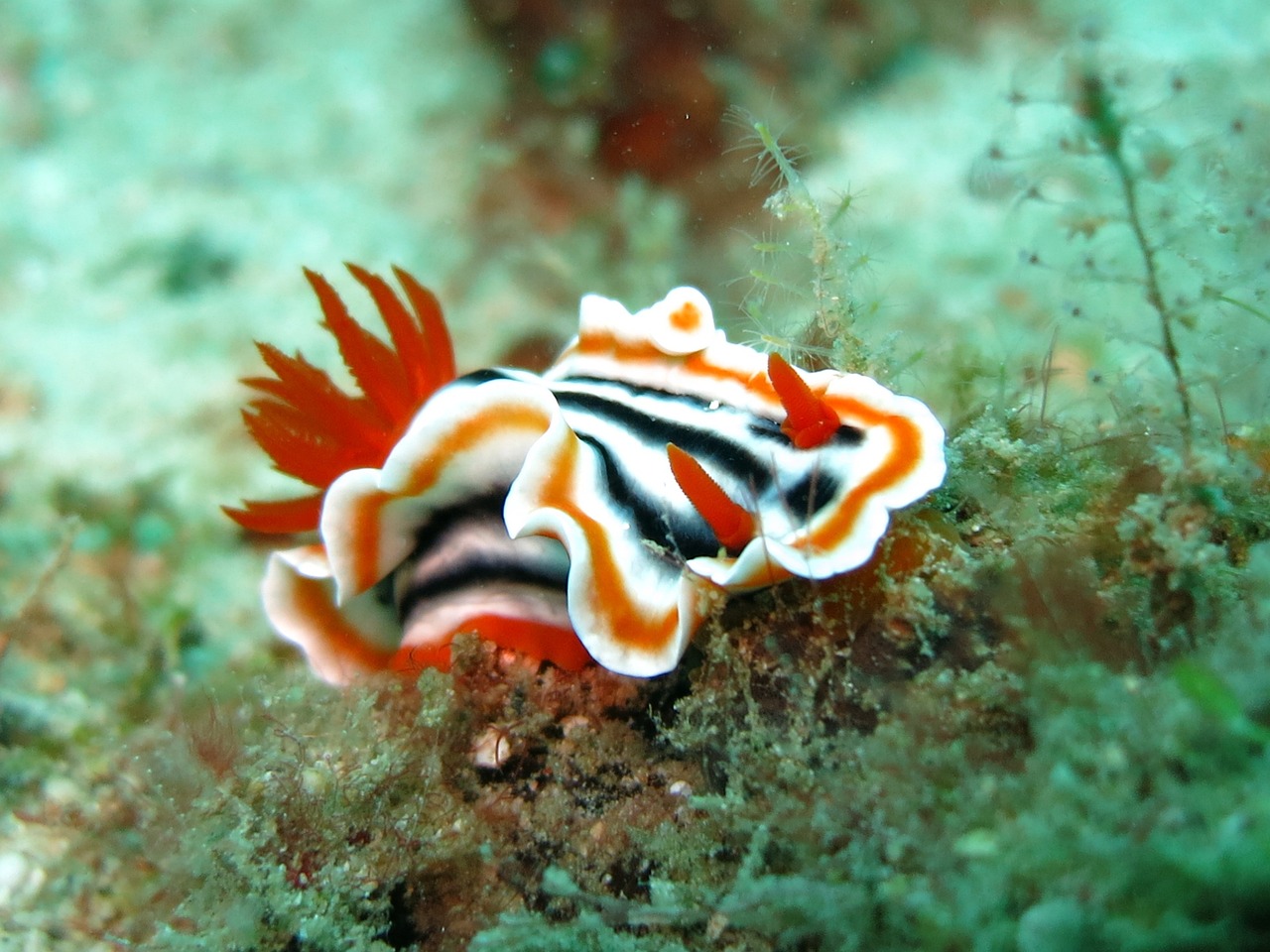
nudibranch chromodoris looks like ribbon candy

Salty Samples 

Sea slugs are a family of boneless animals that contain a particularly fancy looking molluscs called nudibranchs. Usually they’re small enough to fit on your hand, but they can be as long as a sheet of binder paper. Their shapes and colours result in names like “dragon” and “orange peel,” or “sea bunny,” “dancer” and “clown.” Start an image search and you could browse pictures of fanciful nudibranchs all day. There are more than 3000 kinds! 
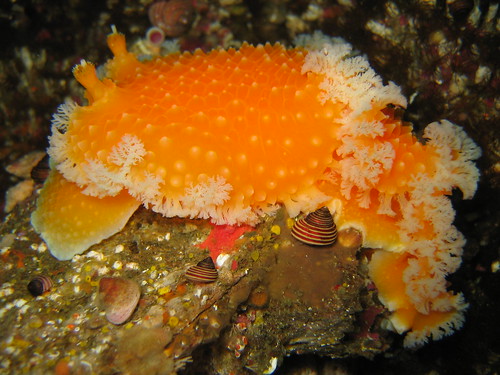
the "orange peel" nudibranch can be 50 cm long

Pantry Paint Packs 

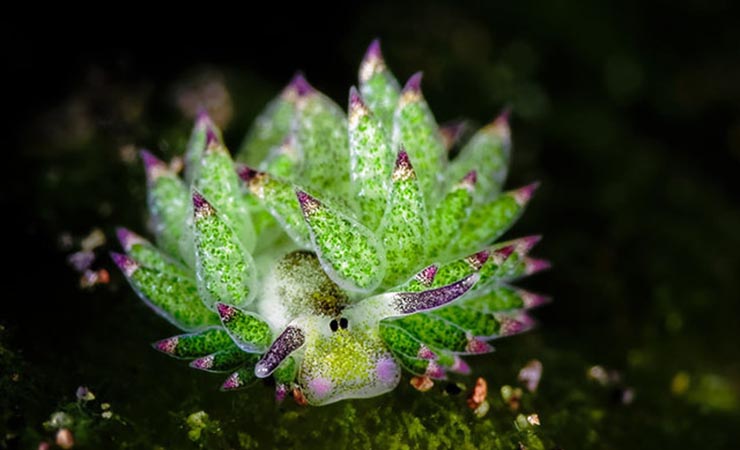
Like flamingoes get their pink colour from their food, nudibranchs get their colour from their diet too. Check out this little creature that looks like a sheep that rolled in cut grass! It’s the leafy sheeps’ algae diet that makes them green. They store the chloroplasts from their food and that means photosynthesis happens inside their bodies like it does in plants. 
Nudibranch Brunch 

Nudibranchs are carnivorous! They eat algae, sponges, and even other sea slugs. Some also eat coral and even stinging jellyfish, and that makes them a bit toxic. Like the leafy sheep keeps some chloroplasts from its food, the jellyfish eating “blue dragon” keeps some of the stinging cells from its food. Like a lot of colourful things in nature, the bright hues warn us that they can hurt. Touching them can sting. 

Making Nudibranchs 

Any two nudibranchs can make babies together, because they all have both sex organs. They’re hermaphrodites, just like earthworms and most snails are. About 5 of every 100 animal species are hermaphroditic.
A gooey ribbon of fertilized eggs will hatch into nudibranchs that look just like their parents but smaller. Depending on the type, there can be 2 eggs or 25 million! Once they leave the nest, they’ll live just a few weeks to a year. 

Notice Nudibranchs 

To see a nudibranch in person, you’ll have to go out into the ocean because they don’t survive captivity for long. But you’ll find some of these saltwater slugs along every ocean coast — except in the Arctic and Antarctic circles. They love coral reefs. You will find nudibranchs in shallow water and way down in the deep. Look on the bottom, and remember they’re usually very small. Most photos of these creatures are taken with a close-up macro lens.
nembrotha nudibranch on the mouth of a glass drink bottle

29 Oct 2019

Youth and Their Science Discoveries

Paula Johanson

There are a variety of stories from around the world, telling of young people using science to discover amazing and useful things! Many of their projects are of particular interest in a world facing climate change and resource emergencies.

Check out the story of Fionn Ferriera, described as an eighteen-year-old wunderkind. At the 2019 Google Science Fair, he took the top prize. His invention? Creating a way to remove microplastics from ocean water. Click here for a link to read more about Fionn and the Google Science Fair.

It's not so simple to tell you the story of a South African youth who was part of a resounding success at rescuing penguins, during the oil spill when a tanker sank off his country's coast in 2000. He learned of the difficulty rescuers were having in removing crude oil safely and completely from the feathers of sea birds. While practising at home with a couple of feathers and a sample of crude oil, this teenager ended up inventing a way to clean oil spills off penguins, using a combination of dish detergent and ... well, that would be telling. Dyan deNapoli tells all about this teenager and his dad as one small part of her terrific book The Great Penguin Rescue: 40,000 Penguins, a Devastating Oil Spill, and the Inspiring Story of the World's Largest Animal Rescue. She's the penguin scientist who was present at this rescue, and you can learn more about her at this link to her website. Dyan deNapoli's book has so much to tell about professionals and volunteers working with animals, and solving this crisis. It's recommended reading for any family with a young person interested in working with animals, or worried about how people can cope with resource emergencies.

There's a family in Colorado that was learning how to test their drinking water. Their daughter, Gitanjali Rao, wanted to find a way to test water reliably and quickly. While browsing the MIT website, this eleven-year-old came up with an adaption for technology she read about in an article. Her portable device tests for lead in water, which is a problem for many people and places. This story is a terrific read for people who are upset by reading all the news articles about undrinkable water in Flint, Michigan or on First Nations reserves.

These three brief mentions are just a little of the great news that can be found about young people using science to make the world a better place.