25 Oct 2013

Creepy, Eerie, Macabre Fungi for Halloween


(This is a repost of the October 2013 one that somehow disappeared.)

Picture this: You’re in an unfamiliar part of the woods, alone. It’s spooky and dark. A storm is brewing. You hear something, stop dead in your tracks. Was it a howling wolf? Or just the wind? You’re alert now, all your senses are alive. And then you get a whiff of something—something so awful it makes your nose curl: the stench of rotting flesh, a nearby corpse. But where is it?
And then you see something…but it's not a corpse, though it's almost as grotesque. What you’ve found is a stinkhorn.
Two stinkhorns—Phallus ravenelii, with feasting slugs,
and Clathrus archeri (photos: Jan Thornhill; Wikipedia)
Stinkhorns are one of the more wondrous fruits of the fungi kingdom. They come in a bizarre variety of shapes, ranging from cage-like structures to tentacled stars that look like space aliens to rude-looking columns, some of which are dressed in lacy hoop skirts. Whatever their form, they all erupt—sometimes overnight—from an “egg,” and they all, at some point in their development, are covered in gross-smelling slime.
More traditional fungi rely on air currents to disperse their minute spores. Not the stinkhorn. A stinkhorn’s spores are imbedded in its stinky slime, disgusting muck that so closely mimics the smell of a decomposing cadaver it quickly attracts flies and other insects. When these insects take off again, they unwittingly carry away the stinkhorn’s spores stuck to their mouth parts and their tiny insect feet, spreading them far and wide. 
Stinkhorns are not the only macabre fungi you can come across in the woods. Walk farther and you might stumble upon some aptly named “Dead Man’s Fingers.” 
Dead Man's Fingers—Xylaria polymorpha (photo: Ulrike Kullik)
Properly called Xylaria polymorpha, these fungi are hardwood decomposers. They’re most often found on rotting logs, but when they grow from buried wood they can eerily resemble the blackened fingers of a corpse struggling to dig its way out from a forest grave. Unlike stinkhorns, which can pop up and then deteriorate in a couple of days, Dead Man’s Fingers are so horny and tough they can persist for months, or even years. 
And then there’s the Bleeding Tooth fungus.  
The spores of the Bleeding Tooth Fungus, Hydnellum peckii, are produced
on tooth-like projections beneath the cap. (photo: Darvin DeShazer)
The first time I stumbled upon one of these, it was so covered in “blood” I thought I’d found something recently killed. Though Hydnellum peckii, when fresh and moist, exudes something that looks shockingly like what oozes out of a slaughtered animal’s veins, the globules of pigment-filled liquid are nothing like animal blood. There is, however, a compound in these fungi that can affect blood. This compound, called atromentin, has anticoagulant properties similar to those of heparin, a medication used to prevent blood clots. Ominously, though, an overdose of these anticoagulants can cause a patient to bleed to death.

Some Omphalotus species, or Jack-O'-Lantern mushrooms,
glow in the dark. (photos: Thomas Schoch; Noah Siegel)
The fungi world provides even more Halloween-appropriate characters. In daylight, some of these look like perfectly normal mushrooms. But if you happen to be out for a midnight woodland stroll without a flashlight, you might be frightened by an eerie glow emanating from the base of tree—a glow produced by bioluminescent fungi. Scientists don't yet know why more than 70 species glow in the dark, but one idea is that their light might attract nocturnal insects that could help spread the mushrooms' spores. 
But the prize for the most frightening, the most macabre, the most fiendishly devious fungi has to go to the Zombie Ant Ophiocordyceps
The fruiting body of a Zombie Ant Ophiocordyceps protruding
from the head of a dead ant. The white nodules are another
parasitic fungus—a parasite of a parasite! (photo: David Hughes)
The Cordyceps family of fungi are parasites, and their chosen victims are often insects. But what makes Ophiocordyceps so unforgettable, and so nasty, is that after it has worked its way inside an ant's body, it travels to its brain, where chemicals are released that control the ant's actions. The now "zombified" ant is compelled to walk a distance from its colony, and eventually latches tightly onto a leaf with its mandibles. It will never let go. The fungus continues to grow, killing the ant and producing a fruiting structure that sprouts straight up out of the insect's head. The fungus then produces spores that are dispersed by air currents, so the fiendish cycle of Zombie Ants can continue. But, wait! There's some comeuppance for the dastardly Omphiocordyceps: a completely different parasitic fungi preys on it, reducing its ability to produce mature spores!    

For more information about fungi in general: http://www.mushroomexpert.com/
For more information about Zombie Ant Fungi: http://ento.psu.edu/directory/dhughes


18 Oct 2013

Creativity

            She reached up, touching the cold ceiling above her head, relishing the grain of stone beneath her fingertips. The lamp flickered. Shadows raced across the cave walls, spirits running through time. She hoped there was enough fat in the lamp. It would be difficult to find their way out, and she was afraid of what might press close in the darkness.
He was coming toward her. She was silent. It was easy to be, here; the walls were always talking. He stood beside her, holding a half clam shell filled with red, thin like new blood. He held it close to her hand, up near the rock. He put the end of a bone of a dove into the red, and blew, through the hollow.  His breath mingled with the fluid. It bubbled and whistled. The spirits whistled in reply. 
She felt the red against her hand’s flesh, cool and soothing, not hot like the blood of a kill, the blood of death. Her hand was steeped in it, her knuckles smooth under the coating. The light of the lamp flared and for a moment, her skin glowed. The red pulsed through her, inside her, and outside her. She peeled her fingers away from the rock with sadness, breaking the union between the past and the present. On the pale rock she’d left an imprint, a pale hand, five rays. A part of her to remain with the spirit shadows, a manifestation of her moment.
All of us share this imaginary CroMagnon woman’s compulsion to create, though we cannot understand the significance of her hand print, made deep in a cave some 40,000 years ago. We can say, however, that just like her hand print, what we create also leaves an imprint of ourselves on the physical world. At its core, creativity is about self-expression. Creativity is also, at its core, a manipulation of the world around us. Not only do we make our inner self external when we create, but we also interact with the external in a personal way. Creation is an act of giving and also an act of receiving.
I create because it is a way to give that is comfortable; it does not require thanks, and it has no strings attached. It is safe. When someone judges my hand print, they are judging not just my gift but my desire to give it. 
I create because the parts of me made external become a part of my world, a friendly part, that I can interact with, and receive from. I have forged connections with my surroundings, I am not so isolated. When someone judges my hand print, they are putting a value on the parts of me made external. They are changing the dynamic of my interaction with them.

Judging a creative product is important. To give requires a receiver. And understanding what we have expressed of ourselves is aided by understanding what others have perceived. However, it is never a task to be taken lightly. Even the simplest of creations may be imbued with meaning for the creator, and that meaning is not always accessible to others, like hand prints on a cave wall.

11 Oct 2013

Science magazines for kids

A few days ago an email arrived in my inbox from a Toronto colleague -- health writer Jane Langille -- to let me know about a new science magazine. (Thanks, Jane!)

I really enjoyed exploring the website (see Brainspace below), and that made me think about other children's magazines that cater to science interests.

Here are a few science magazines for kids that I know about:


Owl Kids: For me, Owl magazine and its cohorts Chirp and chickaDEE, each geared for a specific age group, remain the standard for Canadian kids' magazines. Owl, geared for nine- to 13-year-old readers, began as a nature and science magazine, but in recent years expanded its scope to include many other subjects and themes. It's been around for some 35 years, and it's still winning awards.

Owl also has an attractive website with content to explore geared for kids as well as teachers & parents. For example, the World Watch section offers links to causes of all types, including science-related topics.


Brainspace: New kid on the block, Brainspace is available through a website offering videos, a blog, and special content for students as well as teachers & parents. This Canadian magazine promises to offer interesting articles on math, geography, technology, and more.

If you've seen the September issue, please let me know: can the cover really talk? And how does it do that?


In my opinion, there's always room for more magazines offering content designed for readers in specific age groups, especially when the articles cover science. When I searched for children's science magazines, I found lots of links.


Odyssey: This is a science magazine designed for readers aged nine to 14, and the website says it intends to make its readers excited about science. Its topic range includes traditional school science subjects like physics and biology, as well as the environment, technology, and careers in the science fields.

Odyssey is part of the Cobblestone & Cricket family of magazines. Cricket has many different magazines geared for various ages and interests offered through Carus publishing (US). Each magazine has its own website, and the Odyssey site is full of interesting content and sample articles.


Kids Discover: While searching for magazines about science for kids, I came across this website. The Kids Discover website says it was started by a parent/publisher in 1991. It carries several science or science-related topics in its content list, from earth to space sciences.

I don't know much about this online magazine, but the website certainly looks interesting and I was able to read some samples of the content. Has anyone read it? What did you think? (Please leave a comment below.)


Do you have any favourite science magazines? Or any favourite magazines that have interesting articles about science?

Please leave a comment -- and share a link!

By Marie Powell

Marie Powell is the author of seven books for children, including Dragonflies are Amazing (Scholastic) and a new six-book series of Word Families books published by Amicus Publishing

4 Oct 2013

The Lane Anderson Awards for Excellence in Science Writing

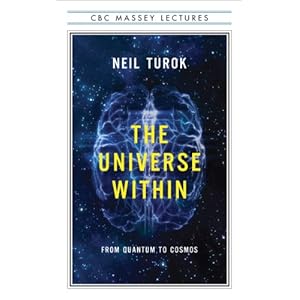
Can you be just a little over the moon? No. Which is why I'm a LOT over the moon to have been named the winner of the 2012 Lane Anderson Award for Science Writing, in the Children's Books category for The Big Green Book of the Big Blue Sea.


The winner in the Adult category is Neil Turok for The Universe Within.


Here we are giddily clutching our plaques.  

Congrats to Neil and to everyone who participated in this great event! And a huge thanks to the Fitzhenry Family for endowing this award and highlighting the central role of science in our lives.

Here are the deets from the official announcement:

$10,000 Lane Anderson Award Winners

Celebrating the Best Science Writing in Canada

Toronto. 26th September, 2013:  The Fitzhenry Family Foundation announced the winners of the 2012 Lane Anderson Award. Finalists and winners were feted at an intimate dinner in Toronto.

The annual Lane Anderson Award, now in its fourth year, honours excellence in Canadian science writing, by highlighting two jury-selected books – one addressed to adult readers, the other written for children and/or middle grade readers.  Authors of the winning books each receive $10,000. 

There were a total of 20 submissions for this year’s award.

“We established this award because we believe passionately that science writing, and science reporting is vitally important for every Canadian today.  Science writing, research, and knowledge impacts the ways in which we live now, the ways our children will live in future, and the ways in which our children’s children will live their lives. As Canadians, we do not pay enough attention to science. We take it for granted.  The Lane Anderson Award is dedicated towards removing that indifference, two books at a time. We thank all of the authors and publishers and judges who are helping us pass along this message. It needs to be heard and heeded.”
- Hollister Doll & Sharon Fitzhenry Directors, Fitzhenry Family Foundation  

The annual Lane Anderson Award honours two jury-selected books, in the categories of adult and young reader, published in the field of science, and written by a Canadian. The winner in each category receives $10,000.


The 2012 Lane Anderson Prize Winners are:

The Universe Within by Neil Turok (Anansi)

The most anticipated nonfiction book of the season, this year's Massey Lectures is a visionary look at the way the human mind can shape the future.  Neil Turok is one of the world’s top physicists and founder of the African Institute for Mathematical Sciences (AIMS). He is currently the Director of the Perimeter Institute for Theoretical Physics.


Big Green Book of the Big Blue Sea by Helaine Becker (Kids Can Press)

Based on the idea that knowledge is power, The Big Green Book of the Big Blue Sea shows how the ocean works and why this immense ecosystem needs our protection. Experiments using everyday materials help explain the scientific concepts. Helaine Becker is a bestselling writer of children’s fiction, nonfiction and verse.


The two juries meet annually to consider all the submissions to the Lane Anderson Award and comprise editors, librarians, and previous Lane Anderson winners.

The Lane Anderson designation honours the maiden names of Robert Fitzhenry’s mother, Margaret Lane, and his wife, Hilda Anderson Fitzhenry.  The Fitzhenry Family Foundation is a privately directed Canadian foundation established in 1987 by Canadian publisher Robert I. Fitzhenry (1918-2008).  The Lane Anderson Award is administered by Christopher Alam, a partner at the law firm of Gowling Lafleur Henderson LLP.


27 Sept 2013

Sing a Song of Science

Do you ever wish that scientists could just explain what they do in simple words? Or at least, explain a little of what they do? Or maybe even just talk about their studies without using big words in a way that makes everyone else feel foolish for not knowing the words?

What about if they sang?

No kidding. There are actually songs to be found that were written by scientists, and that were written about science. Some of the songs use familiar tunes, or tunes from classical music. You can find recordings of many of these songs on the Internet. And yes, most of these songs have been written by someone with a sense of humour, and a sense of wonder.

For chemists, there's a classic song written by comedian Tom Lehrer which names all the elements of the periodic table. All of them, in a list of names that isn't alphabetical and only parts of it are sorted. He sings the names of the elements to a tune by the composers Gilbert and Sullivan, called "The Modern Major-General." Lehrer's song has been sung on television shows about science, like "The Big Bang Theory" and older shows such as "Gilmore Girls."
It's hard to imagine how anyone can ever remember all the names of the elements like this. Singing this song is a fun feat of science memory. Daniel Radcliffe, who played Harry Potter in the films based on J.K. Rowling's books, has been known to sing this song at parties.

This kind of singing even works for particle physics. How about a discussion of string theory that's set to the tune of a famous song? It's neat to think that an explanation for how the building blocks of the universe work can not only make sense, but it can rhyme! This particular song is called "Bohemian Gravity" as it is a parody of the song "Bohemian Rhapsody" by the rock band Queen.
The video for this song was made up of 70 hours of recordings by a physics student while he was studying for his Master's degree. He uses the name Acapella Science when posting his videos on YouTube for others to enjoy. As one fan wrote in the comments section on the video's webpage, "I'm sure Brian May, the guitarist of Queen with a PhD an Astrophysics, would approve of this video if he sees it."

The Monty Python comedy troupe have covered astronomy in their song about the expanding universe. For philosophy, there's a drinking song written by the Pythons which names most of the philosophers studied at University -- but describes the philosophers as drinking a lot of booze. That's one song for young scientists to hear or sing only with their parents' advice. Listening to science songs might be a fun thing for a family to do together. And singing them certainly can be fun!

20 Sept 2013

First Frost... and a Book Giveaway!

By Guest Blogger Carolyn Fisher


Hi. I'm artist and author Carolyn Fisher. I write and illustrate picture books. Today I'm pinch-hitting on Sci/Why for Joan Marie Galat, who is gallivanting around Australia to look at stars in the southern hemisphere.

In my picture book The Snow Show, I wrote and illustrated a story about how snow is made.


When you're making a book, you do oodles of research. You brainstorm, you write, and then - if you're an illustrator like me - you draw zillions of sketches to plan out the pages. But because my editor gave me a 48-page limit on The Snow Show, there were lots of things that I left out.

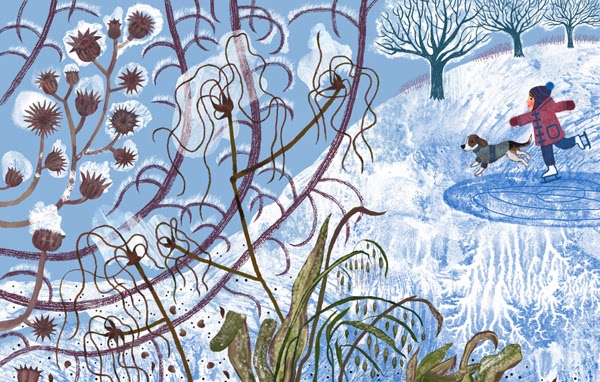
Like how frost is made, for example. So today, in honour of September's dropping temperatures, I wanted to write about frost.

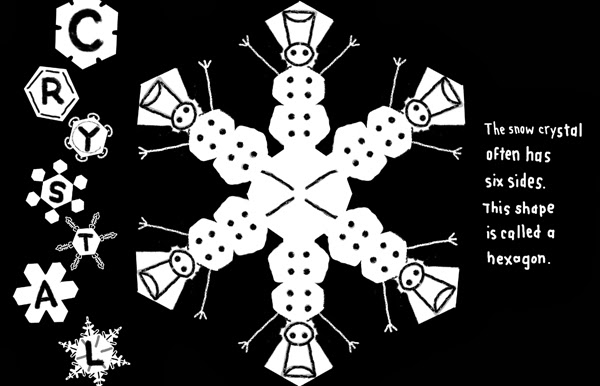
First, we have to talk about how snow grows. Here are some drawings that got rejected from The Snow Show:


Did you catch that? If the air temperature is below zero degrees Celsius (32 degrees Fahrenheit), water vapour molecules can change to ice without turning to liquid first. That’s called DEPOSITION. Snow crystals form when floating water vapour molecules change by deposition directly into ice crystals.

There, I just summarized The Snow Show in three sentences. Can you believe it took me 48 pages to say that?

Frost crystals grow the same way: water vapour molecules in the air freeze by deposition onto plants, glass, or snow surfaces. (Sometimes frost forms beneath snow surfaces: that’s called depth hoar and it can cause avalanches if conditions are right. But that’s a whole other blog post!)

BOOK GIVEAWAY: Is it frosty where you are? What’s the average first fall frost date where you live? Post your answer in the comments by 12 noon on September 30th and I’ll draw a name for a free signed copy of The Snow Show.

For more about snow and making picture books, check out my website: www.carolynfisher.com
For a snow study guide, download my free snow activity kit pdf: http://www.carolynfisher.com/study-guides/

And if you’re Joan Marie Galat? Don’t bother entering the first fall frost date in Australia. We all know that it’s spring down there!

13 Sept 2013

Great White (Northern) Science – LINKS and a CHALLENGE

By Claire Eamer

There’s lots of great science happening in the Great White North. (Actually, it’s not very white today – gorgeous fall colours instead – but you know what I mean.) And a lot of that science is being done by Northerners themselves. So I decided to spread the word.

Here’s the LINKS bit: I’ve dug out a few kid/teacher/librarian-friendly links for you. You’ll find them below, with short notes about where they lead.

And here’s the CHALLENGE bit: Hey, all you Northerners, scientists, science freaks (that’s me!), geeks (young and old), and wizards of Google-fu - let’s find some more! If you have a favourite science link to something that’s taking place in northern Canada, post it in the Comments section at the bottom. We can build something here.

So, here’s my first kick at the can - a mostly-but-not-entirely Yukon contribution.

This scimitar cat once roamed the Yukon grasslands. Today,
it snarls at visitors to the Yukon Beringia Interpretive Centre
in Whitehorse. Claire Eamer photo
Would you like to learn about the amazing animals that roamed the Yukon 20,000 years ago, when most of Canada was buried under kilometres of ice? Check out the Yukon Beringia Interpretive Centre's Education Corner. There's everything from educational materials for senior grades to colouring sheets for the little kids. And check back regularly. I was talking to the Beringia Centre folk yesterday, and they're planning some great new additions to the site.

If I've got you hooked on mammoths, giant sloths, and scimitar cats, there's more information about the latest research (and lots of cool photos) in the online (pdf) booklets Ice Age Klondike and Ice Age Old Crow, published by the Yukon Government.

By the way, if you want to know what life is like today at Old Crow, the Yukon's most northerly community and home of the Vuntut Gwitchin First Nation, check out the community website. It offers a sampler of the Gwich'in language, traditional stories, culture, history, cooking (lots of caribou recipes!), and a whole lot of other entertaining bits and pieces of information, including a collection of videos made by Old Crow students.

Back to ice ages and climate: how about climate change? The climate is warming faster in the North than anywhere else in Canada. What do northerners think about that? In 2000, the Inuvialuit people of Banks Island talked about their lives and how climate change is affecting them in a video called Inuit Observations of Climate Change, which is online in both a short version and a long version.

All that warming has turned up a few surprises. High in the  mountains of the Yukon and the Northwest Territories, there are patches of permanent ice, too small to be glaciers but too big to melt over the short summer. Until recently. Now many of them are melting and revealing a record of plant, animal, and human life going back thousands of years. I blogged about the ice patch discoveries here last year. The online (pdf) booklet The Frozen Past has both information and photos of Yukon finds. And Archaeology magazine has an online article about ice patch finds in other parts of the world.

For first-hand accounts at what it's like to live and do research at the northwest edge of Canada, check out this series of podcasts produced by the Wildlife Management Advisory Council (North Slope). You'll find everything from elder Danny C. Gordon's account of a lifetime of travel across the Yukon North Slope and park ranger Richard Gordon's song in praise of Herschel Island to permafrost researcher Chris Burn's musings on using both scientific and traditional knowledge to understand the land and its future.

Okay, that's my contribution - for now. I won't promise not to come back and add more links in the Comments section, but I'll let you guys have a chance first. What's your favourite science link for the North? And don't think just about the northern territories. Besides the Yukon, the Northwest Territories, and Nunavut, there's Labrador, Nunavik, and the northern regions of most of the provinces. Have I left anyone out? If so, add it in below.