Showing posts with label libraries. Show all posts

18 Feb 2022

Virtual Author Visit coming to a Public Library

Our own Lindsey Carmichael, author of over 20 books, will be doing an author visit at North Vancouver Public Library on Wednesday, March 2, 2022 - 1:30pm to 2:30pm. This is great news, not only for people in North Vancouver, but anywhere -- because this author visit is online!


As Lindsey notes on Facebook:

I'm doing a virtual author talk for the North Vancouver Public Library's Red Cedar Book Club. It's free but you have to register: https://nvdpl.ca/event/virtual-author-visit-red-cedar-award-nominee-le-carmichael

This online event is geared for children, particularly students in Grades 4 through 7. Families are welcome. You can click on the link to learn more about the book, the author, and how easy it will be to attend the event.


5 Aug 2017

An amazing science librarian's retirement party

By Paula Johanson

Among all the science news this summer of various kinds across Canada, here's a piece of good news about a person who spent a career working in a science field.

After 40 years as an engineering librarian, Randy Reichardt has retired. His colleagues and friends gathered on June 28 at the University of Alberta to celebrate his retirement -- dozens in person and dozens more watching an online live feed of his retirement party. Among the praise that was lavished on him were the facts that Randy was the first engineering librarian to include social media referencing and has been awarded the title engineering librarian of the year for North America. He's earned many honours over the years in the field of library science! Here's a link to the Engineering Guides available through the University of Alberta Libraries, where Randy worked until this July.
 
This is Randy's current profile picture on Facebook, which he's captioned: "Tuning up for the weekend gigs."

Another engineering librarian praised "the knowledge, humour and generosity of simply the best amongst us." One friend sent thanks "to the librarian who taught me everything I know about Leptinotarsa decemlineata, Click beetles, space elevators, and MathSciNet on CD-ROM." And a colleague who met Randy several times at conferences or library advisory board meetings noted: "Your innovative outreach methods and your Scitech Library Question blog that you started many years ago motivated me to explore, evaluate, and experiment with new engineering electronic resources and innovative instructional approaches." That blog, Scitech Library Question, was written by Randy from 2003 to 2009.

If you're thinking about a career in library science, or as an engineering librarian, there are hard-working people like Randy in this field, making a difference with every library user they help or colleague they advise.

19 Aug 2016

Mark Your Calendar: Science Literacy Week Sept. 19-25!


Science lovers, strap on your boots! You’ll need them for Science Literacy Week coming your way September 19-25, all across the country. This wonderful celebration of all things science will feature events for everyone, adults and kids alike, in venues ranging from libraries and schools to museum and local parks.

Jesse Hildebrand, founder of Science Literacy Week
Science Literacy Week is the brainchild of Jesse Hildebrand, a self-confessed science geek and energy whirlwind. I had the opportunity to interview him earlier this summer, to find out both where he gets his superhuman enerjuice and about the marvelousness that is Science Literacy Week. Here is what I found out:

1. Give us your brief potted bio. Who the heck are you and why do you love science so much?

I'm a lifelong tremendous nerd, born and raised in the same lovely house in Etobicoke.  I grew up with Steve Irwin posters on my wall and Carl Sagan books on my shelf.  If I was interested in anything, my parents dutifully marched me to a library to get books on it.  Thus, my initial love of science was fostered and nourished immensely. 

I went on to get an Evolutionary Biology Degree from U of T and a Science and Society Diploma from The Open University.

I also truly love baseball, nature, books, pina coladas and taking walks in the rain.  The dunes of the cape also sound awfully inviting.

2. What were some of the science books you read as a kid that sparked your imagination?
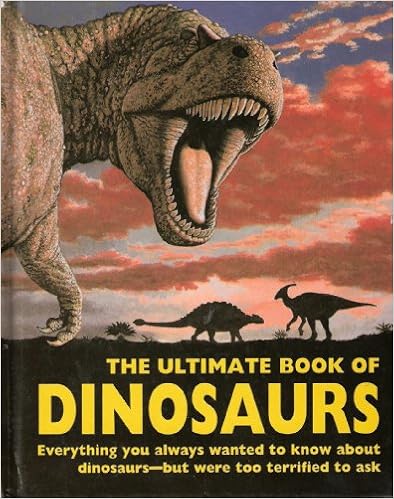
 I still have them so that's easy!  The Ultimate Book of Dinosaurs, Animals of the World, The Great Big Book of Knowledge, The Crazy World of What If? And my two very favourites, the awesome 'Wildlife Fact File" series and the Oxford First Encyclopedia.  My own kids will get all of them.  I was also encouraged by the librarians at my junior schools at Broadacres and John G Althouse and at Richview Public Library, where I'm still to be found roaming the halls more often than not.

3. What is Science Literacy Week? Why/how did you found it?
Science Literacy Week began simply as an effort to encourage University of Toronto libraries to bring their science collections out from the back for one week and prominently display them in the spot typically reserved for popular fiction.  I had always wanted to do something in science communication, and quite literally the day after I finished my last exam -  April 3rd, 2014 - I approached the libraries to make the ask. They took me seriously and it snowballed from there.

4. Tell Sci/Why readers about how the program has expanded since you began it in 2014.

Once the U of T libraries got on board, I convinced the Toronto Public, Mississauga Public and York University libraries to join in, making it a total of four participating institutions.  I convinced a few of my former professors to give talks and also arranged a smattering of other activities. 

It went pretty well in Toronto!  I thought that it could be expanded to include the whole country, so in 2015, I emailed everybody - libraries, museums, science organizations - some 4,500 emails in all in an attempt to make Science Literacy Week bigger. 

There was a tremendous response! I was remarkably lucky to receive ten yesses for every no. All told, Science Literacy Week 2015 came to include 300 events in 40 cities coast-to-coast. 

This year, with 160+ partners and major support from Indigo and NSERC (The Natural Sciences and Engineering Research Council of Canada), Science Literacy Week 2016 looks to be even bigger. NSERC has now hired me run the week, which means that since I no longer have to do this as a volunteer, I can commit full time to bringing it to life.  As of August 8st, there are 142 events already scheduled to run in 8 provinces!

5. Can you highlight some of the most successful/innovative/fun programs that ran in previous years, and some that are coming up this year?  

St. John's, NF, was one of the 2015 Science Literacy Week’s hotspots.  A great group of participants including Memorial University, the public libraries, the Johnson Geo Centre and the Let'sTalk Science folks worked together to present 27 events in 7 days. These included taking over the main mall in the city for a 5 hour science demo, an impressive event covered by the local radio station.  That was Science Literacy Week at its best! 

Across Canada, there was also "the Great Egg Drop" where kids had to make a container to drop an egg in from 25 ft. without it breaking; science demos in libraries where you could play with Non-Newtonian fluids; dozens of Astronomy Nights and more. 

For this year, some early confirmed highlights include:
Ø  Dissect a Beaver  (Vancouver)
Ø  Bird-banding hike in Oak Hammock Marsh (Manitoba)
Ø  Science with Fire and Alcohol (Red Deer)
Ø  A showcase of iconic science books you can touch and flip the pages of at Thomas Fisher Rare Book Library (Toronto).

6. And let’s repeat for those who have forgotten: when is Science Literacy Week running this year?

September 19-25, 2016. 

For the current roster of confirmed events by province, go to http://scienceliteracy.ca/events/. 

7. How can people – librarians, educators, institutions, ordinary folk who want to HOST a program -  get involved?

Anyone who wants to host a program or be put in touch with other local groups who might be keen to partner can contact me directly  info@scienceliteracy.ca.


8. And for those who would like to attend or participate in a program, where can they find the information?

For the most up to date listings of confirmed events by province, go to 

You can learn about events near you on twitter @scilitweek, on Facebook at Facebook.com/scilitweek. 

You can participate by spreading the word and sharing your love of science with the hashtag #scilit16


 Thank you! See you in September!

20 Oct 2011

Why constellations and astronomy are important

by Joan Marie Galat

Astronomy has intrigued me since I was a young girl staring out the window on long drives. At that time, I knew how to find the Big Dipper and Little Dipper but not much else. Curiosity led me to hop on my bike and pedal to the County of Strathcona Library. For reasons no longer remembered, I visited the adult shelves  and took out books far beyond my level of comprehension.

Comparing images in the books to objects in the heavens left me feeling there were too many dots on the page and too many stars in the sky. I imagined constellations all over the place but was never sure I was seeing the same group of stars as in the books. Finally as an adult, I learned to find my way around the night sky. At one point I remember thinking, “if only you could connect the dots in the sky, it would be easier to find the constellations.” And that’s how my Dot to Dot in the Sky series was born.

How to find Cygnus (The Swan)
from Cepheus (The King)
from Dot to Dot in the Sky,
Stories in the Stars
The first and fourth books in the Dot to Dot in the Sky series show how to jump from one star group to the next. Stories in the Stars focuses on 15 easy-to-find star groups. They are easy to locate because they either contain bright stars or are near constellations with bright stars. Stories of the Zodiac explores the 12 constellations that the Sun appears to travel through when viewed from Earth. These books also share the myths, legends, and folklore that ancient cultures told to explain the gods, goddesses, heroes, monsters, and other characters in the sky.

While it's fun to search for constellations, it's also important to note that these star groups are more than pictures in the sky. They represent stories from many different cultures and are also important because they serve as a celestial map. Astronomers refer to zodiac constellations when describing the location of the planets in our solar system. Constellations are also useful for navigation. Just think of the North Star!

You may wonder why it’s important to study astronomy. Does it really matter what’s up there? Yes it does. Here are just a few reasons. Studying the Sun helps scientists understand the life cycles of other stars. This knowledge helps scientist learn how to predict celestial events that could impact Earth. 

Our Sun is the closest star to Earth at only 93 million miles away. It is responsible for life on Earth and provides our energy, our  atmosphere, and all our weather.

Solar flares impact radio transmissions. Activity from the Sun can interfere with Earth-orbiting satellites, power grids, and global positioning system (GPS) measurements. The Sun, as well as the Moon, causes Earth’s tides.

While I've learned a lot since those nights staring out the window on long drives, I still feel the same awe I did as a child—wondering about everything in space. But now the night sky is more familiar. I look up and see characters in the night sky. I know how to use the constellations to locate planets. And thanks to the important work of astronomers and other scientists, I know the Sun is responsible for much more than sunny days and the constellations are even more than a wonderfully entertaining way to enjoy the outdoors.

20 Sept 2011

Chewing on Books


Chewing on Books
In a culture overflowing with ear-worn copies of Harry Potter and jam-stained editions of Robert Munsch’s works, it’s easy to take books for granted. They’re everywhere—our homes, schools, bookstores, libraries, vast cubes of them at Costco.
With all these books, it’s easy to forget that we learn not just to read, but how to respect and use books. 

There’s a science to how we learn not just to read, but also to use books; an anthropology of books.
All you have to do is to go somewhere with a less developed book culture for this to jump right of the page, so to speak.

When I go on book tours to remote and rural communities in Canada, some of the most striking moments are talking with children for whom books are a novelty.

Several years ago I did a reading in Thompson, Manitoba’s public library as part of a Canada Book Week tour. The kids jostled in, sat cross-legged, smiling and laughing during the reading. Then came the book signings and sale. The librarian shepherded one elementary student up to me, ten dollars clenched in her small hand. She wanted to buy a copy of my book. It was the first book she’d ever bought. I was the first author she’d ever met.

The experience of buying a book and meeting an author are both important parts of book acculturation. Learning that you can access books and that, in seeing yourself reflected in that author, that you have the power and opportunity to write, to self-express, to share your experience-- whatever it might be—of the world.

The most dramatic example of this anthropology of books is in a community like Bunalwenhi, Uganda. A neighbour of mine recently returned from a sixth-month stint starting the small, rural community’s first library.

What she discovered is that filling the bookshelves was the easier part of fostering a book culture. People needed to learn to use books.

Bunalwenhi is primarily an oral culture. Even with mandatory primary school education, most children make it to the sixth grade—including learning the rudiments of reading and writing—without ever holding, let alone owning, a book.

For Bunalwenhi’s children arriving at the library was like going to a foreign land, populated with strange creatures—books. Kids in primary school approached the books as tactile objects. They pulled books from one-another’s hands, ripped them, hit one another with them, folded pages, scribbled in them. All the things that kids do with books, but here generally at a much younger age when they’re first introduced to books and learning how to properly use them, which became a focus for the librarians.

When we give babies books they can chew, or plasticized ones they play with in the bathtub, a watching anthropologist would jot down a note about book acculturation. Later some adult will joyfully read in a warm, bubbly tub; or feel a sense of peace reading the paper while chewing on breakfast toast.

Every time we hold a book, we can be glad that someone taught us not just how to read, but that a book can be ours to read.