Showing posts with label physics. Show all posts

13 Mar 2018

Nanotennis

By Simon Shapiro

Nanotechnology deals with particles ranging in size from 1 to 100 nanometers. A nanometer is one millionth of a meter. That's very small: a newspaper page is about 100,000 nanometers thick. Atoms are about .1 to .5 nanometers in diameter, so nanotechnology works at a molecular level.

Materials start behaving differently at nano scale and scientists are learning about this behaviour and finding uses for nano materials. One of the success stories has been graphene and carbon nanotubes.

Graphene
Image by AlexanderAlUS

 Graphene consists of a lattice of carbon atoms in a hexagonal pattern. It's a sheet of carbon one atom thick. And it's the strongest material ever discovered 200 times stronger than steel, but also very light and flexible.
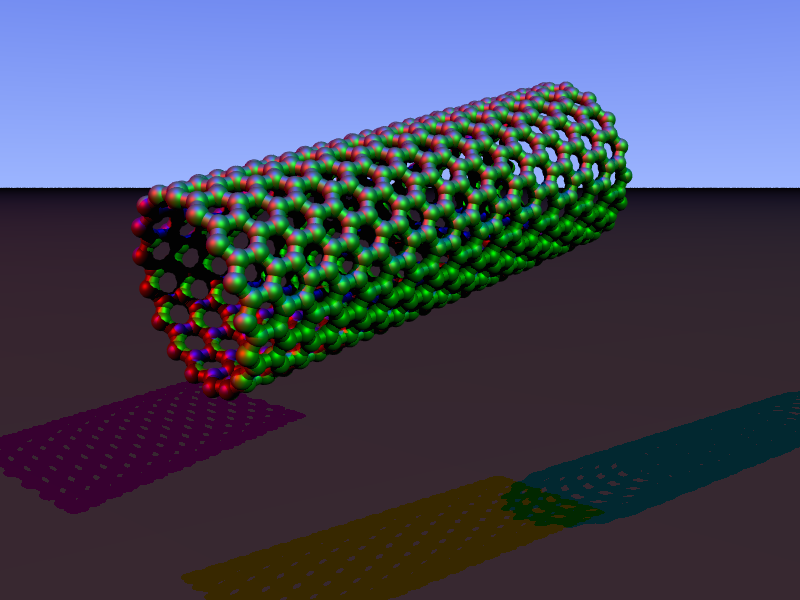
Carbon Nanotube
By Arnero - Own work, Public Domain
Graphene can be formed into a cylindrical shape, which is call a nanotube. It's light, strong and stiff.

 So what does nanotechnology have to do with tennis? Would you believe tiny tennis players hitting electrons across a 1 nanometer high net? No, me neither.

In the early 1970s an aeronautical engineer by the name of Howard Head, revolutionized tennis by inventing a racket with a much bigger face. It was a huge improvement over existing rackets especially for average players. Head did this by making the frame out of aluminum, instead of wood, which wasn't strong enough for larger rackets. (This was Head's second sports revolution: 25 years earlier he had developed plywood/aluminum/steel/plastic skis which blew away the existing solid hickory ones. You can read about this story in my book Faster, Higher, Smarter.)

Head's idea of a larger racket face is still the dominant design, but technologists have been working away to improve the materials used. And the most advanced rackets today all use graphene sheets or nanotubes to make portions of the racket lighter, stronger and more rigid.

Silica (silicon dioxide) is another nanotechnology material used in tennis rackets. Silica nanoparticles are used to fill the gaps in other materials, for example between nanotubes. The silica adds stability and strength, without adding much weight.

Clay Nanoparticles
Silicon atom at the centre and four
oxygen atoms at the vertices

Still with tennis, balls use clay nanoparticles on the inside membrane. These silicon oxide particles are tetrahedral shaped molecules which form a barrier to gas. No gas leaking out gives the ball a longer life.

Fullerenes (or Buckminsterfullerenes, or just "Buckyballs") are carbon molecules made up of 60 carbon atoms linked into pentagons and hexagons, forming a structure that looks exactly like a soccer ball. It also looks like a geodesic dome. (The American architect, Buckminster Fuller, popularized the geodesic dome, earning him the nano-homage).  While we're on the subject of appropriate names, one of the three Nobel laureates for discovering Fullerenes was Richard Smalley!


Soccer ball 
By Pumbaa80 (Self-published work
by Pumbaa80) via Wikimedia Commons

Buckminsterfullerene
By Mstroeck at English Wikipedia

Buckyballs are also used in tennis rackets, to make them lighter and more resistant to twisting.

Nanotechnology is used in lots of other sports equipment.
  • Golf clubs: carbon nanotubes are used for strength and lightness. Buckyballs are used for flexibility.
  • Fishing rods: use silica nanoparticles to fill spaces between carbon fibres, strengthening the rod without increasing the weight. 
  • Kayaking: carbon nanotubes are used to enhance resistance to abrasion and cracks; nanoclay is used to reduce weight and resistance, making it easier to paddle.
  • Archery: carbon nanotubes reduce vibration in arrows.
  • Bowling: buckyballs reduce chipping and cracking on bowling balls.
  • Cycling: graphene and carbon nanotubes are used to build very strong and light bicycle frames. 
Nanotechnology is really important in other industries, of course: electronics, pharmaceuticals, textiles, food ... More to come in future blogs.


10 Oct 2014

Enchantium Gas is Real (Tell Me Something I Didn’t Know)

By guest blogger Robert Paul Weston

[This post originally appeared in May 2014 on Robert Paul Weston's blog. We liked it, and he kindly offered to share it. - The Sci/Why Gang.]

The Lagoon Nebula.
Photo credit: "ESO/VPHAS+ team" (http://www.eso.org/public/images/eso1403a/)

This morning I read an article about a “quiet revolution” in theoretical physics. According to Max Tegmark, a physicist at the Massachusetts Institute of Technology, consciousness may in fact be an undiscovered form of matter, as in a solid, liquid or gas. He even gave the new element a fancy name. “Perceptronium.”

Now, far be it from me to accuse a highly decorated theoretical physicist of scientific plagiarism, but I had to wonder…has this guy read my book?

Enchantium Gas, the square root of -1
on the periodic table of elements.
A discovery I made way back in 2008.
Photo credit: Robert Paul Weston/Penguin USA
In Zorgamazoo, I very clearly laid out the principles not only of human thought as an element (ahem, Enchantium Gas anyone?), but I also went one step further, postulating how an entire civilisation, power system and energy cycle could be derived from something as intangible as psychological boredom.

This was way back in 2008. This guy Tegmark—if that’s his real name—is waaay behind the times. Seriously, physicists, chemists, people of science: Do try to keep up.

(Sigh.)

Robert Paul Weston grew up in Ontario but now lives in England. He writes fiction that sometimes veers toward fact.

21 Mar 2014

Science News of the Old and Oldest

By Claire Eamer

It's been a busy week or so in the world of science - a lot to keep track of. Here's a quick guide for those who, like me, are feeling a bit overwhelmed.

First, there's the Old: A couple of new dinosaurs have been identified.

One of them is a miniature cousin of the best-known predatory dinosaur, T. rex. This little guy (well relatively little, but still way bigger than any of us) has been named Nanuqsaurus hoglundi - meaning, roughly, polar bear lizard - and he roamed the Arctic 70 million years ago. You can read more about him, and find some pictures, here and here.

The other was found a few thousand kilometres south and east, in the states of North and South Dakota. It's a strange, half-birdlike creature that scientists have nicknamed "the chicken from Hell" - not because it's so scary, although its claws are impressive, but because it was found in a geological formation called Hell Creek. A little more formally, the chicken from Hell is Anzu wyliei, and you can learn more about it here.

And then there's the Oldest: What physicists think is a kind of cosmic fingerprint from the beginning of the universe - evidence of rapid expansion from the first split second after the Big Bang. It has caused a lot of excitement, and a lot of confusion. If you want to get unconfused, here are a few links:
And that, fellow science fans, is the momentous week that was!

11 Oct 2013

Science magazines for kids

A few days ago an email arrived in my inbox from a Toronto colleague -- health writer Jane Langille -- to let me know about a new science magazine. (Thanks, Jane!)

I really enjoyed exploring the website (see Brainspace below), and that made me think about other children's magazines that cater to science interests.

Here are a few science magazines for kids that I know about:


Owl Kids: For me, Owl magazine and its cohorts Chirp and chickaDEE, each geared for a specific age group, remain the standard for Canadian kids' magazines. Owl, geared for nine- to 13-year-old readers, began as a nature and science magazine, but in recent years expanded its scope to include many other subjects and themes. It's been around for some 35 years, and it's still winning awards.

Owl also has an attractive website with content to explore geared for kids as well as teachers & parents. For example, the World Watch section offers links to causes of all types, including science-related topics.


Brainspace: New kid on the block, Brainspace is available through a website offering videos, a blog, and special content for students as well as teachers & parents. This Canadian magazine promises to offer interesting articles on math, geography, technology, and more.

If you've seen the September issue, please let me know: can the cover really talk? And how does it do that?


In my opinion, there's always room for more magazines offering content designed for readers in specific age groups, especially when the articles cover science. When I searched for children's science magazines, I found lots of links.


Odyssey: This is a science magazine designed for readers aged nine to 14, and the website says it intends to make its readers excited about science. Its topic range includes traditional school science subjects like physics and biology, as well as the environment, technology, and careers in the science fields.

Odyssey is part of the Cobblestone & Cricket family of magazines. Cricket has many different magazines geared for various ages and interests offered through Carus publishing (US). Each magazine has its own website, and the Odyssey site is full of interesting content and sample articles.


Kids Discover: While searching for magazines about science for kids, I came across this website. The Kids Discover website says it was started by a parent/publisher in 1991. It carries several science or science-related topics in its content list, from earth to space sciences.

I don't know much about this online magazine, but the website certainly looks interesting and I was able to read some samples of the content. Has anyone read it? What did you think? (Please leave a comment below.)


Do you have any favourite science magazines? Or any favourite magazines that have interesting articles about science?

Please leave a comment -- and share a link!

By Marie Powell

Marie Powell is the author of seven books for children, including Dragonflies are Amazing (Scholastic) and a new six-book series of Word Families books published by Amicus Publishing

4 Oct 2013

The Lane Anderson Awards for Excellence in Science Writing

Can you be just a little over the moon? No. Which is why I'm a LOT over the moon to have been named the winner of the 2012 Lane Anderson Award for Science Writing, in the Children's Books category for The Big Green Book of the Big Blue Sea.


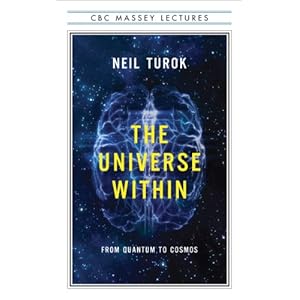
The winner in the Adult category is Neil Turok for The Universe Within.


Here we are giddily clutching our plaques.  

Congrats to Neil and to everyone who participated in this great event! And a huge thanks to the Fitzhenry Family for endowing this award and highlighting the central role of science in our lives.

Here are the deets from the official announcement:

$10,000 Lane Anderson Award Winners

Celebrating the Best Science Writing in Canada

Toronto. 26th September, 2013:  The Fitzhenry Family Foundation announced the winners of the 2012 Lane Anderson Award. Finalists and winners were feted at an intimate dinner in Toronto.

The annual Lane Anderson Award, now in its fourth year, honours excellence in Canadian science writing, by highlighting two jury-selected books – one addressed to adult readers, the other written for children and/or middle grade readers.  Authors of the winning books each receive $10,000. 

There were a total of 20 submissions for this year’s award.

“We established this award because we believe passionately that science writing, and science reporting is vitally important for every Canadian today.  Science writing, research, and knowledge impacts the ways in which we live now, the ways our children will live in future, and the ways in which our children’s children will live their lives. As Canadians, we do not pay enough attention to science. We take it for granted.  The Lane Anderson Award is dedicated towards removing that indifference, two books at a time. We thank all of the authors and publishers and judges who are helping us pass along this message. It needs to be heard and heeded.”
- Hollister Doll & Sharon Fitzhenry Directors, Fitzhenry Family Foundation  

The annual Lane Anderson Award honours two jury-selected books, in the categories of adult and young reader, published in the field of science, and written by a Canadian. The winner in each category receives $10,000.


The 2012 Lane Anderson Prize Winners are:

The Universe Within by Neil Turok (Anansi)

The most anticipated nonfiction book of the season, this year's Massey Lectures is a visionary look at the way the human mind can shape the future.  Neil Turok is one of the world’s top physicists and founder of the African Institute for Mathematical Sciences (AIMS). He is currently the Director of the Perimeter Institute for Theoretical Physics.


Big Green Book of the Big Blue Sea by Helaine Becker (Kids Can Press)

Based on the idea that knowledge is power, The Big Green Book of the Big Blue Sea shows how the ocean works and why this immense ecosystem needs our protection. Experiments using everyday materials help explain the scientific concepts. Helaine Becker is a bestselling writer of children’s fiction, nonfiction and verse.


The two juries meet annually to consider all the submissions to the Lane Anderson Award and comprise editors, librarians, and previous Lane Anderson winners.

The Lane Anderson designation honours the maiden names of Robert Fitzhenry’s mother, Margaret Lane, and his wife, Hilda Anderson Fitzhenry.  The Fitzhenry Family Foundation is a privately directed Canadian foundation established in 1987 by Canadian publisher Robert I. Fitzhenry (1918-2008).  The Lane Anderson Award is administered by Christopher Alam, a partner at the law firm of Gowling Lafleur Henderson LLP.


12 Dec 2011

Inspiring Books


What were your most inspiring science reads in 2011? Maria over at Brainpickings (a site to which I recommend you subscribe) has a wonderful list with lots of links and videos to pore over. On my wish list? Radioactive: A Story of Love and Fallout by Laura Redniss. A great story and, by the looks of things, a stellar design. (And, really, what a great title.)

16 Aug 2011

Solar Powered Building at Concordia University


Text and photo by Marie Powell

Buildings use a lot of energy. We only have to see a city at night to realize that. Harnessing the sun to power a skyscraper sounds like the stuff of science fiction - but in Montreal, it's becoming science fact.

Concordia University has been a leading researcher into renewable energy sources for at least 25 years. In December, 2008, it became the site of a unique 17-story building that gets its light and heat from solar power. It's called the John Molson School of Business (left), and it's the first of its kind. I saw this building first-hand in June, at a conference on the Concordia campus in downtown Montreal.

At the very top you can see the dark solar panels across the width of the building, called the solar facade. This facade provides provides both heat and electricity, and is known as a Photovoltaic/Thermal (PV/T) application.

On the Concordia website, there's a useful document explaining how the energy system works, complete with flow charts and close-up pictures of the panels (SBRN Demonstration Solar Project). According to this report, the solar panels take fresh air from outside and heat it as much as 20 degrees on sunny winter days, maximizing energy efficiency even in cold weather. That's important because, overall, buildings use about 30 percent of the secondary energy produced in Canada, such as natural gas and oil, and about half of its electricity. I wonder how much energy could be saved, if all of Canada's buildings got light and heat from solar power.

Many partners collaborated on this project, including Concordia's Building, Civil and Environmental Engineering Department, Natural Resources Canada (NRCan), and Conserval Engineering, a company that won a major Renewable Energy award for the PV/Thermal Solar Wall (this link shows an online video of the award.)

Here are some resources to check for more information:

"Concordia to head research into cold-climate solar power technologies" (Montreal Gazette, June 8 2006)

"Innovative Solar Technology Showcased in State-of-the-art Building," by Laura Nichol (NRCan website, March 2009)

"Le Quartier Concordia - John Molson School of Business," by Christopher Henry (Architecture Daily, July 2011)

SBRN Demonstration Solar Project (pdf document), Concordia website (www.bcee.concordia.ca)


Marie Powell is the author of Dragonflies are Amazing! (Scholastic Canada).