23 Nov 2013

Who's that chit-chatting outside my door?

When I went to the Nature House at Elk/Beaver Lake, I expected to use my science talents, but I never expected to meet a new neighbour. A small neighbour, and new to me but a long-time resident of the area.
First sign of the little neighbour was a loud, repeated "CHIK!" sound from outside and behind the Nature House. I put down my gear -- a folding inflatable kayak in its bag, and a small drybag holding my wallet and spare dry shirt -- and walked round to the back of the Nature House. Up in a poplar tree was a small animal running from branch to branch, occasionally pausing to declare "CHIK!" in indignant tones.
Eventually I saw glimpses of it through the branches. It wasn't a bird as I'd thought; it was a furry four-footed animal. It wasn't a squirrel, either a red squirrel or a grey squirrel. Squirrels have long bushy tails. It wasn't a rat, either -- this animal's tail was shorter and furry, not long and bald. This little animal had a neat small head, and its furry coat was dark on the back with a white underside. I watched it scurry high in the branches, scolding another animal that was unseen; perhaps it was scolding a crow or raven.
Then I went into the Nature House, curious to figure out what I had seen. It was time for a little simple science research. But with no computer access to the internet, it was time to hit the books.
This photo is from ZooChat.com - check out their website!
First book I found on the Nature House shelves was Mammals of British Columbia. It's a great resource, with photos as well as descriptions of the animals and their habitats. The second book I opened was Carnivores of British Columbia. I had an idea what kind of animal this might be.
The sound this animal made reminded me of the sound I'd heard a baby river otter making on a seashore one day, and otters are carnivores. I wondered what kind of animals are related to otters, and are found in trees? Was this animal a pine marten, or maybe a fisher? It wasn't anywhere near big enough for either.
The little animal turned out to be the smallest member of the mustelidae family: a least weasel.
How wonderful it was to see this neat, bright little animal in the photos, and match it to the little fellow scrambling quickly through the trees. Small books like the ones in the Nature House or the public library are so useful for understanding more about our animal neighbours. I'm so glad that when I heard the sound of the weasel in the tree, I didn't just assume it was one more crow among many.
Later at home, I was able to find all sorts of interesting websites that can help us figure out what animals we're seeing in the woods, or traces that animals leave behind. One of them is the Canadian Museum of Nature website, which has lots of resources for learning a little or a lot. And it's bilingual!
The University of British Columbia has posted a list of animals. Canadian Geographic magazine, which has many educational materials available, has a website listing animal fact sheets for free download in English or French. And the Ministry of the Environment has a website that's an Identification Manual to the Small Mammals of British Columbia, with a link so that you can download the entire manual and print it if you like. This manual is really detailed, right down to five drawings detailing key differences among chipmunk genital bones. That's a little more detail than I needed to identify my neighbour, the least weasel.

12 Nov 2013

So What DOES The Fox Say, Anyhow?

Sci/Why alum L. E. Carmichael was on TV last week, talking about domesticated foxes and her new book, Fox Talk: How Some Very Special Animals Helped Scientists Understand Communication.

For the real answer to the question, "What does the fox say?" check out this clip:


Lindsey's book is available in soft and hardcover editions from Chapters, Amazon, or your favourite independent. If you're interested in the enhanced ebook, consider buying it direct from the publisher, with a bonus stuffed fox!

8 Nov 2013

The Man Who Made the Earth Move

Claire Eamer

Just about this time of year, back in 1930, one of the most famous figures in modern geology lay down to die on the snow-covered ice cap of Greenland. On November 1, Alfred Wegener celebrated his 50th birthday with friends at a tiny, temporary meteorological station on the glacier. The next day, he and one companion - a young Greenlander named Rasmus Villumsen - hitched up the sled dogs and headed back to the coast to rejoin their main party.

They never made it. In the spring, his friends found Wegener's body, laid out carefully on a reindeer hide and buried in snow. Villumsen was never found.

Wegener explaining continental drift - as depicted by
illustrator Sa Boothroyd.
From Before the World Was Ready: Stories of Daring Genius in Science
Unsung Hero

Today, Wegener is a celebrated hero in the world of geology, but that wasn't true when he died. Then he was a meteorologist and polar scientist with a weird idea that drove many geologists into a frenzy. The continents, Wegener said, weren't stuck in place. Instead, they moved - ever so slowly - around the globe, breaking apart to create oceans and coming together to create mountain ranges. He called his theory Continental Drift.

Most geologists hated the idea. They couldn't see how continents could move (and Wegener couldn't explain that either), and they were deeply offended that a mere meteorologist would stick his nose into their science. By the time of his death, Wegener had been amassing evidence and arguing his theory for 20 years without convincing them.

It would be another 30 years after Wegener's death before the geological world took him seriously. What it took was the discovery of a mechanism that explained the movement of the continents.

Marie and the Ocean Floor

Mapping the sea floor with sound waves.
Illustration by Sa Boothroyd, from
Before the World Was Ready (Annick Press 2013)
One of the first to recognize the mechanism was an American geologist, Marie Tharp. In 1952, an American survey ship was trundling up and down the Atlantic Ocean, using new technology involving sound waves to study the ocean floor. Back in the lab, Tharp was drawing ocean-bottom maps based on the ship's data.

She spotted a formation more familiar from land - a rift valley, created when two bits of earth's crust pull apart. And it meant, she realized, that the ocean bottom was spreading, getting wider. That meant that the continents on either side were moving apart, just as Wegener had said.

It took months before Tharp could convince her colleagues that the ocean really was growing wider. Even then, most geologists still considered Wegener sadly mistaken - at best.

The Canadian Connection

One of the scientists who took the evidence of ocean spreading a bit more seriously was Canadian geologist and physicist John Tuzo Wilson. He later said it took him almost a decade to accept the idea that the continents move, but once he did, there was no stopping him.

Tuzo Wilson realized that Earth's surface is made up of massive plates that move around, pushed and pulled by the forces in the planet's molten core. He pioneered the study of what is now called plate tectonics in a now-classic 1965 journal article called  "A New Class of Faults and their Bearing on Continental Drift." It was the vindication and elaboration of Wegener's much-despised theory from 35 years earlier.

And if Wegener hadn't died on that remote icefield in 1930, he might still have been around - a hale and hearty 85-year-old - to enjoy the triumph.

Want to Know More?

The story of Alfred Wegener and Marie Tharp and a few others is in my new book, Before the World Was Ready: Stories of Daring Genius in Science (Annick Press 2013).

There's plenty of information about Wegener on the Internet. Here's a good site, with links about different aspects of plate tectonics. And here's a lovely bio of Marie Tharp, in her own words.

John Tuzo Wilson was a science communicator as well as a scientist. He spent more than a decade as director general of the Ontario Science Centre in Toronto. Here's a short biography of J. Tuzo Wilson (as he was usually called), and here's a longer one.

25 Oct 2013

Creepy, Eerie, Macabre Fungi for Halloween


(This is a repost of the October 2013 one that somehow disappeared.)

Picture this: You’re in an unfamiliar part of the woods, alone. It’s spooky and dark. A storm is brewing. You hear something, stop dead in your tracks. Was it a howling wolf? Or just the wind? You’re alert now, all your senses are alive. And then you get a whiff of something—something so awful it makes your nose curl: the stench of rotting flesh, a nearby corpse. But where is it?
And then you see something…but it's not a corpse, though it's almost as grotesque. What you’ve found is a stinkhorn.
Two stinkhorns—Phallus ravenelii, with feasting slugs,
and Clathrus archeri (photos: Jan Thornhill; Wikipedia)
Stinkhorns are one of the more wondrous fruits of the fungi kingdom. They come in a bizarre variety of shapes, ranging from cage-like structures to tentacled stars that look like space aliens to rude-looking columns, some of which are dressed in lacy hoop skirts. Whatever their form, they all erupt—sometimes overnight—from an “egg,” and they all, at some point in their development, are covered in gross-smelling slime.
More traditional fungi rely on air currents to disperse their minute spores. Not the stinkhorn. A stinkhorn’s spores are imbedded in its stinky slime, disgusting muck that so closely mimics the smell of a decomposing cadaver it quickly attracts flies and other insects. When these insects take off again, they unwittingly carry away the stinkhorn’s spores stuck to their mouth parts and their tiny insect feet, spreading them far and wide. 
Stinkhorns are not the only macabre fungi you can come across in the woods. Walk farther and you might stumble upon some aptly named “Dead Man’s Fingers.” 
Dead Man's Fingers—Xylaria polymorpha (photo: Ulrike Kullik)
Properly called Xylaria polymorpha, these fungi are hardwood decomposers. They’re most often found on rotting logs, but when they grow from buried wood they can eerily resemble the blackened fingers of a corpse struggling to dig its way out from a forest grave. Unlike stinkhorns, which can pop up and then deteriorate in a couple of days, Dead Man’s Fingers are so horny and tough they can persist for months, or even years. 
And then there’s the Bleeding Tooth fungus.  
The spores of the Bleeding Tooth Fungus, Hydnellum peckii, are produced
on tooth-like projections beneath the cap. (photo: Darvin DeShazer)
The first time I stumbled upon one of these, it was so covered in “blood” I thought I’d found something recently killed. Though Hydnellum peckii, when fresh and moist, exudes something that looks shockingly like what oozes out of a slaughtered animal’s veins, the globules of pigment-filled liquid are nothing like animal blood. There is, however, a compound in these fungi that can affect blood. This compound, called atromentin, has anticoagulant properties similar to those of heparin, a medication used to prevent blood clots. Ominously, though, an overdose of these anticoagulants can cause a patient to bleed to death.

Some Omphalotus species, or Jack-O'-Lantern mushrooms,
glow in the dark. (photos: Thomas Schoch; Noah Siegel)
The fungi world provides even more Halloween-appropriate characters. In daylight, some of these look like perfectly normal mushrooms. But if you happen to be out for a midnight woodland stroll without a flashlight, you might be frightened by an eerie glow emanating from the base of tree—a glow produced by bioluminescent fungi. Scientists don't yet know why more than 70 species glow in the dark, but one idea is that their light might attract nocturnal insects that could help spread the mushrooms' spores. 
But the prize for the most frightening, the most macabre, the most fiendishly devious fungi has to go to the Zombie Ant Ophiocordyceps
The fruiting body of a Zombie Ant Ophiocordyceps protruding
from the head of a dead ant. The white nodules are another
parasitic fungus—a parasite of a parasite! (photo: David Hughes)
The Cordyceps family of fungi are parasites, and their chosen victims are often insects. But what makes Ophiocordyceps so unforgettable, and so nasty, is that after it has worked its way inside an ant's body, it travels to its brain, where chemicals are released that control the ant's actions. The now "zombified" ant is compelled to walk a distance from its colony, and eventually latches tightly onto a leaf with its mandibles. It will never let go. The fungus continues to grow, killing the ant and producing a fruiting structure that sprouts straight up out of the insect's head. The fungus then produces spores that are dispersed by air currents, so the fiendish cycle of Zombie Ants can continue. But, wait! There's some comeuppance for the dastardly Omphiocordyceps: a completely different parasitic fungi preys on it, reducing its ability to produce mature spores!    

For more information about fungi in general: http://www.mushroomexpert.com/
For more information about Zombie Ant Fungi: http://ento.psu.edu/directory/dhughes


18 Oct 2013

Creativity

            She reached up, touching the cold ceiling above her head, relishing the grain of stone beneath her fingertips. The lamp flickered. Shadows raced across the cave walls, spirits running through time. She hoped there was enough fat in the lamp. It would be difficult to find their way out, and she was afraid of what might press close in the darkness.
He was coming toward her. She was silent. It was easy to be, here; the walls were always talking. He stood beside her, holding a half clam shell filled with red, thin like new blood. He held it close to her hand, up near the rock. He put the end of a bone of a dove into the red, and blew, through the hollow.  His breath mingled with the fluid. It bubbled and whistled. The spirits whistled in reply. 
She felt the red against her hand’s flesh, cool and soothing, not hot like the blood of a kill, the blood of death. Her hand was steeped in it, her knuckles smooth under the coating. The light of the lamp flared and for a moment, her skin glowed. The red pulsed through her, inside her, and outside her. She peeled her fingers away from the rock with sadness, breaking the union between the past and the present. On the pale rock she’d left an imprint, a pale hand, five rays. A part of her to remain with the spirit shadows, a manifestation of her moment.
All of us share this imaginary CroMagnon woman’s compulsion to create, though we cannot understand the significance of her hand print, made deep in a cave some 40,000 years ago. We can say, however, that just like her hand print, what we create also leaves an imprint of ourselves on the physical world. At its core, creativity is about self-expression. Creativity is also, at its core, a manipulation of the world around us. Not only do we make our inner self external when we create, but we also interact with the external in a personal way. Creation is an act of giving and also an act of receiving.
I create because it is a way to give that is comfortable; it does not require thanks, and it has no strings attached. It is safe. When someone judges my hand print, they are judging not just my gift but my desire to give it. 
I create because the parts of me made external become a part of my world, a friendly part, that I can interact with, and receive from. I have forged connections with my surroundings, I am not so isolated. When someone judges my hand print, they are putting a value on the parts of me made external. They are changing the dynamic of my interaction with them.

Judging a creative product is important. To give requires a receiver. And understanding what we have expressed of ourselves is aided by understanding what others have perceived. However, it is never a task to be taken lightly. Even the simplest of creations may be imbued with meaning for the creator, and that meaning is not always accessible to others, like hand prints on a cave wall.

11 Oct 2013

Science magazines for kids

A few days ago an email arrived in my inbox from a Toronto colleague -- health writer Jane Langille -- to let me know about a new science magazine. (Thanks, Jane!)

I really enjoyed exploring the website (see Brainspace below), and that made me think about other children's magazines that cater to science interests.

Here are a few science magazines for kids that I know about:


Owl Kids: For me, Owl magazine and its cohorts Chirp and chickaDEE, each geared for a specific age group, remain the standard for Canadian kids' magazines. Owl, geared for nine- to 13-year-old readers, began as a nature and science magazine, but in recent years expanded its scope to include many other subjects and themes. It's been around for some 35 years, and it's still winning awards.

Owl also has an attractive website with content to explore geared for kids as well as teachers & parents. For example, the World Watch section offers links to causes of all types, including science-related topics.


Brainspace: New kid on the block, Brainspace is available through a website offering videos, a blog, and special content for students as well as teachers & parents. This Canadian magazine promises to offer interesting articles on math, geography, technology, and more.

If you've seen the September issue, please let me know: can the cover really talk? And how does it do that?


In my opinion, there's always room for more magazines offering content designed for readers in specific age groups, especially when the articles cover science. When I searched for children's science magazines, I found lots of links.


Odyssey: This is a science magazine designed for readers aged nine to 14, and the website says it intends to make its readers excited about science. Its topic range includes traditional school science subjects like physics and biology, as well as the environment, technology, and careers in the science fields.

Odyssey is part of the Cobblestone & Cricket family of magazines. Cricket has many different magazines geared for various ages and interests offered through Carus publishing (US). Each magazine has its own website, and the Odyssey site is full of interesting content and sample articles.


Kids Discover: While searching for magazines about science for kids, I came across this website. The Kids Discover website says it was started by a parent/publisher in 1991. It carries several science or science-related topics in its content list, from earth to space sciences.

I don't know much about this online magazine, but the website certainly looks interesting and I was able to read some samples of the content. Has anyone read it? What did you think? (Please leave a comment below.)


Do you have any favourite science magazines? Or any favourite magazines that have interesting articles about science?

Please leave a comment -- and share a link!

By Marie Powell

Marie Powell is the author of seven books for children, including Dragonflies are Amazing (Scholastic) and a new six-book series of Word Families books published by Amicus Publishing

4 Oct 2013

The Lane Anderson Awards for Excellence in Science Writing

Can you be just a little over the moon? No. Which is why I'm a LOT over the moon to have been named the winner of the 2012 Lane Anderson Award for Science Writing, in the Children's Books category for The Big Green Book of the Big Blue Sea.


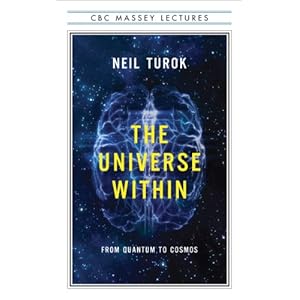
The winner in the Adult category is Neil Turok for The Universe Within.


Here we are giddily clutching our plaques.  

Congrats to Neil and to everyone who participated in this great event! And a huge thanks to the Fitzhenry Family for endowing this award and highlighting the central role of science in our lives.

Here are the deets from the official announcement:

$10,000 Lane Anderson Award Winners

Celebrating the Best Science Writing in Canada

Toronto. 26th September, 2013:  The Fitzhenry Family Foundation announced the winners of the 2012 Lane Anderson Award. Finalists and winners were feted at an intimate dinner in Toronto.

The annual Lane Anderson Award, now in its fourth year, honours excellence in Canadian science writing, by highlighting two jury-selected books – one addressed to adult readers, the other written for children and/or middle grade readers.  Authors of the winning books each receive $10,000. 

There were a total of 20 submissions for this year’s award.

“We established this award because we believe passionately that science writing, and science reporting is vitally important for every Canadian today.  Science writing, research, and knowledge impacts the ways in which we live now, the ways our children will live in future, and the ways in which our children’s children will live their lives. As Canadians, we do not pay enough attention to science. We take it for granted.  The Lane Anderson Award is dedicated towards removing that indifference, two books at a time. We thank all of the authors and publishers and judges who are helping us pass along this message. It needs to be heard and heeded.”
- Hollister Doll & Sharon Fitzhenry Directors, Fitzhenry Family Foundation  

The annual Lane Anderson Award honours two jury-selected books, in the categories of adult and young reader, published in the field of science, and written by a Canadian. The winner in each category receives $10,000.


The 2012 Lane Anderson Prize Winners are:

The Universe Within by Neil Turok (Anansi)

The most anticipated nonfiction book of the season, this year's Massey Lectures is a visionary look at the way the human mind can shape the future.  Neil Turok is one of the world’s top physicists and founder of the African Institute for Mathematical Sciences (AIMS). He is currently the Director of the Perimeter Institute for Theoretical Physics.


Big Green Book of the Big Blue Sea by Helaine Becker (Kids Can Press)

Based on the idea that knowledge is power, The Big Green Book of the Big Blue Sea shows how the ocean works and why this immense ecosystem needs our protection. Experiments using everyday materials help explain the scientific concepts. Helaine Becker is a bestselling writer of children’s fiction, nonfiction and verse.


The two juries meet annually to consider all the submissions to the Lane Anderson Award and comprise editors, librarians, and previous Lane Anderson winners.

The Lane Anderson designation honours the maiden names of Robert Fitzhenry’s mother, Margaret Lane, and his wife, Hilda Anderson Fitzhenry.  The Fitzhenry Family Foundation is a privately directed Canadian foundation established in 1987 by Canadian publisher Robert I. Fitzhenry (1918-2008).  The Lane Anderson Award is administered by Christopher Alam, a partner at the law firm of Gowling Lafleur Henderson LLP.