17 Jun 2016

The Joys of Researching Kids’ Science Books — Plus a Contest!

by Jan Thornhill

I’m in the midst of doing research for a new kids’ book ­— one of my favorite parts of the creation process. Not only do I get to fully immerse myself in my subject, but I also get to stumble across fabulous little off-topic tidbits that make my day. When I’m full hog into the process, these tidbits come to me one after another, making me ooh and ah with the thrill of discovery. What I live for — and the reason I tell kids that a day without learning something new is a day wasted.


I just got 2 advance copies of The Tragic Tale of the Great Auk!
Take yesterday, for instance, when I found a slew of fun things that were tangential to my topic. I’m going to list them so you can see what I mean. I’m also going to offer a prize of a signed book (sorry, not the Auk book — none to give away yet) to the first reader who can guess what I’m writing is about (unless I’ve already told you). Other than the “clues” that follow, your only hint is that it will be companion volume to The Tragic Tale of the Great Auk, which is coming out from Groundwood this October.


Staddle Stones

staddle stones
Staddle stones protect storage buildings from vermin. (Wikipedia)
“Staddle stones” were used in Great Britain to raise granaries and other small storage buildings above the ground to keep out vermin. Their widespread use blossomed with the introduction of a worldwide pest. (They look like mushrooms!)

Crossmen

nineteenth century manure crisis
In the late 1800s, horses dropped ridiculous amounts
of manure on the streets every day.
“Crossmen” were boys who were paid to remove manure from streets before automobiles replaced horses in cities. More specifically, they cleaned crossing paths so that women’s long skirts would not drag in piles of “horse apples.” (Google "manure crisis" for some entertaining reading!)


Cotton Domestication

ikat weaving
Ikat weaving (Wikipedia)
Cotton was independently domesticated in both the east and the west. Along with its domestication, the same tools for working it were independently invented: combs, spindles and simple looms. What I like best is that ikat weaving, (an extremely complicated process of dying bundles of yarn multiple hues or shades of colour and then lining them up while weaving to create intricate patterns in the final fabric), was also independently invented in Asia, Africa and central America. 


Word of the Day!

Inartificial: not characterized by art or skill (archaic)


Quote of the Day!

Mark Twain having a youthful bad hair day. (Wikipedia)

A quote attributed to Mark Twain: “History doesn’t repeat itself, but it often rhymes.”


The "Father of Traffic Safety"

William Phelps Eno invented traffic signs
Traffic jams were common in cities long before cars came along.
At the beginning of the twentieth century William Phelps Eno — the "father of traffic safety" — came up with the stop sign, pedestrian crosswalk, traffic circle, one-way street, pedestrian traffic island, yield sign, and taxi stand. This was his adult response to having been stuck in a traffic jam many years before when he was a child, a traffic jam of about a dozen horse-drawn vehicles. He remembered thinking at the time that “all that was needed was a little order to keep the traffic moving.”


Protected Species in Elizabethan Cities

scavenger raven
The common raven is a scavenger. (Wikipedia)
Ravens and kites were protected species in Elizabethan cities. Both are scavengers of dead animals. I think it must have smelled more back then than we imagined!

10 Jun 2016

World Oceans Day

There are plenty of ways to celebrate science on World Oceans Day! Today before going to the beach, I went to Twitter and looked at some interesting projects
 
OceanNetworksCanada ‏@Ocean_Networks 
-that's a fascinating page on Twitter, with plenty of photos and links to interesting things happening in ocean science. Today they posted:
 "The audience oohs at a California during 's . Awesome!
 
Ocean Networks had this wonderful image of a sea cucumber!
 I also looked at the page for
"Connecting people to the ocean in an entertaining, engaging & educational way to build ocean awareness & the next generation of ocean stewards.

Fish Eye and Ocean Network used the hashtag #livedive, which leads to a page discussing live broadcasts during dives in the ocean. Fascinating!

Twitter is no substitute for walking along the seashore, or learning to scuba dive. But it's a great way to bring the outdoors and ocean into my home for an hour, and help me decide what to look for in the library and at the seashore.

3 Jun 2016

This Is Your Brain... This is Your Brain on Books

By L. E. Carmichael

Image via ambernwest/Flickr under CC
Earlier this week, I had the privilege of talking to librarians at the Atlantic Provinces Library Association conference about STEM books for kids, and how to find the great ones. Due to scheduling conflicts, I was only able to attend one other session, but it was a great one - all about the neurobiology of reading. In other words...

Your brain on books.

I really, really, wish I'd brought a notebook with me. So many details have already escaped me, but here's what I remember.

Learning to Read


Nicole Conrad of Saint Mary's University started the session. She talked about how kids learn to read in stages, and how the process of becoming a fluent reader causes physical changes in the structure of kid's brains. For one thing, stronger connections form between the occipital lobe, which processes visual info, and the language centres of the brain. That wasn't too surprising, but did you know there is an area of the brain that appears to exist exclusively for reading the written word? In fMRIs, that area only responds to words - no other visual information. How cool is THAT?

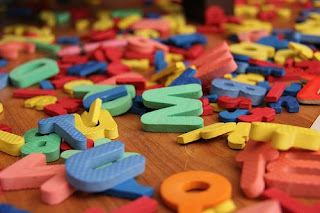
Conrad also said that fun activities like story time and playing with letter-shaped toys (like plastic fridge magnets) are enough to prepare kids for the image recognition used in reading. The "drill and kill" method of early reading training is not only totally unnecessary, but risks building resentment towards books. Keep reading fun, parents, and see what a difference it makes!

Reading and Bilingualism


Hélène Deacon was next, speaking on language acquisition for bilingual kids. Apparently kids (the lucky ducks) can learn a second language with no more effort than learning their first, because (unlike adults) they're really good at applying patterns from one language to patterns in a second language. Retention of languages is strongly affected by reading material, though. Kids whose first language is the dominant language of their social milieu benefit from reading in their second language, whereas kids whose first language is in the minority actually need reading enrichment in their primary language.

Deacon also shared my favourite fact of the session - books are an important part of language acquisition for kids, because the text complexity of a kid's book is equivalent to the oral complexity of expert witness testimony. Which means that kids who read are learning a much deeper and richer version of their languages than kids who only speak!

Reading When Deaf or Hearing Impaired


Bonita Squires shared some really cool science on how children with hearing impairments learn language. For example, did you know that letter sounds used in speech vary in both pitch and decibel? As a result, a hearing-impaired child may hear the same spoken word as a collection of very different sounds, depending on level of background noise and the pitch of a person's voice. This lack of consistency makes it really challenging for kids to learn new vocabulary aurally.

As deaf and hearing impaired kids learn to read, however, they discover that the same letter combinations always signify the same object or concept (assuming the words are properly spelled!). That knowledge dramatically improves their language skills, in any format. In other words, fostering a love of reading in kids with hearing impairments may be even more important than in kids with normal hearing.

And Something for the Adults...


Good news, grown ups! According to Gail Eskes of Dalhousie, reading is one of several activities that can slow general age-related cognitive decline, AND the onset of Alzheimer's disease, meaning avid readers will probably get more functional years out of their brains.

Go forth, my friends, and experience your brain on books. Need suggestions for a great title? Check out our list of Canadian science books for kids!

27 May 2016

Free Space Program Info from NASA

Rocket ships, telescopes, and astronauts! My computer brings me NASA's Astronomy Pictureof the Day and Image of the Day. NASA's space program has been fascinating since I was a child. These days, it's interesting in more ways, and the information is much more accessible than it ever was. 

Mike Collins in a command module simulator on June 19, 1969 during a practice rendezvous
 and docking maneuver with the lunar module. Credits: NASA
 
Did you know that since it was founded, NASA makes heaps of learning materials available for free? Fifty years ago, there were only newspaper articles for me and my brother to read about the Apollo program. We watched the moon landings on our family's black-and-white television. Then in a science magazine we found the mailing address for NASA. In reply to our questions about astronauts, NASA sent us free pamphlets and posters and booklets. We sent blank videotapes and got back recordings about Mars and Venus probes. We were the space program experts at our school back then! 
 
That same feeling of “kid in a candy store” is what I get today at NASA's website at nasa.gov . It's wonderful to see the photos and videos of images from telescopes and from probes that visit other planets. Banners at the top of the screen organize links to many pages on different topics. When I wanted detailed articles to read on Curiosity Mars rover, it was easy to find information. Social media links are there, for daily updates from NASA on current events such as the Pluto fly-by. I even found podcasts and ebooks to download for my phone and tablet, and ringtone mp3s for my spouse to mix into Acid music loops! There is material of interest for people of every age or reading level, and particular attention is paid to teachers and students. For young children, there are NASA Space Place at http://spaceplace.nasa.gov/ and NASA Kids Club.

This Jan. 19, 2016, self-portrait of NASA's Curiosity Mars rover shows the vehicle 
at "Namib Dune," where the rover's activities included scuffing into the dune with a wheel 
and scooping samples of sand for laboratory analysis.

I'll never forget watching the dawn sky from an isolated farm north of Edmonton as the space station went by, and feeling connected to the space program because I looked it up at https://spotthestation.nasa.gov . The information NASA gathers on Earth and in space is for everyone. International scientists study data and draw conclusions that are wide-reaching. Doctors in Canada's North use monitoring and communications systems originally developed for astronaut safety. Artists are inspired by images and ideas from programs that study the solar system and galaxies.

We may never know how many people are helped by NASA making this knowledge available. You can look at NASA's web pages on Benefits To You to get some idea of the impact. The weather data alone is priceless. As for my brother who made an astronaut costume for Hallowe'en, he grew up to test computer games and security programs, and edit Neo-opsis Magazine. I'm the author of over two dozen books on science for educational publishers. With my friends and colleagues I write for our blog Sci/Why which has a list of family-friendly science books you can find in the left-hand column on this page. Whenever someone says they want to know more about astronomy and the space program, I send them to NASA's website for all kinds of information.

20 May 2016

So You Want to Work with Animals.....

Post by Helaine Becker

A lot of kids love the idea of a career working with animals. Who can blame them?Animals are cute, cuddly, funny, fascinating. But they're also hard to take care of!

For my recent book, Worms for Breakfast: How to Feed a Zoo,  I got the chance to interview several people who do work with animals, every day. They told me what their favorite parts of their jobs were, what they liked least, and how they got the job in the first place. While most agreed that their jobs had lots of hard bits, they all agreed that working with animals was everything they'd imagined it would be: challenging, exciting and rewarding.

Dr. Deb Schmidt, a Nutritionist at the St. Louis Zoo, had this to say, "The fun part of being an animal nutritionist is helping to solve problems. I like to figure out what nutrients animals need and at what levels. Sometimes, domestic animals (like cows, horses, chickens, dogs and cats) give us clues about what wild animals similar to them may need. But the diets of other animals (such as apes and reptiles) can be harder to figure out."

Dr. Schmidt went on to say that if you want to become a zoo nutritionist, you should be good at math and science. A strong background in biology or biochemistry wouldn't hurt!

You can find out more about careers that involve science and working with animals, check out Worms for Breakfast.  But also check out Sci-Why's very own giant list of super science resources (click the tab, above). You'll find a listing there specifically for Careers in Science.


13 May 2016

Announcing the Bigger, Better - and Fully Updated - Science Book List

By Claire Eamer

2014 Lane Anderson Award
About a year ago, we posted our first list of Canadian science-themed books for children. Our goal was to help teachers, librarians, science communicators, and parents find science resources home-grown in Canada.

It was a selection only, not a comprehensive list - just what we could do with too little time, too few hands, and no resources to speak of.

2012 Lane Anderson Award
Here we are a year later, and not much has changed in the time-hands-resources continuum - but the book list has changed. It's bigger, bolder, better organized - and UPDATED!

(Oops. Did I shout that? Well, it's worth shouting about.)

The list is still not comprehensive, but there are a lot of books in there. Including the prize-winners you see on this page. The books are listed by curricular topic, so you can search for books on your favourite subject or just browse happily.
2013 Lane Anderson Award

And the book list even has its own shiny new page on the Sci/Why website. Take note of the tab on the right, above, and keep an eye on that page for further news. Or you can just jump straight to the book list.

Please share the Science Book List link with everyone and anyone. And use the list. You're welcome to download and distribute it. Just acknowledge the source.

Happy Reading!

7 May 2016

Reconnecting with Nature in Five Minutes

by Jan Thornhill
House sparrows love cities. (Wikipedia)
It’s May. Before my coffee is ready I let the dog out and sit for a couple of minutes on the early morning porch. I don’t have my glasses on, but I know I’m surrounded by birds, because they’re singing up a storm. The spring songs of the year-rounds — chickadees, mourning doves, blue jays, a woodpecker, distant crows — overlap with the new arrivals — robins, chipping sparrows, a phoebe flycatcher, and the first ovenbird, an early wood warbler. In a week or so, when spring migration goes berserk, on any given morning I should be able to count fifteen or more different kinds of birds within five minutes. In the 25 years since we built our house in the woods, I have seen or heard 121 species on our two acre property. And the house sparrow, so common in cities, is not one of them.

The ovenbird is a seldom seen, but often 
heard woodland warbler. (Louis Agassiz Fuertes)
I had the luxury of growing up spending my free time in fields and woods, environments that nurtured my love of nature. That kind of childhood is all too uncommon today. Now such a huge majority of kids are growing up in urban environments, under much closer supervision, that most have little contact with “natural” habitats. This loss of engagement with nature has dire implications: it is difficult to care about, and work to protect, something you do not know. 

But, wait! As unnatural and lifeless as cities might sometimes seem, they are simply a different sort of natural environment, one that human animals have created, environments that support a startling amount of wildlife.

Blue jays are just as comfortable in cities 
as they are in forests. (Wikipedia)
When I lived part time for a couple of years at my aunt’s house in Toronto, I counted 64 different kinds of birds in her tiny yard and in her trees, a house that was only a ten-minute drive from the CN Tower! At Queen and Bathurst I have seen a kettle of forty turkey vultures swirling in the sky. At Bloor and Yonge, I have looked up and seen a bald eagle soaring south, white head and tail glittering like sequins in the sun. And from a hospital room on University I’ve seen a peregrine falcon streaking by. The only one I’ve ever seen.

I saw a bald eagle heading for Lake Ontario, sailing
high down Yonge St. (Ryan McFarland)

And now it’s May and millions of birds are on the move. One of the wonders of migration season is that birds continue to fly to their summer (or winter) homes using the same flyways their ancestors took, regardless of what cities and towns humans have built in their paths. To see them, you just have to pay attention.

Sometimes you have to look up in the city — you
might see a flock of turkey vultures! (Wikipedia)
I know my birds by song, but before I learned their songs, even when I was a tiny child, I was perfectly capable of distinguishing one song from another. And so can you. In almost any Canadian city — or anywhere else, for that matter — if you go outside and sit quietly for a few minutes, you should be able to hear at least a couple of bird songs, perhaps the irritating chirp, chirp, chirp or house sparrows, or the soothing cooing of pigeons, or the harsh chatter of a magpie, or the gronk of a raven, or one of the multitude of sounds a starling can make. At this time of year, though, if you listen carefully, you may hear many more songs, songs that are less familiar. If you follow a song, you might see a bird you’ve never seen before.

The black-billed cuckoo is a gorgeous, common
bird in Calgary. (John James Audubon)
But you have to go outside. And you have to go outside without your music, without your phone, without your ipad. With nothing but your eyes and ears. Go out early tomorrow morning. Sit quietly with your ears open and your eyes peeled. Who knows what joyous songs you’ll hear? Who knows what fancy mating outfits you’ll see? Five minutes is all you need to connect to whatever your natural habit is.

Resources: 


Please read this important piece by George Monbiot in the Guardian: “If children lose contact with nature they won't fight for it”