by L. E. Carmichael
One of the coolest things about fiction (especially science fiction) is how it inspires scientific discovery in real life. Cell phones - inspired by Star Trek communicators - are a classic example. Edmond Locard is another. Locard was a huge fan of Sherlock Holmes novels, in which the great detective solves crimes using the tiniest of clues. The books were one of the reasons that Locard became a forensic scientist. He not only pioneered the field of trace evidence - microscopic clues - but defined Locard's Principle, "every contact leaves a trace." Meaning that during a crime, physical evidence transfers between the crime scene and the criminal, this Principle the cornerstone of modern forensics.
One of my favourite examples is a case where science inspired art which then turned around and inspired science.
It began during the Scientific Revolution - the era of scientists like Newton and Boyle (who, in addition to defining Boyle's Law, invented the lab report). During a frog dissection around 1780, Luigi Galvani's assistant touched a nerve cell with his scalpel, and the frog's leg jumped. Galvani believed nerve cells conducted electricity - could electricity be the spark of life? Electric shocks couldn't save drowning victims, but they did cause the corpse of a murderer at Newgate Prison to sit straight up.
Mary Shelley was well-educated and fascinated by science, so she probably knew about these experiments. So it's probably not surprising that, when a group of her friends challenged each other to write scary stories, she came up with Frankenstein.
Here's the cool part.
In the early 1930s - golden age of Hollywood monster movies - 9-year-old Earl Bakken saw Frankenstein for the first time. He loved it so much, he went back over and over again, fascinated by the way electricity brought dead tissue back to life. Bakken also loved to tinker with mechanical devices, and once he got his engineering degree, opened a medical technology company in his garage. He repaired equipment for the local hospital and made friends with a lot of the staff, including Dr. Wilton Lillehei.
Lillehei was a pioneer in the field of open heart surgery. After the procedures, about 10% of the patients, many children, needed pacemakers to keep their hearts beating until they healed enough to beat on their own. At the time, pacemakers were so big, they had to be pushed around on carts. They also had to be plugged into the wall. As a result, one of Lillehei's child patients died during a power outage in 1957.
Lillehei asked Bakken to come up with something better. Bakken designed a 4 inch square, wearable pacemaker powered by a 9 volt battery. Bakken tested it on a dog and the very next day, Lillehei connected the wires to a little girl's heart. She not only survived the surgery, her heart grew strong enough that she didn't need the device anymore. Today, Bakken's company, Medtronic, is the largest manufacturer of (implantable) pacemakers in the world.
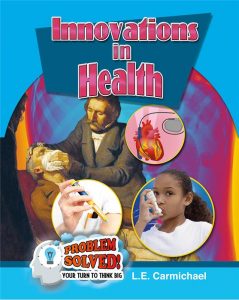
For more cool stories about medical innovations, check out my children's book, Innovations in Health. And for more on Frankenstein, vampires, werewolves, and sea monsters, check out Monster Science, by Sci/Why blogger Helaine Becker.
Showing posts with label Frankenstein. Show all posts
14 Jul 2017
14 Oct 2016
Just in Time for Halloween - Monster Science!
Post by Helaine Becker
Science isn't scary. Or is it?
I'm pleased to announce that my latest book, Monster Science (Kids Can Press) is out, and the reviews are in!
Here are two:
"From Frankenstein’s creation to Nessie, Becker uses the creatures of our scariest stories as a springboard for an introduction to the scientific understandings that might make such creatures possible—or impossible. In addition to man-made monsters and legendary sea creatures, she covers vampires, zombies, werewolves, and wild, humanlike creatures like Bigfoot. Chapter by chapter, she provides references from literature, film, and popular culture, including a bit of science, a bit of history, and a plentiful helping of humor. She includes numerous monster facts, suggests weapons of defense, and concludes each section with a test-yourself quiz. Science topics covered range widely: electricity, genetic engineering, “demonic diseases,” the nature of our blood and the circulatory system, the possibility of immortality, animal classification, evolution, cannibalism, optical illusions, heredity, hoaxes, and the very real profession of cryptozoology, or the search for hitherto unidentified creatures. Explanations are clear though sometimes oversimplified; they’ll provide readers with an acquaintance with the topic and its vocabulary but probably not real understanding. Lively design and zany cartoon illustrations add to the appeal. There is an index but, sadly, no sources or suggestions for further explorations by readers who will be wanting to know more.Book bait of the best sort, this is a winning combination of fancy and fact." - Kirkus
"A highlight of this work is its exploration of the often symbiotic relationship between culture and science; figures such as Shelley, John Polidori (The Vampyre), and filmmaker George Romero (Night of the Living Dead) merged cultural fascination with scientific development to create truly inspiring works and further public interest in science...VERDICT: The connection between pop culture and science is intriguing; this title will appeal to science educators as a supplemental resource for classroom activities. - School Library Journal
Want a sneak peek? Find out your Vampire IQ with this science-sharp quiz from Chapter 2!
Science isn't scary. Or is it?
I'm pleased to announce that my latest book, Monster Science (Kids Can Press) is out, and the reviews are in!
Here are two:
"From Frankenstein’s creation to Nessie, Becker uses the creatures of our scariest stories as a springboard for an introduction to the scientific understandings that might make such creatures possible—or impossible. In addition to man-made monsters and legendary sea creatures, she covers vampires, zombies, werewolves, and wild, humanlike creatures like Bigfoot. Chapter by chapter, she provides references from literature, film, and popular culture, including a bit of science, a bit of history, and a plentiful helping of humor. She includes numerous monster facts, suggests weapons of defense, and concludes each section with a test-yourself quiz. Science topics covered range widely: electricity, genetic engineering, “demonic diseases,” the nature of our blood and the circulatory system, the possibility of immortality, animal classification, evolution, cannibalism, optical illusions, heredity, hoaxes, and the very real profession of cryptozoology, or the search for hitherto unidentified creatures. Explanations are clear though sometimes oversimplified; they’ll provide readers with an acquaintance with the topic and its vocabulary but probably not real understanding. Lively design and zany cartoon illustrations add to the appeal. There is an index but, sadly, no sources or suggestions for further explorations by readers who will be wanting to know more.Book bait of the best sort, this is a winning combination of fancy and fact." - Kirkus
"A highlight of this work is its exploration of the often symbiotic relationship between culture and science; figures such as Shelley, John Polidori (The Vampyre), and filmmaker George Romero (Night of the Living Dead) merged cultural fascination with scientific development to create truly inspiring works and further public interest in science...VERDICT: The connection between pop culture and science is intriguing; this title will appeal to science educators as a supplemental resource for classroom activities. - School Library Journal
Want a sneak peek? Find out your Vampire IQ with this science-sharp quiz from Chapter 2!
Labels:
bigfoot,
boo,
critical thinking,
Frankenstein,
Halloween,
loch ness,
Nessie,
nonfiction,
sasquatch,
scary,
science fun,
science history,
vampire,
werewolf,
witch,
zombie
3 Aug 2016
Are Monsters REAL?
Post by Helaine Becker
Are monsters - vampires, zombies and their kin - real? Could they be?
I'm so excited to share this new trailer for my upcoming book, Monster Science, from Kids Can Press.
Enjoy!
Are monsters - vampires, zombies and their kin - real? Could they be?
I'm so excited to share this new trailer for my upcoming book, Monster Science, from Kids Can Press.
Enjoy!
Subscribe to:
Posts (Atom)


