Showing posts with label Yolanda Ridge. Show all posts

26 Nov 2021

Vacuuming up eDNA

 by Yolanda Ridge

In crime shows the first thing detectives look for is fingerprints. I’m sure you know why —because every person has a unique pattern on the tips of their fingers. This means anything touched by the criminal could help to identify them.


Smart criminals wear gloves for exactly this reason. To stay one step ahead, detectives and scientists figured out how to look for something else that’s unique — DNA fingerprints.

What is DNA? It’s the alphabet used to write the instruction manual on how all living things develop, grow and function. A copy of this instruction manual is contained in every single cell of our body. Which means that if a criminal leaves a piece of hair of a speck of spit at the scene of the crime, scientists can examine the DNA within the cells to try and identify a suspect.

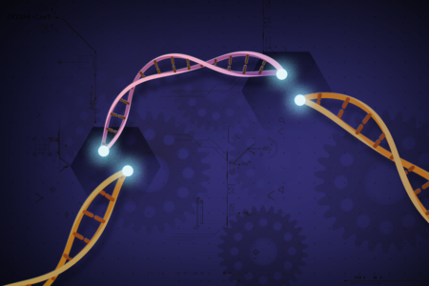
DNA fingerprinting has been available for a while but now there’s something new on the scene — environmental DNA. Better known as eDNA, environmental DNA is DNA that’s been shed by an organism into the environment. And it’s found almost everywhere — water, soil, ice and even air.


Environmental DNA is not being used to fight crime — at least not yet. But over the past ten years it’s been used to do some cool stuff including:

  • verify a new whale species in Mexico

  • monitor endangered fish species like the dwarf Galactus in Australia

  • determine whether there’s enough food for tigers in Bhutan

  • research biodiversity and native species in areas like Columbia

  • track polar bear populations and movement in the arctic

  • detect invasive species such as Asian carp, American bullfrogs and New Zealand mudsnails

  • detect microbes dangerous to plant, animal and human health in waterways around the world


More recently, scientists showed they could vacuum eDNA directly from the sky. To prove it, two different research groups identified DNA from animals at a nearby zoo in samples of the air.


To find out more about eDNA, check out these YouTube videos:


  1. EnviroDNA (Australia): https://www.youtube.com/watch?v=TQdTV1rAlWY

  2. From the World Wildlife Fund: https://www.youtube.com/watch?v=4YXfZvEvUgc


And keep following science blogs like this to learn more about how eDNA gets used in the future. It’s coming soon to a crime scene near you (but hopefully not too near you!).


Yolanda Ridge is a middle grade author, science writer and knowledge translation co-ordinator from Rossland, BC. Visit her website at www.yolandaridge.com to find out more.


Photo credits:

Fingerprint image by Stux from pixabay.com

DNA by Jerome Walker from Wikimedia Commons

eDNA image from Biological Conservation via ScienceDirect

Cloud DNA by Andrew Brumagen via Freethink


References:

https://doi.org/10.1016/j.biocon.2014.11.019

https://www.freethink.com/environment/environmental-dna-whale

https://www.science.org/content/article/dna-pulled-thin-air-identifies-nearby-animals

https://www.google.com/url?sa=t&rct=j&q=&esrc=s&source=web&cd=&ved=2ahUKEwiz6Ob40Kr0AhUBHzQIHR5lDP8QFnoECAMQAw&url=https%3A%2F%2Fwww.usbr.gov%2Fresearch%2Fprojects%2Fdownload_product.cfm%3Fid%3D2513&usg=AOvVaw07mx_aLfvVMelg5lPygWdF


28 May 2021

Seagrass and Neptune Balls


Seagrass and Neptune Balls by Yolanda Ridge


Here’s something you probably know (or could figure out): seagrass is grass that grows in the sea, usually close to shore in clusters called meadows.


photo of seagrass waving on an ocean bottom

Here’s something you probably didn’t know: seagrass is helping to fight plastic pollution.

How?

By removing microplastics from the ocean.

Here’s how it works:


Step 1: When blades of seagrass die, they sink to the ocean floor and hang out between long blades of grass that are still growing strong.


Step 2: Ocean water washes through these seagrass meadows as the tide moves in and out.


Step 3: Tiny bits of plastic in the water get trapped among the living blades of grass and tumble about with the dead ones.


Step 4: Over time, they form something called Neptune balls.


a neptune ball lying on the ocean floor

Step 5: As Neptune balls grow in size, they eventually escape the seagrass meadow—with the help of waves—and roll toward shore.


Scientists estimate Neptune balls from a specific species of seagrass collect nearly 900 million plastic items in the Mediterranean Sea alone—every single year. That’s good news for ocean ecosystems since microplastics are a danger to everything from sea creatures to seagrass itself.


neptune balls that have washed up onshore

And that’s not all! Seagrass also:

  • improves water quality by filtering out more than just plastic,

  • fights climate change by absorbing carbon dioxide and releasing oxygen, and

  • provides a home for hundreds of different fish species.


So next time you’re swimming at the beach and feel something tickle your toes, look down and see if you’re swimming over a seagrass meadow. Leave it be and then give those Neptune balls a hand by picking up whatever plastic you see—on land or at sea—and disposing of it properly.


Yolanda Ridge is a middle grade author and science writer from Rossland, BC. Her most recent nonfiction book for young adult readers, CRISPR: A Powerful Way to Change DNA (Annick, 2020) is available wherever you buy books. Visit http://www.yolandaridge.com to find out more.


Image Credits

1. Seagrass Photograph: Milorad Mikota/Wikimedia Commons (CC BY-SA 4.0)

2. Neptune ball at Sea Photograph: Oplats/Wikimedia Commons (CC BY-SA 4.0)

3. Neptune Balls on Shore Photograph: Marta Veny/UNIVERSITY OF BARCELONA/AFP/Getty Images


Source Information

  1. Sànchez-Vidal, A.; Canals, M.; de Haan, W.P.; Romero, J.; Veny, M. “Seagrasses provide a novel ecosystem service by trapping marine plastics”. Scientific Reports, January, 2021.

Doi: 10.1038/s41598-020-79370-

  1. https://phys.org/news/2021-01-seagrass-meadows-marine-plastic-sea.html

  2. https://www.ub.edu/web/ub/en/menu_eines/noticies/2021/01/003.html


6 Mar 2021

The Science Behind Conspiracy Theories

 by Yolanda Ridge

Sci Why Post: March 5, 2021


The Science behind Conspiracy Theories


It’s been almost one year since the World Health Organization declared COVID-19 a pandemic. We know a lot more about the coronavirus than we did then but there’s still lots of conspiracy theories about it and many people who believe them.


What is a conspiracy theory?

It’s an attempt to explain tragic events by the actions of a small, powerful group of people who are usually seen as evil. Conspiracy theories often suggest that some important secret is being kept from the general public.


Top coronavirus conspiracy theories:


  • It spread through the 5G network.

  • It was created by Bill Gates so he could implant microchips in people through vaccination.

  • It escaped from a Chinese lab.

  • It was developed as a biological weapon.

  • There’s some type of miracle cure for COVID-19.

  • It doesn’t exist.


Where do conspiracy theories come from?

There’s usually a small grain of truth that starts a conspiracy theory. It spreads from there, mostly through fear.

For example, people blamed 5G because there was a rapid rollout of 5G networks taking place at the same time the pandemic hit (truth). A meme linking the two went viral thanks mostly to anti-vaccine activists who also believe that electromagnetic radiation is bad (fear).

The World Health Organization has been very clear that viruses cannot travel on mobile networks. It’s also true that COVID-19 is spreading rapidly in many countries that do not have 5G. Even so, this conspiracy theory led to cellphone towers being set on fire in some part of the world.


Why do people believe conspiracy theories?

People who believe in conspiracy theories instead of explanations grounded in fact and science are not necessarily crazy. Or dumb.

Here are a few reasons people are especially likely to believe COVID-19 conspiracy theories:


  • When we feel insecure and isolated, our brains are more likely to buy into what we consider popular opinion (especially if those opinions are supported by celebrities or other influencers).

  • Our brains often confuse familiarity with the truth, which means we tend to believe things we see over and over again thanks to social media algorithms.

  • Simple explanations for random events help us feel more in control.

  • When we’re anxious we use cognitive shortcuts—unconscious beliefs or biases—to make fast decisions about what to believe.

  • Once we’ve decided to believe in something, we seek out information that supports that belief.

  • Conspiracy theories allow us to cope with threatening events by blaming a specific group of “other people”.


Are conspiracy theories bad?

Yes! It’s estimated that 46% of Canadians believe one of the big conspiracy theories regarding COVID-19 and 28% of Americans believe the coronavirus was created by Bill Gates. Burning cellphone towers is bad, obviously, but conspiracy theories are especially dangerous when they stop people from taking reasonable actions like getting vaccinated.

According to two surveys done at the end of 2020, 35-40% of Americans say they will not get the COVID-19 vaccine. Since fighting the pandemic requires the vast majority of people to get vaccinated, this is not good at all.

People who believe in conspiracy theories are also less likely to follow health guidelines such as wearing masks and social distancing.


How can you avoid conspiracy theories?

It’s not easy to convince someone who believes in a conspiracy theory that they’re wrong. Here are a few ways to make sure you don’t become one of them:


  • Get information from reliable sources like reputable news organizations instead of social media.

  • Be aware of your own cognitive shortcuts and biases such as racist attitudes or political opinions.

  • Use critical thinking to interpret data and information.

  • Look for facts and science-based evidence that support beliefs or claims.

  • Think before you share information.


Yolanda Ridge is a middle grade author and science writer from Rossland, BC. Her most recent nonfiction book for young adult readers, CRISPR: A Powerful Way to Change DNA (Annick, 2020) is available wherever you buy books. Visit www.yolandaridge.com to find out more.


Image Credits

  1. Conspiracy Theories by Nick Youngson CC BY-SA 3.0 Alpha Stock Images

  2. Shhhh… clipart image from pixy.org

  3. 5G image from Pixabay

  4. Cartoon Monkey is Scratching His Head vector clipart from pixy.org

  5. Face Mask image by ArtJane at Pixabay

  6. A_NEW_TRUTH.jpeg by Mossado at Wikimedia Commons


Source Information

  1. https://allianceforscience.cornell.edu/blog/2020/04/covid-top-10-current-conspiracy-theories/

  2. https://www.statista.com/chart/23105/share-of-coronavirus-misinformaton-identified-as-conspiracy-theories/

  3. https://www.nationalgeographic.com/science/article/why-people-latch-on-to-conspiracy-theories-according-to-science

  4. https://www.damemagazine.com/2020/04/06/the-brain-science-behind-conspiracy-theories/

  5. Timothy Caulfield’s University of Alberta Alumni presentation “Relax Dammit: Don’t Let Health Misinformation Stress You Out!”

  6. https://www.pewresearch.org/science/2020/12/03/intent-to-get-a-covid-19-vaccine-rises-to-60-as-confidence-in-research-and-development-process-increases/

  7. https://news.gallup.com/poll/327425/willingness-covid-vaccine-ticks.aspx


12 Dec 2020

How Do Vaccines Work?

 by Yolanda Ridge

After a year of bad news stories, there’s finally some good news on the horizon when it comes to COVID-19: a vaccine!


So how do vaccines work? Here’s a step-by-step guide on how vaccines—also known as immunizations—prevent people from getting disease like the measles, the flu and (hopefully soon) COVID-19. For the simplicity, I’ll refer to the disease as “YUCK” and the germ that causes it as “Y”.


    Scientists modify Y so it is weak or even dead but still recognizable (a bit like a zombie).


    This zombified version of Y is given to a person, usually by injection or nasal spray.

    Once a person has been exposed to Y-modified they start to develop an immune response.

    This immune response can cause some people to develop a fever or maybe a bit of a runny nose but it will not cause someone to get YUCK because of the way Y has been modified (or zombified).

    The body essentially learns from this exposure to Y-modified through something called adaptive immunity.

    When an immunized person is next exposed to Y (this time through contact with someone who has YUCK) their immune system will immediately recognize the intruder and launch a full-scale assault… usually enough of an attack to stop Y from causing YUCK.


There’s more detail on vaccines and immunity in this excellent TED-Ed video. Because it was made in 2015, there’s no mention of COVID-19. But did you know that there are more than 150 coronavirus vaccines currently in development across the world? As I write this, people in the United Kingdom and Russia are receiving the first immunizations against COVID-19.


For more details on the different types of coronavirus vaccines and the process of getting them approved, check out this comprehensive article: Here’s the latest on COVID-19 vaccines, from National Geographic magazine.


According to a poll done by National Geographic magazine, 61% of Americans are likely to get an FDA-approved coronavirus vaccine once it’s available. What about you?


Yolanda Ridge is a middle grade author and science writer from Rossland, BC. Visit her website at www.yolandaridge.com to find out more.


Photo credits: Male Zombie by Gordon Dylan Johnson from opengameart.org; Soldier by André Santana from pixabay.com

18 Sept 2020

CRISPR and Kids

 by Yolanda Ridge

CRISPR and KIDS


When I say my new book is about CRISPR, most people look confused. Going on to explain that CRISPR is a biotechnology used to edit DNA doesn’t help much. Sometimes, people make reference to GMOS—which are not quite the same—but mostly it’s just:


The first two chapters of CRISPR: A Powerful Way to Change DNA  aim to clear up this confusion. The first chapter provides an overview on chromosomes, genes and DNA. This information’s targeted at 10th grade readers to tie in with the high school curriculum. Chapter two gets into detail about how gene editing with CRISPR/Cas9 actually works.


The rest of the book explores the potential applications of CRISPR technology. I ask a lot of questions and encourage readers of all ages to consider the pros and cons of gene editing on everything from mosquitoes to potatoes to humans. To give readers a preview of this, I wrote a set of articles on how CRISPR can be used to change:


Coffee


Cats


Vision


Space Travel


Coronavirus


Before writing CRISPR: A Powerful Way to Change DNA, I didn’t know much about gene editing despite my background in genetics. I hadn’t given much thought to how CRISPR could be used, how it should be used, or how it should be regulated either.


My opinions are still mixed on this. But one thing is clear to me: it’s important that we all understand just how much CRISPR has the power to change… everything.


Yolanda Ridge is a middle grade author and science writer from Rossland, BC. Visit her website at www.yolandaridge.com to find out more.


Photo credits:

Confused Smiley Clipart by Alexas_Fotos on Pixabay


26 Jun 2020

For the Love of Frogs

by Yolanda Ridge

For the Love of Frogs


This week, I finally visited what people in my town affectionately (and not-so-creatively) refer to as “the frog pond.” Being at home during the pandemic, I’ve sort of lost track of time. Maybe that’s why I expected the tadpoles to be bigger. Or maybe that’s why I was surprised—like I always am—to see so many of them huddled together, totally unconcerned about “social distancing.”


Over the next month, my sons and I will visit the pond regularly to see them grow. There’s nothing quite like watching a pond swarming with small, simple creatures transform into a community of frogs. Perhaps I will be lucky enough to have good photos to share in my next post. In the meantime, here are ten cool facts about frogs:


  1. There are over 5000 different species of frogs, including the “flying frog” that leaps from tree to tree with help from the webbing between their toes.


  1. Frogs come in many different colours, even black and white.


  1. A frog sheds its skin about once a week. Instead of letting the dead skin go to waste, they eat it.


  1. Many frogs can jump over 20 times their height. If a human could do that, they’d be able to leap-frog over a 100-foot building!


  1. Rumour has it that some frogs, including African Bullfrogs and Horned Frogs have really smelly farts.


  1. Some frogs are as small as 7.7 mm (the size of a dime). Others, like the appropriately named “goliath frog” are as big as 32 cm (the length a school binder).


  1. Frogs don’t drink water like we do, they absorb it through their skin.


  1. Frogs eat with their eyes. Really. In order to swallow their food, they blink to push their eyeballs down on top of it.


  1. The most poisonous animal on earth is the “poison dart frog” The Golden Poison Dart Frog can have enough toxin in its body to kill a human.


  1. Pollution and climate change are a huge threat to frogs. They’re considered an “indicator species” because their health tells scientists a lot about the health of the planet.


BONUS FACT: A person who studies frogs is called a herpetologist (which sounds a lot like “burp”-a-tologist to me).

Is there a frog pond near your house? Or a small bit of water with a frog living in it? Now that summer’s finally here, I hope you get a chance to check it out!


Yolanda Ridge is a middle grade author and science writer from Rossland, BC. Visit her website at www.yolandaridge.com to find out more.


Photo credits:

Tadpoles by Yolanda Ridge

Milk Frog by Da Vinci Science Center @Flickr

Poison Dart Frog by Da Vinci Science Center @Flickr


3 Apr 2020

Testing for COVID-19

By Yolanda Ridge

It’s hard to write about the science of COVID-19 right now because our understanding of the virus is still evolving. But it’s also hard to think about anything else.

One thing everyone wants to know is how and when this pandemic will end. In the best-case scenario, a vaccine becomes available and life goes on as normal. The problem is that it will take at least a year – even with international cooperation, dedication and determination – to develop, test, and then distribute the vaccine worldwide.

To find out more about viruses and vaccines, click on this link to read Virus VS Bacteria – Know Your Enemy on Sci/Why, written by our own Adrienne Montgomerie.

In the meantime, everyone will have to stay at home unless we can find a way to quickly and accurately identity who has the virus and who doesn’t. Unfortunately, testing for COVID-19 has been difficult.

There are two main steps to testing a person to see if they’ve been infected with COVID-19.

Step One: Collect the Sample

The sample must be collected by someone wearing a mask that can protect them from getting infected. It’s done with a nasopharyngeal swab, which is basically a long cotton swab that goes into the nose. 

Photo by cottonbro from Pexels
Unfortunately, both face masks and swabs have been in short supply due to huge demand and manufacturing disruptions. One of the largest makers of nasopharyngeal swabs is in Lombardy, Italy where a lot of people are affected with COVID-19.

Step Two: Test the Sample

Getting enough lab space to do the testing has been difficult as well, since the lab has to be specially designed so the virus won’t spread. The test itself requires specific chemicals and machines, which have also been in short supply.

To find out whether there’s any COVID-19 virus in the sample, scientists look for its RNA. Like DNA in humans, RNA is a set of instructions that makes each type of virus unique. To cause an infection, the COVID-19 virus injects this genetic material into a human cell (it really likes lung cells) along with instructions on how to make copies of it. This allows the RNA to be copied over and over again until the cell dies. Then all those copies of RNA are released in the form of new COVID-19 viruses that can attack other cells.

To find out more, click on this link to watch The Coronavirus Explained & What You Should Do on Kurzgesagt – In a Nutshell.

If someone has the COVID-19 virus, there will be pieces of its RNA in the sample collected during step one. The most common way to test a sample for viral RNA is by something called polymerase chain reaction (PCR). It sounds complicated but PCR is really just way of making more RNA using the virus’s genetic material as a template – not that different to what the virus does itself when it causes an infection. If the virus is in the sample, PCR will produce enough RNA to been seen using a special microscope.

Artist's image of DNA, from the National Institute of Health
Scientists all over the world are trying to find different ways of making step two faster and more efficient. One way is to use CRISPR, a gene editing tool that works like the find and replace function in a word document to change DNA in ways that have never been possible before. With cool names like SHERLOCK and DETECTR, these tests could get results in as little as 5 to 10 minutes by a process that may eventually be used to not only detect the virus but destroy its genetic material as well.

My book, CRISPR: A Powerful Way to Change DNA, comes out this fall from Annick Press. It will go to press before we know how much CRISPR will be used in the fight against COVID-19.

It’s exciting to think about how new technologies might stop future viruses through testing, treating and even developing vaccines. But the current pandemic is teaching us that the supply of basic stuff - masks, swabs, lab space and equipment – is really the most important thing of all.

30 Jun 2017

Science in Middle Grade Fiction

By Yolanda Ridge

As a kid, most of what I learned about history came from reading historical fiction. Although non-fiction has come a long way since I was growing up, for me there is still something magical about learning a topic through a character that is experiencing it.

But unlike historical fiction, a genre that gives a realistic depiction of history, science fiction refers to titles set in the future dealing with imaginative concepts - things that are often based on scientific fact or possibility, but not necessarily true. If I had relied on A Wrinkle in Time to learn about space, I probably wouldn’t have graduated high school.

Fortunately, there is a subsection of fiction that has become increasingly popular in recent years, which Jacqueline Houtman has creatively labeled “sciency fiction”. She keeps a list of middle grade titles that fit into this category on her blog called Sciency Fiction.

Houtman’s novel, The Reinvention of Edison Thomas, is a perfect example of “sciency fiction”. It weaves accurate information about physics and mechanics into the story of Eddy, a middle grader who invents a traffic calming device using parts from discarded machines, while redefining success and navigating social challenges.

The Fourteenth Goldfish by Jennifer L. Holm also uses references to famous scientists – Galileo, Newton, Salk, Oppenheimer – in telling the story of 11-year-old Ellie as she mourns the loss of her best friend and her goldfish while exploring immortality and the ethics of scientific discovery related to her grandfather’s research.

Combining my love of both historical fiction and “sciency fiction” is the 2010 Newbery Honor Winner, The Evolution of Calpurnia Tate, about 11-year-old Callie who is endlessly curious about the natural world. Each chapter begins with an epigraph from Charles Darwin’s Origin of the Species. The book has been followed up with a sequel and two graphic novels that continue to showcase Jacqueline Kelly’s ability to combine information with engaging story telling.

On the Canadian front, Kenneth Oppel's Half Brother introduces readers to behavioural science through the fascinating relationship between 13-year-old Ben and Zan, a chimpanzee. Oppel’s latest title, Every Hidden Thing, explores archaeology with another engaging story aimed at young adult readers.

Also for a slightly more mature audience, Susan Nielsen’s We Are All Made of Molecules joins the long list of current books featuring super smart protagonists who love to share scientific facts with readers. In this case, we meet 13-year-old Stewart who defines relationships geologically, has a cat named Schrödinger, and remembers his mother by breathing in her molecules.

Gordon Korman’s Ungifted takes the opposite approach by throwing an “ordinary” student into a special program for gifted and talented students where a lot of learning happens for all the characters (and the reader). The Hypnotist and Masterminds series also weave scientific elements into action-packed stories that border on science fiction.

Many other great titles combine science fiction and “sciency fiction”. The anthology Polaris: A Celebration of Polar Science employed science content reviewers to ensure the science fiction collection could be used to enrich and supplement science teaching. Fantasy can also deliver “sciency fiction” as it does in Paula Johnson’s Tower in the Crooked Wood, where Jenia uses her knowledge of trees to learn by trial and error about the magic used to kidnap her.

In celebrating the release of my recent Inside Hudson Pickle, I prepared a list of children’s fiction books depicting medical conditions caused by a single gene or chromosomal change for the Nerdy Book Club. Among the titles I researched, there was a wide variation in how much scientific detail was provided. In my book, where 13-year-old Hudson’s uncle is diagnosed with a genetic condition called Alpha-1, I drew on my experience as a genetic counsellor to explain autosomal recessive inheritance within the context of the narrativke.
middle grade novel,

Like many authors, I’ve tried to write the book I would’ve liked to read when I was that age – so I could learn about genetics without staring at one of Mendel’s pea diagrams. Today, there are many great choices for young people who want non-fiction, “sciency fiction” or a combination of both.

This week's guest blogger, Yolanda Ridge, is a Vancouver-based writer with an interest in both fiction and science.