28 Feb 2020

Everything Old is New Again

By Claire Eamer

An atlatl is a throwing stick. It’s a tool used to extend the reach and flexibility of a hunter’s arm so that he or she can throw a light spear farther, harder, and faster. And very accurately. The word atlatl comes from the Nahuatl language of the Aztecs, who used atlatls in hunting and war.

A model at the Natural History Museum in Vienna, Austria, shows an ancient
hunter using a simple atlatl and dart. Photo by Wolfgang Sauber.
At its simplest, an atlatl is a stick with a hook at one end. The hook fits into a dimple in the base of the spear – usually called a dart. The hunter holds the atlatl and dart in one hand, sweeps both forward in a throwing motion, and lets the dart fly.

Atlatl throwing. Illustration by Drew Shannon for
Out of the Ice: How Climate Change is Revealing the Past (Kids Can Press, 2018)
Sounds simple, but it’s so effective that people on all continents have used atlatls for thousands of years, and many still use them. Although it has been overshadowed in most cultures by the bow and arrow and by firearms, an atlatl is still a cheap, easy-to-make, and easy-to-use hunting weapon. All you really need to make one is a small knife and a straight-ish stick.

These two atlatls, currently in the Houston Museum of Natural Science, are
between 12,000 and 17,000 years old. They were found in caves or rock shelters in France.
The animal carved on the lower atlatl has been identified as a hyena. Claire Eamer photo.
Of course, not all atlatls are simple sticks. Humans like to embellish their tools. A couple of atlatls found in dry caves in France have carved images of animals that have been extinct in Europe for thousands of years. An Aztec atlatl in the British Museum is elaborately carved with images of warriors or gods and covered with gold.

I first heard about atlatls in the late 1990s, when I lived in the Yukon. A friend, Environment Canada caribou biologist Don Russell, was asked to confirm discovery of what appeared to be huge quantities of caribou droppings melting out of a high alpine ice patch near Whitehorse. (For the full story, see my book Out of the Ice: How Climate Change is Revealing the Past.)

Dimples in the ends of atlatl darts.
Illustration by Drew Shannon for
Out of the Ice: How Climate Change is
Revealing the Past
(Kids Can Press, 2018)
Don spotted something odd lying on the rocks beside the ice patch. It was a stick. Far above treeline, with no other wood around, he found a stick – with what looked like string wrapped around it and a tattered bit of feather.

“Cool,” said the archaeologists (more or less), when presented with the stick. “Part of an arrow, maybe even a century old. Very rare.” But testing showed it was even cooler. The stick was 4300 years old, and it wasn’t an arrow. The tell-tale dimple at one end showed that it was the remains of an atlatl dart. Long ago, around the time that ancient Britons were building Stonehenge, a hunter in the Yukon mountains flung a dart at a caribou – and missed. The dart disappeared into the snow and ice where the cold preserved it.

That was the first direct evidence of atlatl use in the Yukon. Wood normally disintegrates in a few years unless it’s preserved in some way – usually by extreme dryness or extreme cold. Cold is what saved the Yukon atlatl dart, and it has preserved other things too. Lots more wooden artifacts, including the rest of the dart Don found, have been discovered in the ice patches, as well as bone, antler, leather, and other materials that normally don’t survive for thousands of years. 
Kids choose their weapons at the atlatl range at the
Yukon Beringia Interpretive Centre in Whitehorse.
Yukon Government photo.
Today, most school kids in the Yukon know about atlatls and might even have tried their hand at them. Elsewhere, too, people are experimenting with atlatls. There are even formal atlatl competitions and modern atlatl hunters. It is, indeed, a case of “Everything old is new again.”

Ready to throw at the Yukon Beringia Interpretive Centre's atlatl target range.
Yukon Government photo
If you want to know more about the Yukon Ice Patches and see some of the finds, check out The Frozen Past, an illustrated booklet produced by the Yukon Government and the First Nations involved in the ice patch research.

If you'd like to see video of people throwing atlatls, here is the 2012 Atlatl Competition at Anasazi State Park Museum in the United States.


And, of course, you can always consult my own book -- Out of the Ice: How Climate Change is Revealing the Past (Kids Can Press, 2018) -- for the story of the Yukon discoveries and frozen discoveries elsewhere in the world.

29 Jan 2020

Protecting Elephants in Zambia

Protecting Elephants in Zambia
By Margriet Ruurs
photos by Margriet Ruurs

If you visit Africa, you need to go on safari!
So when I toured international schools across Africa, I knew I’d want to see wildlife in the place where it belongs: the vast wilderness of the African continent.


Driving across the Serengeti I spotted a lion crouched low in the grass – both painted orange by the rising sun.
Seeing a white rhino in the Ngorogoro Crater was iconic and drove home the need to preserve this natural legacy for generations to come.

But perhaps the highlight was a visit to Zambia’s National Parks. Wildlife in Zambia is abundant. Even on the ride from the tiny airport to the lodge in a National Park, we saw the "big five" and more. Africa's big five animals include lions, leopards, elephants,  African buffalo, and rhinoceros.


During a walking safari, we learned about reading tracks and other signs. “A cheetah walked here about two hours ago, carrying an impala,” our guide would ‘read’ with confidence. But he also told us about poachers and how elephant populations are dwindling. We met with a poacher to hear his side of the story. And ended up financing a system whereby poachers who have served a jail sentence wear ankle bracelets that allow for tracking them to make sure they don’t sneak off again during the night.

And then we met Aaron. A young man who grew up in a poaching community, he explained how his family went hungry as herds of elephants came through his village, trampling rice crops and eating the mangos. How poaching allowed for a bit of income in a place without jobs. And how he had never known that elephants would be endangered. He had been forced to drop out of school to help his family’s income. Elephants were the enemy.

At the elephant orphanage, elephants bond into new families.

But one day, Aaron was involved in the rescue of a baby elephant at the resort where he had a menial job. That’s when he met people working for Game Rangers International and the Lilyai Elephant Orphanage outside Lusaka, Zambia.


“I thought there was black magic involved,” Aaron said when he first saw people working with elephants. But, upon visiting the orphanage to check up on the rescued baby, he not only learned about their work but was offered a job. Now Aaron is a skilled elephant caretaker who helps to save the lives of young, orphaned elephants who will later be released into the wild again. He also speaks to Zambian youths in schools about the need for preservation. “Tourists bring more resources than poaching,” he now knows.


You can read many more details about this true story in:
The Elephant Keeper, Caring For Orphaned Elephants in Zambia
by Margriet Ruurs
Kids Can Press
ISBN  978-1771385619
The book encourages schools and individuals to ‘adopt’ an orphaned elephant.
Check this website for details: https://www.gamerangersinternational.org

17 Jan 2020

Eat like a bird? Better get started!

If you ate like a bird, you'd take in more than 16 kg (35 lbs) of food every day!
Saying someone "eats like a bird" is supposed to mean they eat very little, but that's based on a mistake: birds actually eat a huge amount. Up to half their body weight every single day! While you may see birds take one seed at a time from the bird feeder, they come back often, and keep eating all day. That adds up.
What would it look like if you ate half your body weight? Let's look at the choices for a typical 32 kg (70 lb) 10-year-old:
1.5 large bags of potatoes
13 boxes of Foot Loops
20 heads of lettuce
67 Big Macs
235 scoops of ice cream
So, if you're going to "eat like a bird", you'd better start eating!

Just be glad you're not a pygmy shrew. They have to eat 1.25 times their weight every single day!
Photo by Andrew via CC BY-2.0

Image of cardinal by GeorgeB2 from Pixabay

16 Jan 2020

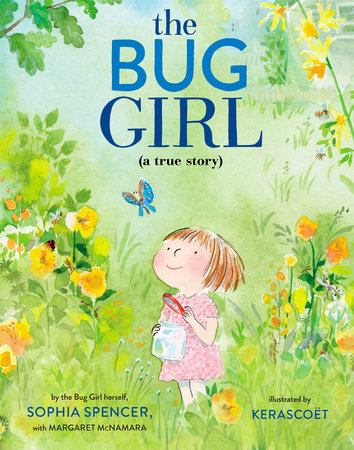
The Bug Girl is now an author!

The Bug Girl by Sophia Spencer and Margaret McNamara


Did you hear the story of seven-year-old Sophia Spencer? Since she was a toddler, Sophia has loved bugs and learned about them. Her mother put out the call for... well, that would be telling.

Don't expect me to tell more about the Bug Girl. Click on this link to find out about her BRAND NEW BOOK now available from Random House.


(Kids these days! She's still in grade school but she's already friends with bug scientists and she's the author of a book from Random House. Oy!)

10 Jan 2020

Hot Stuff! Calibrate your oven.

By Simon Shapiro

One of the many things that can go wrong for novice bakers is that your oven can be inaccurate. Impress your family and friends by calibrating your oven using phase transitions.

While you can't depend on your oven manufacturer, you can depend on the fact that sugar melts at 366°F (186°C). And since we're impressing friends and family, tell them that sugar transitions from the solid (crystalline) phase to the liquid phase at 366°F.

Here's how you do it:
  • Set your oven temperature to 365°.
  • Put half a tablespoon of sugar in an ovenproof dish.
  • When the oven reaches its target temperature, put the dish in the oven and leave it there for 15 minutes.
  • Check to see whether the sugar has melted. Use oven gloves to handle the dish. It may look the same, but it will be really hot! Don't burn yourself!


Sugar is still crystalline
... or ...
Sugar is melting
If the sugar is still crystalline, increase the oven temperature by 5°, and leave the sugar in for another 15 minutes. If it's melted, let the oven cool a little, set it to 5° lower, and put a fresh half tablespoon of sugar in for fifteen minutes. Repeat the process until you discover a temperature setting where sugar doesn't melt and a setting where it does melt.

Some ovens won't let you set a temperature that's not a multiple of 5. If your oven allows more precise settings, you can keep going to find the exact setting at which the sugar melts.

When I did this, I found that the sugar melted at a setting of 357°. So now I know to set my oven to 9° lower than the temperature I really want.

13 Dec 2019

Food on the Move

By Claire Eamer

A vital component of a turkey dinner.
Image by skeeze from Pixabay
I've been thinking a lot about food lately. One reason is that I have been auditing a university class on food and drink in the archaeological record. Somehow, ancient peoples seem much more real when you start to figure out what they snacked on during a workday and what they ate and drank at a feast.

(Auditing classes, I've discovered, is a blast! All the fun of learning with none of the stress of exams.)

The other reason for thinking of food, of course, is that we're approaching the season of winter feasting. Turkey dinner. Mashed potatoes. Corn on the cob. Roasted squash. Cranberry sauce. Maybe a little hot sauce on the side for those who like dash of fire with their food.

But if you'd mentioned any of those foods to someone from Europe, Africa, or any part of Asia 600 years ago, they would have been baffled. All those foods came from the Americas, and no one outside the Americas had eaten them until the European invasion of the Americas began just over 500 years ago.

(Okay -- Europe has a kind of wild cranberry, but it's not the sort you'll find in the cranberry sauce served with your Christmas turkey.)

I learned just how many foods originated in the Americas a few years ago when I was researching The World in Your Lunch Box: The Wacky History and Weird Science of Everyday Foods. I was amazed -- not just at the variety of foods, but at how skilled the farmers of the Americas were and how quickly their foods spread to the rest of the world.

Teosinte is on the left, and modern corn is on the
right. Between them is a hybrid of teosinte and corn.
Image by John Doebley.
Consider, for example, corn. At least 8000 years ago, the people who lived in what is now Mexico and Central America began a long process of crop breeding that turned a common grass called teosinte into maize -- the plant served up as everything from tortillas to corn on the cob. Today, maize is still an extremely important food in Central and South America, but it's also the most important food crop in much of sub-Saharan Africa.

Or look at potatoes. They come from the Andes in South America, and you'll still find the biggest variety of potatoes there. But 500 years ago, the Spanish took a few kinds of potatoes back to Europe, and they spread. They spread so far and so fast that China is now the world's biggest producer and consumer of potatoes.

And that delicious-smelling turkey? The Ancient Puebloans who lived in the famous cliff dwellings of Mesa Verde 800 years ago kept turkeys penned in the alcoves behind their houses. In other parts of North America, such as the forests of what is now the eastern United States, turkeys were so plentiful that people didn't bother to keep them penned up. Why feed a bird when it can feed itself and still be available to hunt when you need it?

Those are just a few of the foods that came from the Americas. They, along with chili peppers, tomatoes, squash, chocolate, and a cornucopia of other delights, changed the nature and flavour of food around the world.

Now I'm hungry!

6 Dec 2019

Teenage Water Science Technician

posted by Paula Johanson
What was your first job, fresh out of school? Something in retail, perhaps.
Or if you're still in school, are you currently delivering newspapers or mowing lawns?
Guess what job teenager Quentin Rae of North Spirit Lake First Nation has, right after finishing high school... has anyone guessed Water Plant Operator? Good golly, there's science technician work in northern Ontario!

Ninteen-year-old Quentin Rae has been hired by his community to operate their new water treatment plant. He is monitoring and maintaining water quality with the assistance and support of Northern Chiefs Council (Keewatinook Okimakanak). The council is getting Quentin specialized training which will enable his community to have clean drinking water, after fourteen years of a Boil Water Advisory.

You can read about it all in the CBC news article at this link: https://www.cbc.ca/news/canada/thunder-bay/teen-first-nation-drinking-water-1.3563110?fbclid=IwAR261xzPfTv1MQp6hAaYnHM6I7khFUeS1qAAaCmTSJvwuKPut0W_-qjv0Zs