Showing posts with label STEM. Show all posts

9 Aug 2024

STEM Club for girls!

 We at Sci/Why have heard from a STEM Club for girl with great news!

Their organizer Skye sent a note to one of our wranglers, Adrienne, telling us the following:
I work with a STEM Club for girls and we just wanted to reach out to let you know that your Sci/Why website was such a help to us! The girls came across it while they were doing research for a project, and the resources you've put together led us to tons of information... we thought you'd appreciate hearing how much you helped us :)!

I was also very impressed with the other resources the girls found in their research! They wanted to share one with you, as a way of saying thanks! Here's a guide to scholarships they picked out: www.madisontrust.com/client-resources/articles/scholarships-for-women-in-stem/

We had the idea that we could include this with our thank-you note to return the favor! They thought it would be a good link for you to add to your science links page sci-why.blogspot.com/p/science-links.html . Hopefully it's helpful !

If you're able to add it we have our next STEM Night next Wednesday, and they would be so proud to see their suggestion :)

~Skye Olley


Thanks for your encouraging words and the helpful link. We will share it with our list. 💗
We are thrilled to hear about the enthusiasm and resourcefulness of everyone in your STEM Club! It's a great thing to share a passion for curiosity.
All the best to Skye and the STEM Club for girls. Here's hoping to hear from many more STEM Clubs for kids and teens and more!


12 May 2023

Celebrate STEM at Science Rendezvous!


by L. E. Carmichael, PhD

This Saturday, May 13, is Science Rendezvous! If you're not familiar, Science Rendezvous is a national STEM festival that aims to bring science out of the lab and into the streets. Hosted by universities across campus, it's a unique opportunity for people of all ages to meet scientists and explore real-life science.

And it's 100% free!

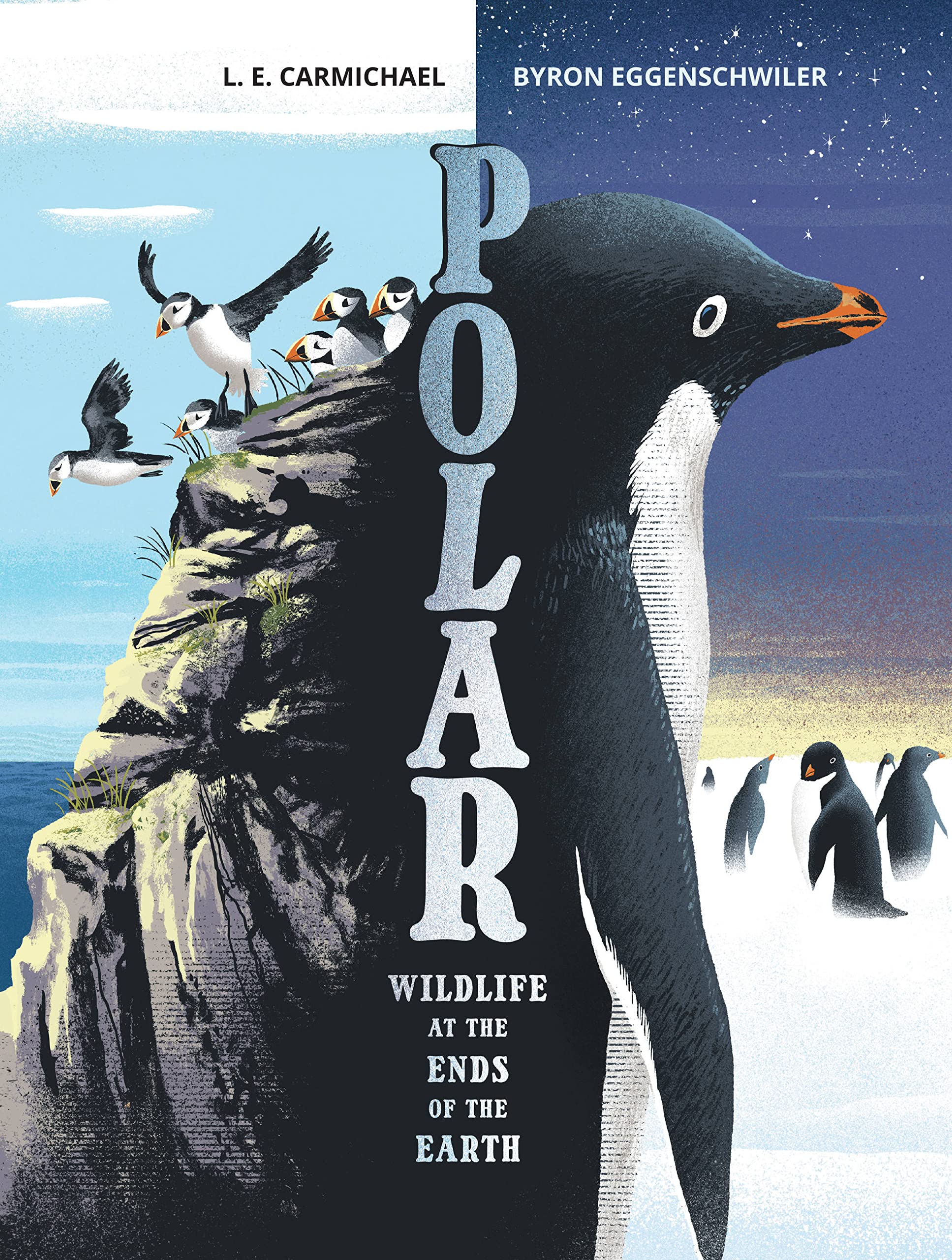
This year, I'll be at Science Rendezvous Kingston with three other children's science writers: Helaine Becker, Rochelle Strauss, and Ishta Mercurio. In addition to wowing visitors with STEM displays and activities, we'll be giving readings of our brand new books: mine is Polar: Wildlife at the Ends of the Earth. Visitors will be able to borrow copies from the public library booths that are on site; or, you can buy signed copies of all our books from indie bookstore Novel Idea, which is just a few blocks away.

Can't make it? No problem! Download our free STEM At Home Activity Guide here.

Not near Kingston? Also no problem! Visit the Science Rendezvous website for details of events happening near you.

We can't wait to share our love of STEM with all of you!


7 Oct 2022

Museum in the Classroom: The Pleistocene Extinction Teaching Kits


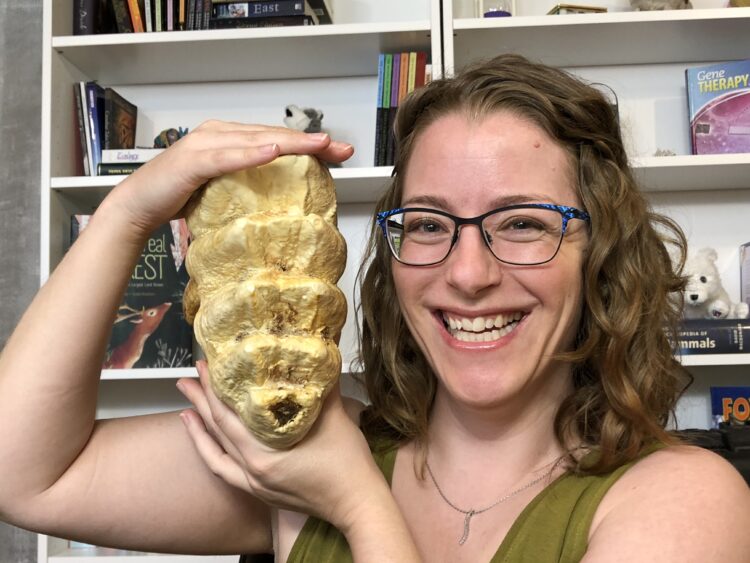
A mastodon molar is AS BIG AS MY HEAD, y'all.


by L. E. Carmichael

Did you have a dinosaur phase when you were a kid? I did. I was in the second grade, and I was obsessed. I pored over library books, memorizing five-syllable names and amazing the adults with my stockpile of bizarre dino facts (I still do that). I liked the armoured species best, because they were just so weird.

And then my parents took me to the Royal Tyrrell Museum to see real fossils. 

Mind. Blown.

Looking back, I can see how these early experiences helped spark my life-long obsession, not just with dinosaurs, but with all life on Earth. But not every child has opportunities to visit natural history museums, either with their families or on school field trips. That's why, when Dr. Lynda Colgan asked me to write the teacher's guides for her Learning with Palaeontology project, I jumped at the chance.

(Also, I'm pretty sure that all children's science writers are legally-obligated to write about dinosaurs at least once in their careers, so box checked!)

As with most of Lynda's ideas, this one was both simple and profound. First, we'd get some great big boxes. Next, we'd fill them with museum quality casts of real fossils, providing teacher's guides that provided the latest scientific knowledge about the species, while focusing on inquiry and hands-on learning. And then, we'd make the kits available to teachers for free.

And giant beavers? They were as big as black bears.
I mean, how cool is THAT?

The first two Kits, on the Pleistocene Extinction, are now available to borrow. Teacher-friends, here's what you need to know:

Features of the Kits

  • Fossil casts of mammals that lived in Canada during the Pleistocene
  • Supporting materials such as magnifying glasses, graphs, and charts
  • Teacher’s Guide containing
    • ALL the information needed to teach core concepts
    • Suggestions for hands-on learning and independent inquiry
    • Glossary, further reading lists, and bibliography of sources
  • Content vetted by experts in palaeontology, education, science communication, and Indigenous issues

Core Concepts and Skills

Junior Edition - Best for Grades 4-7

  • Habitat
  • Evolution and adaptations
  • Biodiversity and classification systems
  • Food chains and energy pyramids
  • Competition and predator/prey interactions
  • Climate change
  • Extinction

Senior Edition - Best for Grades 8-12

  • Habitat and geographic range
  • Evolution and adaptations
  • Competition and predator/prey interactions
  • Trophic cascades
  • Heredity and ancient DNA
  • Climate change
  • Extinction
  • De-extinction: biotechnology and bioethics
  • Correlation vs. causation

At both levels, students will:

  • Evaluate sources of information and assess their strengths and weaknesses
  • Draw conclusions using multiple lines of evidence
  • Understand the relevance of palaeontology to urgent contemporary issues

Junior/Elementary Kit

Borrowing Instructions:

Are you in Ontario? You're in luck! Head on over to the Queen's University Education Library catalogue and place a hold on a physical kit. The cases are on wheels, but they weigh about 40 pounds, so I recommend bringing a friend and a vehicle with a big trunk.

Not in Ontario? Don't worry, we have got you covered. Each Kit is also available in a digital edition, complete with 3D scans of the fossils that you can manipulate from your web browser. Direct links are here:

Junior/Elementary Level

The Pleistocene: Using Ice Age Mammals to Explore Climate, Habitat, and Extinction

Senior/High School Level

Conservation Palaeontology: Using Ice Age Mammals to Explore Climate Change and Extinction

Again, these resources are available to Canadian teachers absolutely free. I field tested them at some student workshops during Science Rendezvous in May, and I can guarantee your kids will be spellbound. I was beyond delighted at the level of critical thinking and curiosity my groups displayed while interacting with the fossils, and I can't wait to hear similar stories from classrooms across the country.

I also cannot wait to launch the new Kits we've been developing this year. Stay tuned, and keep exploring!


The Learning With Palaeontology Project is supported by:


with graphic design by:


29 Sept 2022

Living in Space

by Joan Marie Galat 

Photo credit: NASA
Astronauts have been living over our heads—in outer space—on a continuous basis since 2000. It takes three astronauts to run the International Space Station (ISS) but up to ten may be on board at one time. The entire structure is as big as a football field but the living area is only about the size of a five-bedroom house. Giant solar panels power the station. Some of the electricity is used to split water into gas to generate oxygen for the astronauts. The ISS orbits the Earth at a speed of 28,500 kilometres per hour. That’s eight kilometres a second—25 times faster than the speed of sound! 

I wanted to know what it’s like to live on the ISS, and made plans to write a book on the topic. As part of my research, I visited NASA facilities and watched a SpaceX Falcon heavy rocket launch. The result is the middle grade novel Mortimer: Rat Race to Space (DCB 2022). Written for ages 9-12, it tells the story of a journal-keeping lab rat who sets out to collect scientific evidence that will prove his species is the one that should colonize Mars. Mortimer records video for his future YouTube channel, but not everything goes as planned. He is forced to face new truths about dreams, friendships, and choosing the right thing to do. You can read an excerpt on Amazon.ca or Amazon.com. 


I collected much more information than I could use, including these facts: 

- Astronauts can’t be too tall or short. If you want to be an astronaut, try to grow taller than 62 inches but stay below 75 inches. 

- American astronauts must have 20/20 vision, even if that means wearing glasses, contacts, or undergoing eye surgery. 

- In the USA, jet pilots with at least 1000 hours of flying time, and teachers who have taught K-12, can apply to be astronauts. 

- Astronauts practice everything they’ll do in space on Earth. This includes how to fix malfunctioning equipment, use cameras, conduct experiments, make a meal, stow equipment, and even store trash. 

- Every astronaut has a university education and experience in engineering, biological science, physical science, or math. 

- Astronauts find out what it’s like to be weightless before they go into space. They practice floating inside a high flying plane known as the vomit comet. The plane flies to an altitude of 24,000 feet then climbs at a 45 degree angle to reach 34,000 feet. It then enters a controlled free fall which involves traveling to 24,000 feet in a gradual curve, following a 30-degree descent. This gives about 20 seconds of being weightless. The sensation of weightlessness makes a lot of people feel nauseous. Passengers in the vomit comet also feel 1.8 times heavier when the plane reaches its lowest point. 

- You can experience a few seconds of being weightless when you go down a sudden drop on a rollercoaster or other amusement park ride. 

If you’d like to see the International Space Station pass by at night, visit the Resources page of my website to access information on alerts for your area. If you’re an educator interested in a STEM or STEAM-themed presentation based on Mortimer: Rat Race to Space, contact me to ask about my virtual session—A Rat, A Rocket, and Science. As well as fun science, it includes literacy-building discussion on research, misinformation, and writing.


15 Jan 2021

STEAM Benefits of Stop Motion Animation

by Joan Marie Galat  

I wasn’t looking for a new hobby when I discovered how fun it is to play with stop motion animation. Inspired by a friend’s video of a jigsaw puzzle completing itself, I decided to learn more about the technique of moving static objects in small increments and photographing each change. Playing back a series of frames makes objects appear to move, and you have animation.

Stop motion is a useful STEAM (science, technology, engineering, arts, and math) building activity for the learners in your life, and intriguing because you can make anything appear to move! It’s easy to get started using free phone apps, such as iMotion. Common props include clay figures, Lego, and paper cut-outs. You can also alter images in increments on a whiteboard and photograph each change through the app. I like the challenge of using household objects. This no-shopping route is pandemic-friendly. You can take part without leaving home and spend as much time as like honing your skills. One of my first attempts was to make one of my books climb a flight of stairs.
    
 Next, I used letter tiles to announce a new book.

 
Then I tried to get fancy.
   
As well as encouraging creative expression, stop motion is an effective tool for illustrating science, as it requires breaking concepts into parts. Suppose you decide to demonstrate planet movement in our solar system. Your process would include arranging the planets in order, setting scaled distances to the Sun, and demonstrating speed of movement.

As you experiment, practical math themes arise. How can you best sequence images to tell a story? What happens if you move an object in smaller or larger increments? How do images present if you speed or slow your number of frames per second?

Engineering comes into play as creators brainstorm approaches and solutions. Like engineers, animators must revise and try again before sharing results. Animating science and engineering concepts puts art into learning, keeping students interested. It’s easy to work literacy skills in too, as you storyboard your ideas. Stop motion endeavors build technological expertise, encouraging students to experience media from a creator’s perspective. This encourages critical thinking, when consuming media. How did they do that? How can I find out? 

Stop motion was used to make Isle of Dogs, Chicken Run, Wallace and Gromit: The Curse of the Were-Rabbit, The Lego Movie, Shaun the Sheep, and many other films. You can find plenty of examples on YouTube including a few on my channel, such as Alien Telescope Invasion.
   
For more ideas on how to get creative using engineering, check out Solve This! Wild and Wacky Challenges for the Genius Engineer in You (National Geographic Kids).

23 Oct 2020

Don't Steal My Candy!

 Video by Joan Marie Galat

Are you thinking of ways to protect your candy after Hallowe'en, later this month? Here is a STEM activity you might consider trying at home. Check out this video by Sci/Why author Joan Marie Galat, on how to use PHYSICS to set up a surprise for sneaky candy thieves.


16 Jun 2020

Online STEM Fair

Science Fairs are such exciting events! But during the pandemic, it's not good to plan large gatherings where people will come in close contact. Here's a link to an online science fair for students across Canada from grades 7 through 12 or in Quebec's Cégeps. The Make: Projects website has a detailed virtual display of the Online STEM Fair 2020 sponsored by Youth Science Canada/Sciences Jeunesse Canada and several corporate donors.
The topics for these student projects are many and various, from agriculture & fisheries to environment & climate change, including digital technology and health and much more. If you're thinking of your own projects (past or future), take time to look at some of these award-winning projects at https://makeprojects.com/ysc/home
And if you're finding this link in the future when a new post is at the homepage for makeprojects.com you can look for Online STEM Fair in their website's search window.

20 Apr 2018

A Mathematician Barbie???? Who'da Thunk It?

Post by Helaine Becker

When I was growing up, Barbie was the ultimate aspirational toy. She had a fantastic slinky black dress. An over the top wedding dress. And clothes for being a stewardess, a picnicker, and attending a sock hop.

But there was no Barbie mathematician attire. Are you kidding? This was the era of "men don't make passes at girls who where glasses." And "men don't like women who are smarter than they are. So play dumb!"

Image for BRB INSPR WMN DL 3 from Mattel


Times have moved on. Not enough, of course, but some.

And this is where I get to tell you about the newest dolls in Barbie's inspiring women collection, being released next month. One of them is Katherine Johnson, the subject of my upcoming picture book, Counting on Katherine. 

I only wish this doll had been available when I was growing up. I might not have skipped out on grade 12 calculus.

9 Jun 2017

Superfun STEM trailer!

Post by Helaine Becker


Kids Can Press has  released the trailer for my new picture book biography about William Playfair, the Victorian-era rogue who single-handedly invented the field of infographics. Check it out!

21 Apr 2017

Get Your Hands into Science in Your City

Science doesn’t just happen in big facilities far away. There is science happening right in your city. On May 13 the universities and the nature clubs, the industrial researchers and the backyard tinkerers invite you to come out and play with them at the free 10th annual Science Rendezvous.

What Happens

Every booth wants you to poke, pet, produce, prime, punch, or pedal to partake in the science they are excited about. There are things that explode, float, or twirl. There are technologies that make our modern world run, and technologies looking for new applications. There are ancient technologies like telescopes and modern ones like Frisbee-throwing robots.

Out of the lab and into the streets, more than 6000 groups entertain over 300,000 visitors on this free day of discovery. Get a peek at state-of-the-art laboratories and research facilities, and get a glimpse into the career of a scientist. Meet animals, bike to light up an infrared camera, try the CSI tools, or map your own DNA. Each location is different because it is made up from the local community.

The emphasis is on getting your hands into the action. Takeaways give you activities to do at home and ideas for ways to put more since in your life the rest of the year.

Not Just for Kids

While each festival location definitely has activities for the community’s smallest members, there are hands-on activities for people of all ages. Kids, it’s a great way to inspire your parents to try some cool experiments at home.

Where


From Inuvik and Vancouver to Windsor and St. John’s, there are more than 34 sites holding free festivals on May 13. Find a location near you on the festival’s webpage.


31 Mar 2017

I Blame Dr. Suzuki, or, Why I Write about Science

By Gillian O'Reilly

How did a history and art history graduate end up writing about science? I blame it on Dr. David Suzuki. Specifically, I blame it on a 30-year-old episode of the radio program Quirks and Quarks, which Suzuki hosted, and on a talk he gave to a group of booksellers some 25 years ago. In both cases, the stories he told lodged themselves in a corner of my mind and slowly, slowly pushed science to the forefront of my interests.

The Quirks and Quarks episode was a presentation of ordinary citizens grappling with a new aspect of science in an extraordinarily thoughtful way. It showed a community somewhere in New England faced with a proposal for a laboratory examining recombinant DNA. Back then, for the ordinary layperson, recombinant DNA was the stuff of science fiction or nightmares or both. As I recall, Quirks and Quarks broadcast parts of the public hearings over at least two episodes, devoting hours to the topic with very little editorial comment. We simply heard ordinary people informing themselves, working through questions and coming up with their conclusions. The lab was allowed.

When David Suzuki spoke to the booksellers a few years later, he began by discussing the all-too-common idea that science doesn’t have anything to do with one’s day-to-day life. Intellectually, I agreed with Suzuki that this idea was wrong, but, frankly, science didn’t seem to have much to do with my day-to-day life either.

Suzuki pointed out that, when he was a child, he wasn’t allowed to go to the movies or the swimming pool because of polio scares. As someone who had measles before there was a vaccine and who had seen the results of childhood polio in 1980s Africa, his statement hit home for me. He detailed other ways that science had changed his and everyone’s lives, but what I remember was the vaccines – the very ordinary way that children’s lives have been changed in ways today’s kids can scarcely imagine.

Over the years, I have recalled and reflected on the stories Suzuki told, as I gradually became more interested in writing about STEM topics. These two episodes showed both the ways in which ordinary people’s lives can be affected by science and the way ordinary laypeople can grasp and make intelligent decisions about science.

So I write about STEM subjects, not just for the budding scientist, but for the kids who will grow up to be historians or artists or school principals or lawmakers – all of whom will need to understand and make intelligent decisions about the wonderful science around us.

Gillian O’Reilly is the co-author with Cora Lee of The Great Number Rumble, Revised and Updated: A Story of Math in Surprising Places (Annick Press, 2016), illustrated by Lil Crump.

3 Feb 2017

A Wonderful Announcement!

Post by Helaine Becker

So I can FINALLY share some wonderful news. After 3 years in progress, and interminable months of the contract process, I can finally announce my upcoming picture book, Counting on Katherine, the story of Katherine Johnson (of the Hidden Figures movie). 
Christy Ottaviano at Henry Holt and Co. will be publishing it next winter, and it will be illustrated by Dow Phumiruk.  

I am thrilled beyond words that this project is actually happening; it has been a long and winding road to make it happen to be sure.
Katherine Johnson's daughters, Kathy and Joylette,
 accept the award on Katherine's behalf. 
I had the honor of meeting the Johnson family when Katherine was awarded a De Pizan Living Legacy award from the National Women's History Museum two years ago, and interviewing Katherine for the book. They are terrific folks. 
Katherine was a teacher, and she told me she is so excited to have a book for children about her (this was well before we knew anything about the movie). I am looking forward to going to Virginia with the book in my hands to give to her - she is 98 now so she better hang tough!!!!
So everyone go see the movie! And BTW my book focuses on the part of her story Hidden Figures doesn't cover - how she saved Apollo 13.

21 Aug 2015

What Goes Around Comes Around - Undersea Carousel Style!


Photo: http://www.seaglasscarousel.nyc/the-seaglass-story/ 

Post by Helaine Becker


A fantastic new carousel  called Seaglass opened in New York City yesterday. According to Show Canada, the group that fabricated the structure, "visitors find themselves within a musical seashell structure of 30 illuminated fish of different changing sparkling colors and species." 

The fish are up to 4.5 m tall, made of translucent fibreglass "reminiscent of frosted colored pebbles of sea glass." They rise, fall and swirl about in invisible 'currents' much like real fish do in the ocean.  (See a video of the carousel in operation here) It looks totally spectacular, and I can't wait to get to New York so I can ride it myself!
Photo: http://www.seaglasscarousel.nyc/the-seaglass-story/ 
My friend Stephen Sywak was part of the engineering team (McLaren Engineering Group) that helped make the carousel come to life. He has very kindly answered my questions about the engineering challenges involved in making this complicated and gorgeous work of art. This is what he told me, in short:

Can you describe the carousel for me?
It's a multi-axis carousel.  There's a main turntable, but within the main turntable are three smaller turntables.  And on THOSE turntables, there are a number of "fish," like the horses on an old-timey carousel, except for a few things....

Photo: http://www.seaglasscarousel.nyc/the-seaglass-story/ 
* You ride INSIDE the fish, not on top of them
* The post that the fish move up and down on only goes BELOW the fish.  On a carousel horse, it goes THROUGH the horse, from the floor to the canopy.  Structurally, and  from a control point  of view, it's a lot harder to do it THIS way.
* The fish not only move round on the large carousel, but they swing back and forth because of the smaller carousel.  And then they swing back and forth AGAIN, on their own poles.  AND they move up and down on their own poles (There are a few fish on  the MAIN carousel that only move a little or not all; some of these are designed to accommodate wheelchairs.).


So how do you make it all go "swish?" 

The main carousel and the smaller carousels are driven by industrial motors.  The motors run gearboxes, and the gearboxes run "ring bearings" (large, geared bearings--like you would see on a tank turret).  They provide about 20-30 HP for the main carousel, and 8-10 HP each for the small ones.

The fish are mounted to custom hydraulic cylinders.  But we didn't use hydraulics to run them up and down.  The hydraulic cylinders are perfect for guiding and positioning the rods beneath the fish, and holding them stable.  They are designed to handle linear and rotary motion.  Why reinvent, when it's cheaper to buy an existing product?  (That was my idea, by the way!)  Instead, we used two standard electrical motors (and gearboxes) to do the local lifting and the local turning. 

If I recall correctly,  a giant "slip ring" at the center of the table brings in all the power and control signals.  It allows the central turntable to rotate round and round without winding up a bunch of cables.  The inner (smaller) turntables, and the fish themselves, only spin partially around.  We used "Cable Chains" to bring power and signal to them.

We used industrial control systems both for safety, and to allow us to simplify and reduce the number of signals crossing the main, central slip ring.  Basically, it's running on a network, like computers in an office, or a network you might have at home.  But it's got layers of security on it, so that it can't be "hacked."


I never ever considered the possibility that someone would hack a merry-go-round. Go figure. 

***

What were the key challenges in  taking this idea from the drawing board to Battery Park?

One key challenge was was that we had to work very closely with the artists to make sure that we could implement their vision.  There were a few occasions where the "artist" types even took their lead from our designers and engineers! 

On the physical side, there was the fact that the structure on which the Carousel's turntables sit is all below ground. It's about 8-10 feet "tall," but it's all under foot!   

Photo: http://www.seaglasscarousel.nyc/the-seaglass-story/ 
We also had to make sure that all the various motions of the fish (large turntable, small turntable, fish "wag" and fish "heave" up and down) didn't make the riders heave their respective breakfasts and lunches. 

Thanks for that image. What's your next coolio project?

I'm currently working on a test set-up for an actuator (motor, gears, sensors, etc.) that rotates the solar arrays  on geo-synchronous satellites. If it turns out I know what I'm doing, then I hope I get to work on some of the actuator designs for the next Curiosity mission, slated for 2020.   


WOW! From undersea to outer space! An engineer's life is full of thrills! But now the most important question of all: Do you get to ride on the Seaglass Carousel for free?

Unfortunately, no.  But it's only $5!


Ok then. I'll book my ticket to New York and get in line. 


28 Mar 2014

Robot Animals? GadZOOks!!!!

Post by Helaine Becker

I'm delighted to announce my newest STEM-related book, Zoobots, has just been released by Kids Can Press. It's a pretty exciting (if I do say so myself) survey of the latest developments in robotic research. Glorious, hyper-realistic illustrations by Australian Alex Ries are totally wow-worthy whether you're a transformer-transfixed kid or a formerly jaded grown-up.


I'm just as happy to announce that the book has already been picked up by the Junior Library Guild, and nominated by Capitol Choices for its Noteworthy Books for Children and Teens list.

If robotic animals fascinate you - and really, how can they not?  -  check out my Pinterest board, Cool Robots, where I've posted lots of links to articles about all kinds of amazing mechatronics.

And don't forget to watch out for cockroach-bot overlords. They're on their way to a kitchen counter near you.